How Can Iran Be Brought Back to the Negotiating Table?
Washington says that as long as “Iran’s behavior” does not change, American sanctions will not be lifted. Afshin Molavi writes in an article for Bloomberg explaining under what conditions sanctions are effective and how Iran can be brought back to the negotiating table.
Afshin Molavi, an Iranian-American businessman, is one of the economic activists who entered the Iranian market after the nuclear deal and began cooperation with major companies such as Airbus, Cisco, Total, and Citigroup. In a detailed article for Bloomberg News Agency, he explained that the return of American sanctions against Iran to bring Iran back to the negotiating table—as the Trump administration officials want—is not effective.
The U.S. Secretary of State has threatened that American sanctions against Iran will remain in force as long as the Iranian government does not change its behavior. The U.S. President says the nuclear deal with Iran was the worst agreement in American history and his administration is now seeking a better deal with Iran.
This statement means that the Iranian government must concede to American demands regarding its missile program, relations with quasi-military groups supported by the Islamic Republic, and stricter controls on Iran’s nuclear program to be relieved of sanctions.
Afshin Molavi writes in his Bloomberg article that these demands do not seem achievable. He wrote: America believes that by increasing economic pressure on Iran, the Iranian people will pressure the government to force it to return to the negotiating table and negotiate to reach an agreement. But the problem is that lifting sanctions does not remove a great burden from the shoulders of ordinary people, the prospect of lifting sanctions will not be clear in the future, and Iranian policymakers do not believe that America will live up to its commitments.
According to this businessman’s opinion, America’s major problem with sanctions is that their effects are not completely eliminated even after the sanctions are lifted, and as a result, the credibility and ability of the U.S. government to reimpose them is not effective.
He says the Barack Obama administration failed to help Iran benefit from the removal of sanctions after the nuclear deal. This is partly because U.S. government officials who had warned for months earlier not to trade with Iran had little credibility in encouraging businesspeople to cooperate with Iran after the nuclear deal.
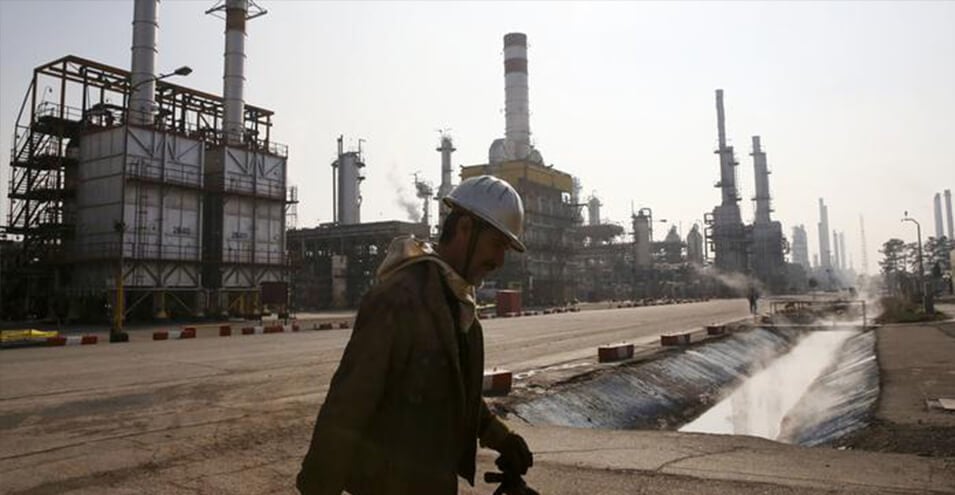
Now the Donald Trump administration hopes that American secondary sanctions against Iran will bring the Iranian government to its knees, but the reality is that Iran has been struggling with sanctions for years and sanctions are part of the daily reality of this country.
Afshin Molavi believes that lifting sanctions is what will be important in future Iran-U.S. negotiations, and the stick of sanctions will be effective when cooperation to eliminate the effects of sanctions is accompanied by sweeteners.
He writes in his Bloomberg article: Before imposing sanctions on any country, America should have a new mechanism in place that will be effective when sanctions are lifted. He believes that such a mechanism should be based on three pillars:
First: The psychological impact of sanctions must be removed. One year after the nuclear deal with Iran, non-American banks were being encouraged to trade with Iran, but there was no guarantee for American banks in this regard.
Second: The United States should have accessible resources to help target countries, which would help mitigate the impact of sanctions on government institutions—reducing trade capacity and facilitating investment after years of economic isolation. For example, a new agreement with Iran should include technical assistance to help this country join the World Trade Organization and other institutions responsible for global trade and investment.
In the best case, the United States should commit to increasing its own trade with investment in a country that was previously under sanctions to help compensate for lost economic growth caused by sanctions. Of course, achieving such a thing is difficult because the U.S. government has limited ability to convince American companies and investors to cooperate with other countries, especially if those countries have a history of hostility with America.
And finally, America can and should have programs to help those who have been harmed by sanctions: the poor sectors of society. For example, after the nuclear deal with Iran, Europe allocated 50 million euros to support development projects in Iran. A significant commitment from cooperative and development organizations like the U.S. International Development Agency encourages other countries to support Iran and sends a reliable message to investors.
Afshin Molavi writes for Bloomberg: Achieving these goals requires forming new teams managed by the Treasury Department, State Department, and the U.S. Commerce Department, which in the best case would be supported by receiving fresh aid from Congress.
He believes that as long as such tools do not exist, a new deal with Iran will not take place and the United States will face resistance from the allies and opponents of this country with sanctions.
He also wrote that it currently seems very unlikely that the U.S. government will pay attention to such recommendations, and as long as the current situation does not have a political cost for the Trump administration and does not impose significant pressure on the American economy, the situation will not change. But when the next U.S. President is forced to remedy the damages caused by the Trump administration’s policies, he must first prove that America is capable of doing so.
Source: DW