Ibrahim Raisi, in Pursuit of “Wilayat” with 38 Years of Crime Record
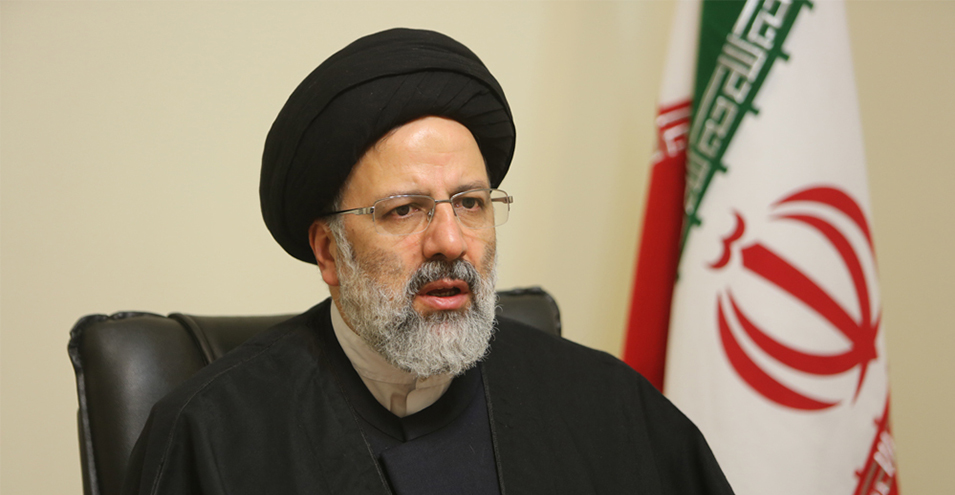
Who is the protégé of Mohammad Beheshti, the trusted aide of Ruhollah Khomeini and the student of Ali Khamenei?
Center for Liberalism Studies – Youhanna Najdi and Saeid Ghasemi-Nezhad
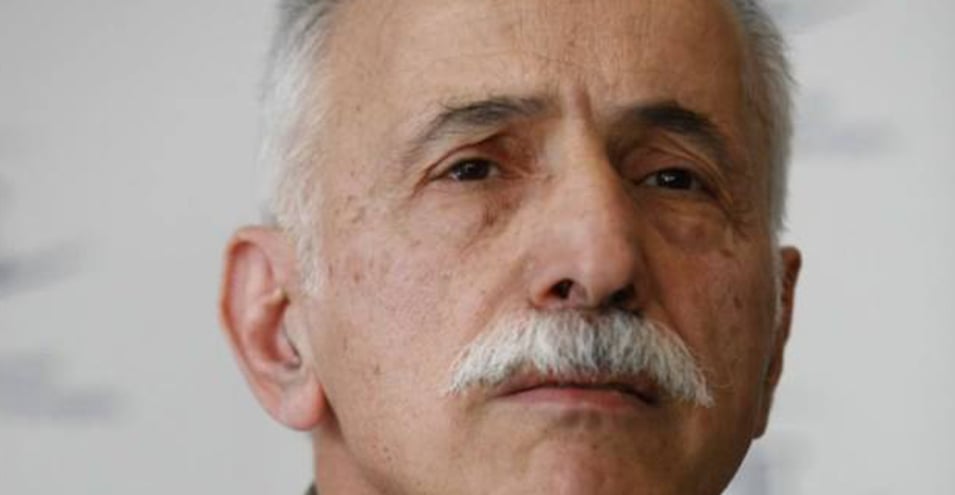
These days, the name Ibrahim Raisi has become more prominent than ever in the political sphere of the Islamic Republic of Iran. The mention of his name as a candidate in the presidential elections, the possibility of him occupying the empty seat of Akbar Hashemi Rafsanjani in the leadership of the “Expediency Discernment Council“ and finally, most importantly, being one of the most serious options for succession to Ali Khamenei, all of this has brought Raisi to the center of attention of analysts and public opinion. But who is this 56-year-old cleric? Behind this emotionless, taciturn and hot-tempered face, who is sitting?
Seyyed Ibrahim Rais al-Sadarat (known as Raisi) was born in 1339 (Gregorian year 1960) in the Nooqan neighborhood of Mashhad. He lost his father, who was a cleric, at the age of five. At fifteen, he entered seminary studies and first attended Nawab School and then until 1354 (1975) studied in the seminary of Ayatollah Mousavi-Nejad in Mashhad. After that, he went to Ayatollah Borojerdi’s seminary in Qom, where he became a colleague of a number of revolutionary and radical clerics. During his seminary studies, he was a student of well-known clerics such as Morteza Motahhari, Seyyed Ali Hakim Damaad, Ali Meshkini, Hussein Nouri Hamdani and Abu Al-Qasem Khazali.
Studying and examining the record of Ibrahim Raisi, even the narratives written in his praise, shows that during the peak period of revolutionary activities against the monarchical system in the 1350s decade, he did not have significant activities beyond attending some gatherings, and only in the cities of Mashhad and Qom, which were considered the main centers of clerical activities against Mohammad Reza Pahlavi, did he associate with revolutionaries.
After the 1357 (1979) revolution, however, Ibrahim Raisi followed a different path and very quickly moved closer and closer to the core of power and the suppression apparatus in the newly established Islamic Republic.
Beginning of murder before the age of twenty; reminiscent of executions and suppression
Seyyed Mohammad Beheshti, one of the influential clerics, immediately after the 1357 revolution with the aim of cadre-building for system management, organized a training course for approximately 70 seminary students in Qom at the “Shahid Motahhari Higher School“. These 70 people were those whom Beheshti believed possessed the necessary qualifications to take on governmental responsibilities, and young Ibrahim Raisi was one of these individuals. Hassan Ayat, Abdolkarim Mousavi Ardabili and Ali Khamenei were among the instructors of this course. Mohammad Beheshti, who liked Ibrahim Raisi, also sought assistance from this young cleric in establishing the office of the “Islamic Republic Party“ in Khasan province.
As written in Raisi’s biography, in the early days of the establishment of the Islamic Republic system, at the invitation of Sheikh Hadi Marvi, representative of Ayatollah Khomeini in the city of Masjed Soleiman, he went to that city and “the key to his connection with the Revolutionary Court system was established from there“. Masjed Soleiman in those days was considered one of the bases of leftist forces, which with the presence of people like Raisi and Hadi Marvi, these groups were severely suppressed and many of them were executed.
Ibrahim Raisi, less than two years later and on the eve of his twentieth birthday, was first appointed as “judge of Karaj“ and then by order of Ali Qodousi, “General Revolutionary Prosecutor“ as prosecutor of that city. After the Islamic revolution and then the start of the Iran-Iraq war, many political activists, especially from southern cities, had migrated to Karaj near the capital, and some political activities had begun in that city. Therefore, the presence of a ruthless individual in eliminating political opponents in Karaj was vital for the revolutionary government.
Raisi was subsequently appointed simultaneously and while retaining his position as “prosecutor of Hamadan“ as well. Given the distance of approximately 340 kilometers between these two cities, he spent half the week in Karaj and the other half in Hamadan until after four months he left Karaj and completely settled in Hamadan.
Raisi continued as “prosecutor of Hamadan province“ until 1363 (1984). In 1364 (1985), at the height of the suppression of critics and political opponents by the government, he was appointed as “deputy prosecutor of the Tehran Revolutionary Court“ and three years later in the summer of 1367 (1988) as a member of the “death committee“ appointed by Ayatollah Khomeini, and alongside Niri, Pourmohammadi and Eshragi, he registered the secret execution of several thousand political prisoners in his record.
According to documents on the “Jamaran” website, on the first day of Dey 1367 (December 22, 1988), the then leader of the Islamic Republic, who had only a few months left to live, issued a decree criticizing the fact that “cases are stalled in the Supreme Judicial Council” and “the execution of God’s decree has been delayed” and ordered that all these cases be placed in the hands of Hojjat al-Islam Hossein Ali Niri (the Sharia judge at Evin Prison at the time) and Ibrahim Raisi so that these two “execute God’s decree as soon as possible” because “delay is not permissible”.
Ayatollah Khomeini also, just ten days later, in another decree, tasked Hossein Ali Niri and Ibrahim Raisi to “examine reports from the cities of Semnan, Sirjan, Islam Abad and Dorud” and “with precision and speed, execute what is God’s decree”. The then leader of the Islamic Republic also asked Niri and Raisi on the 23rd of Dey to execute “God’s decree”.
Ruhollah Khomeini passed away months after these consecutive decrees, but this was only the beginning of Ibrahim Raisi’s path. Immediately after Ali Khamenei assumed leadership and following some changes in important government positions, he was promoted by Sheikh Mohammad Yazdi, then head of the “Judiciary“ at the age of 29 to the position of “prosecutor of Tehran“ and remained in this position for five years until 1373 (1994). After that, for ten years (1373-1383 / 1994-2004) he was appointed head of the “Office of the General Inspection of the Country“ and spent the next ten years (1383-1393 / 2004-2014) as “First Deputy of the Judiciary“. He was then appointed “General Prosecutor of the Country“ by order of Sadegh Larijani and held this position for nearly two years.
Prior to this, in June 1391 (2012), Ali Khamenei, while retaining his position, appointed Ibrahim Raisi as “Special Prosecutor for the Clergy“ which he has held until now.
Ibrahim Raisi has also been a member of the “Assembly of Experts for Leadership“ since 1385 (2006) and is currently one of the 11 members of the committee on “investigation of Article 111 of the Constitution“ of this assembly. This article of the Constitution of the Islamic Republic of Iran pertains to the selection of a new leader in case of death or removal of the current leader.
Seyyed Ali Khamenei, in his latest decree for Ibrahim Raisi, on the 17th of Esfand 1394 (March 6, 2016), appointed him to the position of “custodian of the Astan Quds Razavi“ to succeed Abbas Vaez Tabasi, who had passed away at the age of 80 just days before. Raisi is certainly not unfamiliar with managing large economic institutions, as years ago he was appointed by Ali Khamenei for ten years to membership in the board of trustees of the “Executive Secretariat of the Imam’s Decree“.
Being secretary of the first session of the “Headquarters for Commanding Good and Forbidding Evil“, membership in the “Supreme Board of Candidates of the Country“, custodianship of “Imamzadeh Saleh“ in Tehran and chairmanship of the “Supervisory Council of Radio and Television“ have been among the various positions of this hardline cleric in these years, most of which are related in some way to suppression and oppression.
Simultaneously with all these responsibilities, he also attended classes of influential seminary clerics such as Mahmoud Hashemi Shahroudi and Agha Mojtaba Tehrani, and at the same time was a direct student of Ali Khamenei for 14 years. Since 1376 (1997), at the suggestion of Mohammad Reza Mahdavi Kani and Mohammad Yazdi, he became a member of the “Militant Clergy Association of Tehran“ and is currently a member of its central council.
As written in Ibrahim Raisi’s biography, he obtained his doctorate degree in “Islamic jurisprudence and civil law“ from the “Shahid Motahhari Higher School“ in Tehran. Although it is unclear how, with all these multiple responsibilities, he found time to pursue doctoral studies.
1367 (1988) and the “Death Committee”: Revolutionary Anger and Hatred
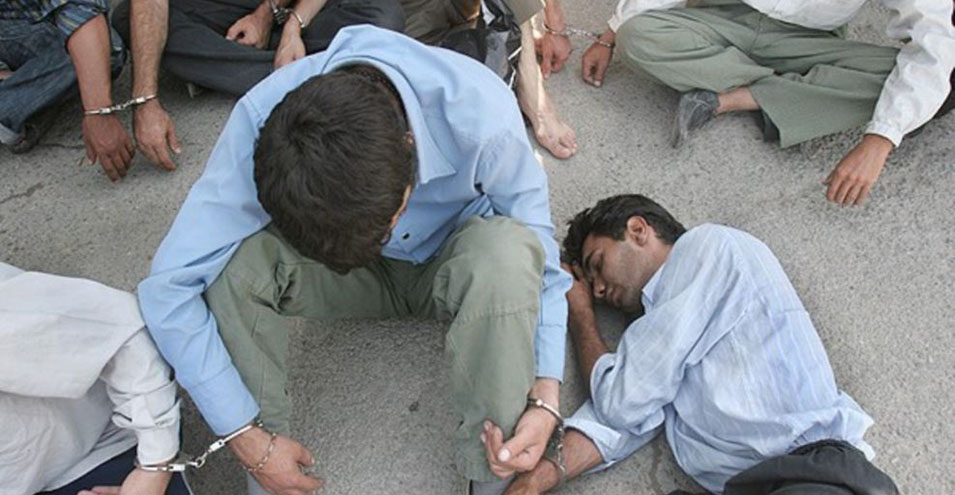
In the summer of 1367 (1988) and following Ayatollah Khomeini’s decree, thousands of political prisoners, mostly in Tehran’s Evin Prison and Karaj’s Gohardasht Prison, were executed. Ibrahim Raisi, who at that time was “deputy prosecutor of Tehran“, along with Hossein Ali Niri (Sharia judge), Morteza Eshragi (prosecutor of Tehran) and Mostafa Pourmohammadi (deputy and representative of the Ministry of Intelligence) were members of the central decision-making committee regarding these executions, known as the “death committee“. This committee had been tasked by Ayatollah Khomeini to determine the fate of those political prisoners who still “remained in their position”, and for this purpose, it was mostly traveling between the two aforementioned prisons.
Ayatollah Montazeri writes in his memoirs: “It became the month of Muharram; I called on Mr. Niri, Mr. Eshragi, Mr. Raisi, and Mr. Pourmohammadi and said ‘Now it is Muharram, at least during Muharram, refrain from executions’; Mr. Niri said: ‘We have so far executed 750 people in Tehran, and we have separated two hundred people as those who remain in their position from the rest, let’s finish them too and then whatever you order.'”
Ibrahim Raisi, however, alongside his other criminal colleagues, was obedient to the order of the then leader of the Islamic Republic, who in his decree, while emphasizing that “mercy toward the warring enemies is simple-mindedness,” had asked the death committee to finally be able to win “the satisfaction of Almighty God” with “their revolutionary anger and hatred toward the enemies of Islam”.
On August 19, 1395 (August 10, 2016), Ahmad Montazeri, the eldest son of Ayatollah Montazeri, posted on his father’s website a recording of a meeting dated August 24, 1367 (August 15, 1988) between his father and the “death committee”. Hossein Ali Montazeri, the then deputy leader, in this meeting, while severely criticizing the executions, tells the death committee: “History will condemn us and will record your names as ‘criminals of history’.”
Thus, Raisi at age 28 rolled up his sleeves and as one of the four members of the “death committee,” took on one of the most principal roles in the bloodbath of the “sacred system” of the Islamic Republic. Some survivors of those executions have reported seeing Raisi in the prison corridors and torture chambers without his clerical robes and turban, in casual clothes, conducting the execution-related work.
Nevertheless, Ayatollah Khomeini, who himself had only a few months left to live, was still not satisfied with the number of executions, so much so that he delegated the decision regarding the execution of other prisoners to the then members of the “Expediency Discernment Council“: “I went to the Expediency Discernment Council meeting. The punishment of counter-revolutionaries was discussed. The Imam has delegated the decision to the council. It was decided to act as before the recent events. The Ministry of Intelligence had such an opinion, and the judges of Evin had a harsher opinion.” (Hashemi Rafsanjani’s Memoirs and Diaries of 1367, “The End of Defense and the Beginning of Reconstruction,” p. 328)
Permanent member of investigation committees; from the bombing of the prime ministerial office to the 1388 events
One of the strangest points in Ibrahim Raisi’s record is his membership in a significant number of investigation and inspection committees, such that following most controversial events in the Islamic Republic, this hardline cleric’s name appears in such committees.
For example, he was responsible for the third group that, between 1363-1365 (1984-1986), investigated the file of the bombing of the prime ministerial building in 1360 (1981). Raisi, who at that time was “political deputy of the Tehran Revolutionary Court“, during this responsibility and especially during interrogation of the accused in the case, worked closely with Asadollah Lajevardi (the then Revolutionary Prosecutor). Finally, after five years of fruitless investigation, Ayatollah Khomeini personally and for reasons that have not yet been revealed, issued an order to close this case.
Raisi was also a member of the “special committee to investigate the events of University Avenue in Tehran“ in 1378 (1999) under the “Supreme Council of National Security“. Abbasali Frati (then prosecutor of the military court of Tehran province), Morteza Rezaei (then commander of information protection of the Revolutionary Guards), Mostafa Tajzadeh (then political deputy of the Minister of Interior) and Ali Rabiei (then member of the Supreme Council of National Security) were among other members of this committee. Ibrahim Raisi and other committee members were strongly supported by Mohammad Khatami, the then president of the Islamic Republic, to such an extent that Khatami described this committee’s report as “characterized by justice and precision” and said: “The investigation committee is approved by the Supreme Council of National Security, and harm to this foundation means harm to the foundation of the system.”
Years later, following Mehdi Karroubi’s revelations about sexual abuse of detainees after the 1388 (2009) events, a committee was established by order of Sadegh Larijani, head of the “Judiciary“ to investigate Karroubi’s statements, and as usual, Ibrahim Raisi’s name appeared among its members. This committee, as expected, rejected Karroubi’s statements and claimed that his evidence was “completely fabricated,” “devoid of truth” and “organized to divert public opinion.”
Ibrahim Raisi, in his capacity as then deputy of the Judiciary, went further; his suppression instinct flared up again and warned that “the judicial system will definitely prosecute the leaders of sedition.” He is currently also a defender of the house arrest of the leaders of the Green Movement and says “the Islamic Republic system treated the leaders of sedition with mercy” because “their house arrest is to ensure their own security.”
On November 8, 1395 (October 30, 2016), the names of seven members of the “supervision committee on the correctness of the 1396 presidential election” were announced by the “Guardian Council“. Ibrahim Raisi’s name appears as one of the members of this committee, while the other six members are all current or former members of the “Guardian Council“.
“The decree of hand amputation is one of our great honors“
Apart from his background and positions, even a cursory look at Ibrahim Raisi’s positions and statements clearly shows to what extent violence, hatred and cruelty are institutionalized in him, such that to preserve the system, he is willing to commit any crime.
Raisi does not refrain from praising the two leaders of the Islamic Republic. He claims that “Muslim nations love the Islamic Revolution and the late Imam.”
At the same time, he is strongly anti-Israel and anti-America: “The evil triangle of America, Britain and the Zionist regime is the most despicable phenomenon in the eyes of all the people of the world.” He not only threatens the destruction of Israel but also promises the liberation of Saudi Arabia: “Soon, not only Jerusalem but also the two holy sanctuaries will be cleansed from the filth of the existence of arrogance.”
Raisi, while emphasizing the need for “comprehensive support” for Bashar Assad, clearly considers Syria as a “border” for Iran: “Syria is considered a border for the Islamic Republic for the defense of its security and identity.”
He occasionally, like a number of other high-ranking officials of the Islamic Republic, engages in daydreaming with obscure language and, for example, speaks of “indicators of the Islamic utopia”; advocates replacing “development” with “progress” and also “redefining jurisprudence” in the field of “cyberspace” and says that “Islam believes in a guiding state, not a welfare state.”
Ibrahim Raisi, in the early twenty-first century, specifically defends “despotism” and says that “in a religious society, everyone must have one opinion” and immediately adds that “guardianship of the jurist” is the same as the rule of the first Imam of the Shias.
In November 1389 (October 2010), in response to the execution of the hand amputation decree of a thief in the city of Yazd, he described it as “based on law and divine limits” and warned that such decrees “will be repeated in the future if the judge determines and in accordance with the law.”
Raisi at that time considered the hand amputation decree one of the “great honors” of the Islamic Republic.
Five days after the bloody Ashura of 1388 (2009), on December 31, 1388 (January 20, 2010), as a speaker before the “Friday Prayer” sermons in Tehran, he called the protesters “moharebeh” (those waging war on God) and said: “We deal with those who threaten security as ‘moharebeh’.” Given that the ruling of “moharebeh” in the Islamic Republic is “execution,” Raisi with these statements effectively paved the way for the execution of protesters.
He was also the first to announce the arrest of hundreds of people on the bloody Ashura day of 1388 (2009) and asked the “relevant authorities and law enforcement” to deal with “sedition-mongers with such force” so that “no one else would dare to cause insecurity.”
Sitting on the wealth of the Astan Quds Razavi
Ibrahim Raisi, now as the “custodian of the Astan Quds Razavi,” controls dozens of small and large companies, industries and extensive economic sectors, such that the exact volume of assets and wealth under his control cannot be estimated.
The “Astan Quds Razavi” with more than fifty economic companies and fifteen cultural and social institutions and foundations in the city of Mashhad is administered under the supervision of the “custodian” of the shrine of the Eighth Imam of the Shias. This “largest economic holding in the eastern part of the country” is among the institutions under the supervision of the leader of the Islamic Republic that are exempt from paying taxes to the government. In his decree appointing Ibrahim Raisi to this “custodianship,” Ayatollah Khamenei explicitly asked him to “organize” the “economic and service enterprises” of the Astan Quds Razavi.
In one of the latest instances of the expansion of Astan Quds Razavi’s role in Iran’s economic projects, the newspaper “Khorasan” in its November 19 (November 10, 2016) edition, quoting Ali-Reza Rashidian, “governor of Khorasan Razavi province,” wrote that five “major development projects” have been delegated to this “Astan”. He introduced these five projects as “the project to transfer Oman Sea water to three eastern provinces of the country,” the railways “Mashhad-Zahedan” and “Mashhad-Gorgan,” “Mashhad-Chenaran-Quchan Freeway” and “allocation of five hectares of land needed for the construction of a 540-bed hospital in eastern Mashhad.”
Ibrahim Raisi is the son-in-law of Ahmad Alamolhoda (the hardline Friday prayer leader of Mashhad and the representative of the Supreme Leader in Khorasan Razavi province). Thus, the political and economic power of Khorasan is effectively divided between the son-in-law and father-in-law; although the true owner of this wealth and power is none other than Sultan Ali Khamenei.
Will the bells toll for Raisi?
Although the political arena in despotic systems is not transparent and often the most important political relationships and relationships are formed out of sight, nevertheless, one can say that Ibrahim Raisi with such a record and his obsequious service to the two leaders of the system and the network of security and judicial institutions, is now not satisfied with the “custodianship of the Astan Quds” nor with membership in the “Assembly of Experts”. It is in this way that recently at some meetings of Revolutionary Guards commanders and Basij forces, posters depicting him alongside the two former and current leaders of the system have been distributed. He increasingly associates with the Guards and simultaneously receives government officials.
Raisi is currently teaching advanced jurisprudence lessons three days a week at the “Nawab Seminary“ in Mashhad, and in this way, in terms of seminary levels, he also possesses the necessary potential and conditions to assume the leadership of the Islamic Republic. On the other hand, government media, especially websites and news agencies close to security institutions and the Revolutionary Guards, have been using the title “Ayatollah“ for him since mid-1395 (2016) in a coordinated action to pave the way for his political promotion, even as a successor option to Ali Khamenei.
Ibrahim Raisi, whatever position he may reach or whatever wealth and power he may wield, one thing is clear about him: his hands are stained with the blood of thousands of people. He committed these crimes when he did not possess his current political and economic position. Imagine if he were to sit in the chair of the third leader of the Islamic Republic, with people’s lives and property under his control; or even if temporary positions such as the presidency and the Expediency Discernment Council were entrusted to him.
Source: Goya
“CNN’s Farsi network has only published this article, and the tone and writing style of this article is that of its authors.”