Implementation of Prison Sentences for Iranian Writers and Intensification of Suppression of Dissenting Views
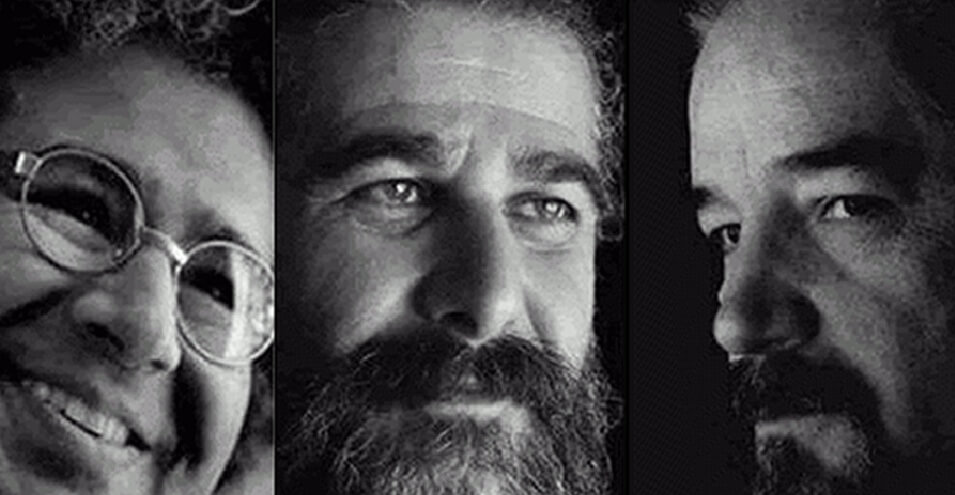
The Iranian Writers’ Association announced on Saturday, September 26, 2018, in a statement that prison sentences for three members of the association have been executed. Reza Khandan (Mahabad), Baktash Abtin, and Keyvan Bazhkan are three members of the Writers’ Association who were previously sentenced to six years imprisonment each by Branch 28 of the Tehran Islamic Revolution Court under the presidency of Judge Moghisseh.
On December 28, 2018, the appellate court for these three writers and researchers convened under the presidency of Judge Ahmad Zargar, during which the six-year prison sentence for Reza Khandan Mahabad and Baktash Abtin was upheld, and Keyvan Bazhkan’s sentence was reduced to three years and six months imprisonment.
The charges against the writers in court included “publishing the internal newsletter of the Writers’ Association,” “preparing a research book about the fifty-year history of the Writers’ Association,” and “visiting the graves of those killed in the serial murders of Jafar Pouyandeh and Mohammad Mokhtari and participating in the annual ceremony of Ahmad Shamlou.”
Naser Zarafshan, a lawyer and member of the Iranian Writers’ Association, referring to the confirmation of the writers’ sentences in the appellate court and non-compliance with legal standards in conducting this trial, told the Iran Human Rights Campaign that unfortunately “appellate courts” in Iran have become “confirmation courts,” and although the appellate court is supposed to be the second authority for reviewing cases, it is so “powerless” and “ceremonial” that sentences in these courts are only “confirmed.”
Mr. Zarafshan, referring to the charges against the writers, states that none of these charges have any legal or judicial basis whatsoever, and there are many contradictions regarding the issuance of these sentences and the punishments announced.
Naser Zarafshan, noting that all contradictions in these sentences have been presented to the court, told the Iran Human Rights Campaign: “These sentences have no legal or judicial basis and are purely political in nature.”
According to this lawyer and member of the Iranian Writers’ Association, the treatment of writers in these courts demonstrates that authorities in the Islamic Republic cannot tolerate differing views, and these judicial and security pressures result from the authorities’ inability to hear opposing voices.
Naser Zarafshan states that in no law and nowhere in the world is “visiting someone’s grave” a crime, and no legal judgment can be rendered against someone based on this criterion.
According to the official page of the Writers’ Association on Facebook, Reza Khandan and Baktash Abtin, two members of the Executive Board of the Iranian Writers’ Association, and Keyvan Bazhkan, as a former member of this board, after appearing at the Evin Prosecutor’s Sentence Execution Branch, were transferred to prison at approximately 3 p.m. on Saturday, September 26, to serve their sentences.
The execution of these writers’ sentences had been delayed due to the COVID-19 pandemic; however, at a time when the situation of the coronavirus outbreak in Iran remains alarming, the execution of these three members of the Writers’ Association has proceeded.
Naser Zarafshan, confirming the point that the content and form of the sentences issued for the writers demonstrates that the main fear of those in power is the continuation of independent civil and professional institutions such as the Writers’ Association, told the Iran Human Rights Campaign that the Writers’ Association is a “professional” organization and has never sought to “share” in power or become a “rival” institution to power.
According to Naser Zarafshan, widespread pressures on writers and the Iranian Writers’ Association demonstrate that those in power do not want to hear any voice opposing their opinions.
Mr. Zarafshan, referring to the treatment of writers and poets in other Iranian cities who do not necessarily engage in professional or institutional activities, states: “Writers and intellectuals have always written against censorship and defended freedom of speech, and it has been those in power who have always exercised censorship and rushed to confront writers; however, the intensity of this matter in the current period is unprecedented.”
According to Naser Zarafshan, currently the pressure on intellectuals and writers has become so great that sometimes individuals are summoned for questioning because of “remaining silent” on a particular issue.
The trial and issuance of these heavy judicial sentences for three members of the Writers’ Association has generated numerous reactions. Reporters Without Borders, in response to the implementation of this sentence against the writers, condemned the judicial harassment and detention of writers and journalists in Iran.
In a statement issued by this human rights organization, it was noted that Reza Khandan (Mahabad), Baktash Abtin, and Keyvan Bazhkan have been imprisoned for fighting censorship and defending freedom of speech.
Eighty unions worldwide have also called for the unconditional release of all workers, unionists, writers, and prisoners of conscience.
Last year, more than 900 writers, translators, and poets in a letter to executive and judicial authorities called the sentences issued for three members of the Writers’ Association “unjust” and “a grave blow to the fundamental rights of every citizen of the Iranian nation.” PEN International also expressed its “deep concern” about these sentences in a statement.
Baktash Abtin, one of the imprisoned writers, previously stated after his trial in the appellate court regarding his charges to the Iran Human Rights Campaign: “One of the examples of my charge is participation in writing the book ‘Fifty Years of the Writers’ Association.’ I would have been honored to have a role in it, but unfortunately everyone knows that I had no role in writing this book and at that time I was living in Kish and I still live in Kish and was not there to help. The attribution of that book to me is completely false.”
According to Naser Zarafshan, the four-volume book “Fifty Years of the Iranian Writers’ Association” was a historical research work about the Writers’ Association. A book that, according to Baktash Abtin, had a limited number of copies printed, and the printed copies of this book were stolen after leaving the printing house and did not even reach the members of the association.
The Iranian Writers’ Association is one of the oldest independent cultural organizations in Iran, which throughout its fifty-year history has witnessed pressures and strictures from those in power. Undoubtedly, the series of killings of Iranian intellectuals and writers, known as the “serial murders” case, is clear evidence of the inability of those in power to tolerate intellectuals and enlightened individuals who, despite all pressures, have strived over many years to continue the presence of movements defending freedom of speech.
One of the charges against the writers who are members of the association is visiting the graves of Jafar Pouyandeh and Mohammad Mokhtari and holding a memorial ceremony for the two deceased writers. Pouyandeh and Mokhtari were longtime members of the Writers’ Association who were killed by security forces during the serial murders.
Although in recent years pressures on the Writers’ Association have increased, this independent professional institution has consistently reacted to the detention and prosecution of writers and poets.
Source: Iran Human Rights Campaign