“Ineffective Factions Have Disappointed and Disheartened the People”
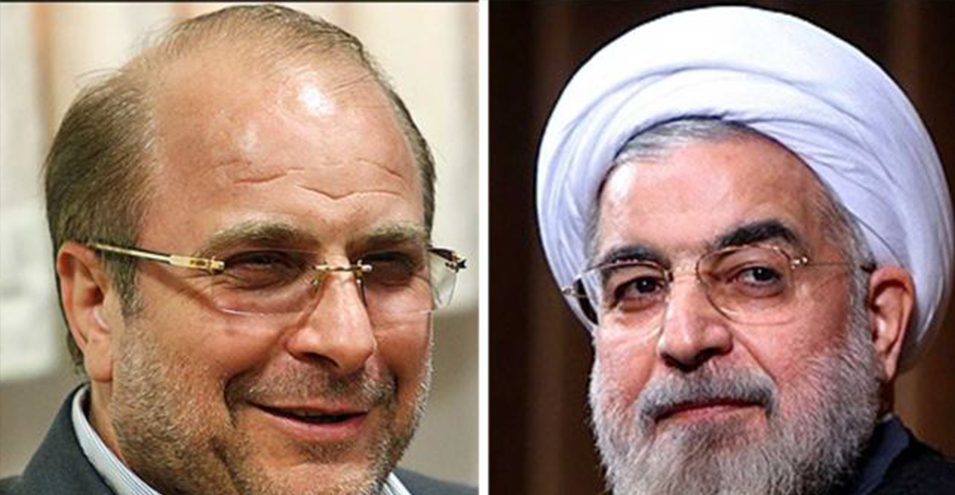
The “possible” withdrawal of Ali Larijani from entering the eleventh parliamentary elections has met with different reactions from various political factions in Iran. Political activists say “ineffective” factions have disappointed and disheartened the people as well.
Some view Ali Larijani’s reluctance—this conservative figure and current parliamentary speaker—to enter the eleventh parliamentary elections as a sign of disappointment among conservative-supporting factions in factional alliances. Others believe that this conservative figure’s absence from the parliamentary election scene indicates that reformists and conservatives should cede the political arena.
Let Politicians Come!
From the perspective of Hossein Mareshi, a technocrat and member of the Developers Coalition, the “clear message” of Ali Larijani’s withdrawal is that not only reformists, but conservatives too no longer see any place for political activity.
Mareshi wrote in the “Etemaad” newspaper, affiliated with the National Trust Party: “Today, if there is no comprehensive determination to issue a call to encourage and attract influential conservative and reformist figures capable of rebuilding citizens’ confidence to participate in elections, the historical opportunity of the parliamentary elections will be lost, and although the system may move toward revolutionary purity, its universality will be overshadowed.”
Mareshi did clarify what exactly he means by “historical opportunity” and “revolutionary purity” and what their manifestations are. Perhaps this member of the Developers Coalition means the emptying of parliamentary seats of individuals with inclinations toward reform and moderation who, in certain periods, were somewhat able to take the “middle ground” and invite people to participate in the relevant electoral junctures.
But another aspect of Hossein Mareshi’s remarks perhaps reflects concern about the parliament becoming less effective due to the entry of individuals who fall under the umbrella of various conservative currents. These individuals still want to apply “revolutionary purity” as was done in the first and second decades of the 1979 Revolution.
Just as Hossein Allahkaram and several of his colleagues have announced their readiness to register and stated that the Conservative Coordination Council Front has placed their names on its list.
“No One Pays Attention to Parliament’s Opinion”
Amidst these statements and their analyses, what stands out most is the “failure” of currents claiming “reform” from both reformist and conservative factions.
It is not only Ali Larijani who “for now” has no inclination to participate in the eleventh parliamentary elections. On the other side, Heshmatollah Falahatpisheh, member of the National Security and Foreign Policy Commission of Parliament, told “Borna,” a news agency close to conservatives, that he will not participate in the eleventh parliamentary elections.
This conservative parliamentarian outlined two reasons for his absence: first, the conduct of Parliament’s Presidium, which according to him has weakened the status of representatives, and second, the existence of structures parallel to Parliament that make “decisions” and have them implemented, such as in the case of gasoline prices.
Falahatpisheh said that in fundamental decision-making in the country “no one pays attention to Parliament’s opinion.” He referred to the issue of gasoline price increases, which occurred despite Parliament’s opposition.
Falahatpisheh, who served as head of the National Security and Foreign Policy Commission in the ninth parliament, also referred to Parliament’s “weakness” and said this weakness stems from structural conditions, and partly from the conditions of Parliament’s Presidium, which he believes has “unfortunately” contributed to this weakness.
“We Need a Senate”
Falahatpisheh, while noting that we witness a series of “conventions” in the administrative political system, added: “At the beginning of the Revolution, decisions were made that became taboo. This country needed a Senate or something like a Senate, and this is a fact. The country needs a second chamber.”
These very “conventions,” according to Falahatpisheh, have led to the formation of multiple councils such as the Expediency Discernment Council, the Summit of the Three Branches, the Supreme Council of the Cultural Revolution, the Supreme Council of National Security, and other parallel executive bodies—councils and institutions that, in Falahatpisheh’s view, not only implicitly weaken Parliament’s authority but have created sufficient problems.
Falahatpisheh did not elaborate further on these problems, but previously some parliamentarians and political experts have repeatedly claimed they intend to “serve the people” but Parliament’s hands are tied. A matter that Falahatpisheh referred to, saying: “During the three parliaments in which I served, the Presidium did not act contrary to Parliament’s dignity; in fact, they completely weakened Parliament’s dignity. In closed sessions, they put wide hats on the heads of parliamentarians and effectively excluded Parliament from fundamental decision-making in the country.”
Encouraging the Disillusioned Again to Participate in Elections?
“Parliament’s ineffectiveness and people’s disillusionment,” especially after recent protests in Iran, are two issues that Parvaneh Salehshouri, representative of Tehran in the tenth Parliament, addressed today, Tuesday, December 3, in a note for the “Etemaad” newspaper.
Salehshouri, by comparing the number of registered female candidates in the previous period and referring to the difficulties of introducing female candidates to the people, raised the issue of Parliament’s ineffectiveness and wrote that recent protests and related issues, alongside Parliament’s ineffectiveness, have “disheartened” the people.
She added that since the beginning of registration days for the eleventh parliamentary elections, women have registered claiming to be independent, or there are conservatives who have greater hope of entering Parliament. But in her view, for this group of people “Parliament’s ineffectiveness is not an issue at all.” Instead, their desired parliament is this very parliament (the tenth Parliament)—a parliament that receives “confidential and classified” reports from Parliament’s Research Center about the causes of recent price increases but cannot make decisions because decision-making centers are elsewhere.
Source: DW