Iran Facing America: Heroic Compromise or Belligerent Shift?
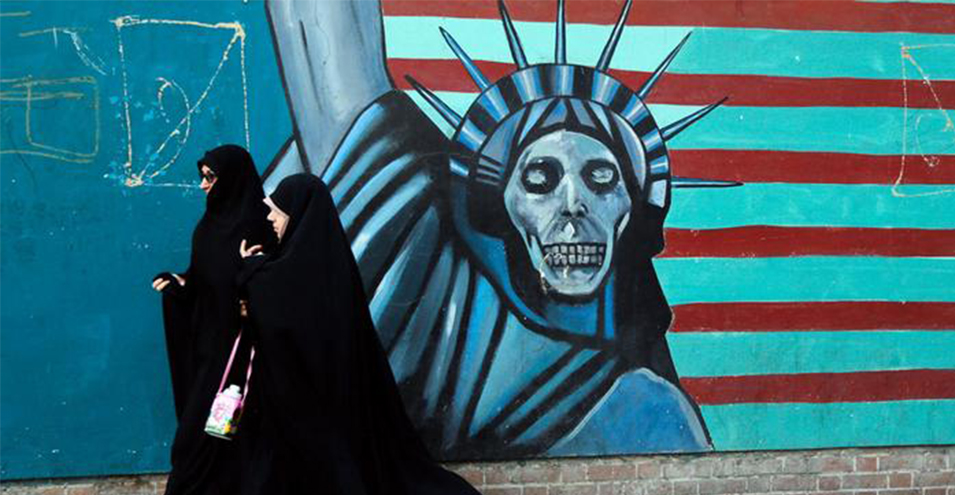
America is determined to significantly intensify its pressure on Iran. What conditions does Europe have for supporting Iran? How reliable and effective is the protective umbrella of Russia and China? Will the government demonstrate heroic compromise or a belligerent shift?
The news of John Bolton’s appointment as National Security Advisor to the White House sparked a wave of reactions in international media; at best, it is expected that America will increase its pressure on Iran to such an extent that even without withdrawing from the JCPOA, Iran’s economic relations with global markets become more limited and foreign investment opportunities in the country become further blocked.
Many suggest the possibility of America withdrawing from the JCPOA, and some believe that with the new arrangement in the White House, the military option has also become more serious.
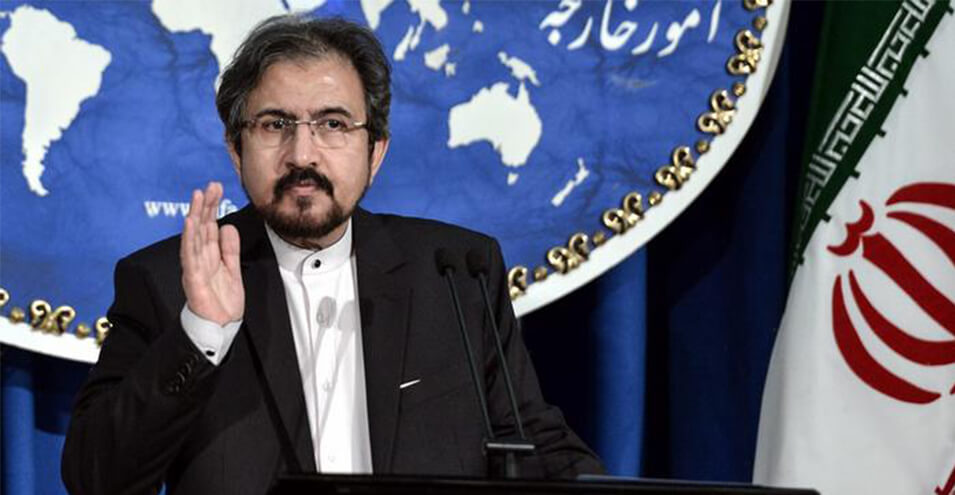
Iranian officials have yet to show significant reaction to the concentration of pieces favoring maximum pressure policy on the Islamic Republic in Donald Trump’s cabinet. Among the few reactions was an interview by Hossein Naghavi Hosseini with the spokesman of the parliament’s National Security and Foreign Policy Commission, who on Sunday (March 26) said America’s ultimate goal is “the overthrow of the Islamic Republic of Iran.” He recommended that the Islamic Republic adopt a “more revolutionary” policy.
Mojtaba Zolnoor, another member of the parliament’s National Security and Foreign Policy Commission, also said Iran will take reciprocal action against America.
Alauddin Boroujerdi, chairman of the National Security and Foreign Policy Commission, told the Iranian Student News Agency (ISNA) about strengthening relations with China and Russia. And Ishaq Jahangiri, First Vice President, viewing Trump’s Nowruz message with concern, found no place for the usual harsh rhetoric of Islamic government leaders and said: “The US President is saying dangerous things about Iran, and we must carefully and wisely deal with regional and global issues, and we must be able to navigate through these issues with foresight and prudence.”
Can Iran rely on European support?
Europe has been working for some time to preserve the JCPOA, even at the cost of making concessions to America, including raising the possibility of imposing new sanctions on Iran’s missile program. The appointment of John Bolton alongside America’s new Secretary of State has increased this country’s concerns about the JCPOA. Or as Boris Johnson, Britain’s Foreign Secretary, says: “Europe might keep this agreement alive even with America’s withdrawal from the JCPOA, however, the agreement will lose much of its value and the process will become more difficult.”
For Europeans, the failure of the JCPOA is a harsh blow. They not only have their eyes on Iran’s attractive market, but also view any new war or tension in the Middle East as a heavy challenge for themselves. European Union foreign ministers have made great efforts so far to convince Donald Trump to stay in the JCPOA. Whether their efforts will have results will become clear on April 16.
But Europe has been thinking for some time about an effective solution to cushion the impact of America’s possible withdrawal from the JCPOA. The International Crisis Group think tank published a report last winter in which it referred to Europe’s efforts to create a protective umbrella against America’s secondary sanctions.
On Monday (March 26), Federica Mogherini, the European Union’s foreign policy chief, emphasized creating this protective umbrella to preserve the interests of European companies at a press conference. Michael Tödtke, a member of the board of directors of the German-Iran Chamber of Commerce, also told Deutsche Welle Farsi that Europe is serious about creating this protective umbrella. But what difficulties does this step face?
Fridoun Khavand, an economics expert from Paris, points to two important issues regarding Europe’s protective umbrella in conversation with Deutsche Welle. He says: “Even if Ms. Mogherini wanted to, the policies of different European Union countries towards Iran are very different. Among them, Eastern European countries are much closer to America’s policy than to Ms. Mogherini’s intended policy. For this reason, implementing this policy in the European Union is not a simple matter.
Beyond that, even if this protective umbrella is created, still no government can encourage or force large European banks and private companies to engage in financial transactions or investment in Iran. These companies still fear American sanctions, and ultimately it is only state banks that conduct transactions with Iran.”
European support for Iran is not without “cost”
European support for Tehran will certainly not be without “cost.” In a meeting held by the foreign ministers of Germany, Britain and France along with Federica Mogherini in Brussels last winter, they clearly stated their conditions for supporting Iran and said: “Iran must abandon its destructive policy in the region. It must stop its missile program and end human rights violations in the country.”
The International Crisis Group report also pointed to other conditions of this support; that Europe, despite great interest in investing in Iran’s economy, especially in the energy sector and long-term partnership in it, expects Iran in turn to take steps; “Tehran must solve its internal economic problems, especially regarding banking standards and creating a more transparent business environment and fighting corruption. This is important not only for attracting foreign technology and capital, but also for addressing public dissatisfaction.”
Greater reliance on China and Russia
The Islamic Republic has relied on China and Russia for four decades. Now, the support of these two powers against America in the political arena may be a success for Iran. But economically? Now that America has entered a trade war with China, will this country make a difference in its monetary and economic policies towards Iran?
Fridoun Khavand says: “China has only used Iran all these years as a market for its goods, and apart from exporting goods, both formally and through smuggling, has played no other role in Iran’s economy. In contrast, in tightening the banking system in Iran, it has been no less strict than Western countries, and has even been stricter. Moreover, for China, the American market is far more important than Iran, and this country will never be willing to lose economic benefits for Iran.”
He adds: “Russia, despite large companies in gas and energy, has never done significant work in Iran and probably will not do so in the future either.” This expert believes that if Russia does take a step in this direction, it would only be to gain concessions from America with Iran as a card, which also does not seem very likely in the current situation.
Will America force Khamenei into another “heroic compromise”?
The hot debate in opposition circles and policy experts in recent days has centered on what reaction Iran will show to America’s maximum pressure policy. Groups like the Mujahedin-e Khalq Organization, which believe they have found a pro-Rajavi supporter in John Bolton in the White House, are delighted and with the assumption that the end is near, are counting down days for the overthrow of the Islamic Republic “before its fortieth anniversary.”
Social media is filled with opinions showing completely different feelings among Iran’s opposition to the arrival of war-mongering figures in the White House.
At the same time, some believe that increasing American hostility towards the Islamic Republic will make Ayatollah Khamenei more steadfast and combative in foreign policy and in dealing with domestic discontent.
But some also believe that the Islamic Republic government neither has the economic capacity of previous years to withstand greater political and economic pressures nor enjoys the support of a significant portion of the people domestically. These two important factors could push the Islamic Republic’s leader towards a “pragmatic” approach and force him into another “heroic compromise.”
Source: DW