Iran is Hell for Religious Minorities; Ranked 8th in the World for Persecuting Christians
As Hassan Rouhani’s second term as president comes to an end, this interview examines his eight-year record regarding the government’s treatment of religious minorities, particularly Christians. For this purpose, we have spoken with Kiaarash Alizadeh, a human rights defender and spokesperson for Article 18 Organization, which works to defend the right to freedom of religion and belief. Mr. Alizadeh also works as a journalist and producer in media activities and has experience working in radio, television, and theater. He has lived in Europe for years and is now a resident of Canada, where he also works defending the rights of refugees. The full interview follows:
Hassan Rouhani has repeatedly presented popular slogans on the eve of elections. Regarding religious minorities, what have these slogans been? How consistent have these slogans been with his actual performance?
Hassan Rouhani promised in a ten-point statement before the 2013 elections that he would address the demands of religious and ethnic minorities.
In the third article of his ten-point statement dated June 30, 2013, Rouhani stated: “Our beloved country, Iran, is a fragrant garden of diverse regions, languages, religions and sects. Now that the decisive presidential election for the eleventh term has provided this historic opportunity; I am committed and determined that upon receiving your vote of confidence and the establishment of the government of prudence and hope, by implementing the following ten clauses, I will transform part of the chapter on the rights of the people in the Constitution—which has been and remains one of the most important objectives of the sacred system of the Islamic Republic—from slogan to action so that we may witness a free and prosperous Iran with the participation of all Iranians.”
For the first time after the revolution, Hassan Rouhani, who chose the name “prudence and hope” for his government, created a structure called the Special Advisor to the President on the Affairs of Peoples and Religious and Sectarian Minorities within his government and appointed former Intelligence Minister Ali Younesi to this post. However, after eight years have passed, unfortunately no measures were taken to resolve the problems of these minorities and hopes were dashed. These promises remained merely election slogans and the suppression of religious and ethnic minorities intensified further. Regarding ethnic minorities, I should note that the statistics for arrests and executions of ethnic minorities have, regrettably, increased significantly compared to previous years.
Since the focus of our conversation is on religious minorities, it is better that we concentrate on this section.
Unfortunately, religious minorities in Iran continue to be suppressed and continue to face organized, structural harassment and religious discrimination. One of the Rouhani government’s promises regarding religious minorities, which is also mentioned in the eighth clause of his ten-point statement, is “eliminating unjust discrimination in all its dimensions and forms,” but this promise remained merely an election slogan.
On December 6, 2016, coinciding with the final months of his first presidential term, Hassan Rouhani fulfilled one of his election promises by signing and issuing the Citizens’ Rights Charter, the drafting of which had taken three years. From the beginning, many believed that this charter lacked enforcement mechanisms, and over time this proved to be the case—this charter did nothing to resolve the problems of religious minorities. For example, Article 10 of this charter states: “Insulting, demeaning or inciting hatred against ethnicities and followers of religions, sects and various social and political groups is forbidden.” Yet we have repeatedly heard officials of the system use terms such as “Zionist Christianity,” “the deviant Bahai sect,” “spy,” and many other instances of hate speech, and many religious minorities have been arrested, insulted and demeaned solely because of their beliefs. Despite all these promises from the government of prudence and hope, many legal discriminations still exist in Iran’s civil law that religious minorities face, and no measures have been taken to address them.
Could you point to several of these legal discriminations?
Certainly, I will point to several cases in this regard:
1. Employment barriers: Religious minorities are not allowed to hold government positions such as judge, ambassador, minister, president, and many other occupations, and these discriminatory laws restrict these positions exclusively to Muslims. Although Sunnis are also deprived of many of these positions.
To become a teacher, regardless of qualifications, special conditions have been set by the Ministry of Education that make hiring religious minorities impossible. Among these conditions are belief in Islam and the guardianship of the jurist. Employment forms also ask about individuals’ religion and sect.
2. Barriers to marriage: Based on Article 1059 of the Civil Code of the Islamic Republic of Iran, a Muslim man can marry a non-Muslim woman. But the reverse is not allowed. Marriage between a non-Muslim man and a Muslim woman is not possible. Marriages of Christian converts, Bahais, and other unofficial religions are not legally recognized unless performed according to Islamic law.
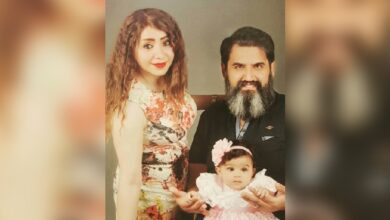
3. Discrimination in child custody: Religious minorities are not allowed to adopt Muslim children. A recent case in this regard is the tragic story of Lydia, a two-year-old child. According to a ruling issued by a Bushehr judge last year, simply because this child was born to Muslim parents, a Christian convert couple, Maryam Fallahi and Sam Khosravi, cannot have custody of the child and must hand her over to an orphanage after two years. The judge wrote in his ruling that there is a “severe emotional relationship” between the child and the Christian couple, Maryam Fallahi and Sam Khosravi, and that returning this sick child to the orphanage would have an “uncertain future” ahead for Lydia, and the likelihood of another family accepting Lydia as a foster child because of her illness is “zero.” Last year in March, more than 120 bar association members and civil rights and child welfare activists sent an open letter to Ebrahim Raisi, the head of the judiciary, asking for the reversal of the Bushehr court ruling that stripped guardianship rights from the Christian convert couple. However, the judiciary has not yet responded to this request.
4. Non-Muslims are not hired in Iran’s armed forces, yet non-Muslim men must serve in military service. Many religious minorities were killed in wars and sacrificed their lives for their country, Iran, yet this discriminatory law remains in effect.
5. In Article 310 of the Islamic Penal Code regarding the punishment of a murderer, if the victim is Muslim, execution is considered, but in the same law if the victim is non-Muslim, the punishment for the murderer is diyeh (blood money). I am opposed to execution and retaliation, but this very article shows the difference in the right to life between Muslims and religious minorities in Iran.
6. Islamic hijab is mandatory for all Iranian women, including non-Muslims.
7. Another legal provision that is very strange and demonstrates the Iranian government’s view of religious minorities is Article 881 bis of the Civil Code. According to this article, “an infidel does not inherit from a Muslim, and if among the heirs of a deceased infidel there is a Muslim, the heirs of the infidel do not inherit, even if they are superior in degree to the Muslim.” Apart from the fact that this legal provision is highly discriminatory and encourages religious minorities to convert to Islam through financial incentives, it shows that even the People of the Book—Christians, Jews, and Zoroastrians—are considered infidels. Kourosh Niknam, a Zoroastrian mobad and former representative of Iranians of Zoroastrian faith in the Islamic Consultative Assembly, said in an interview with Euronews: “I prepared a bill in parliament and said to write a note under this article that at least the recognized religions in the Constitution are not infidels. But they didn’t write it. This means they consider us infidels and it’s true that they don’t do anything to our wives and children, but we are not first-class citizens. We’re not even second or third-class citizens. We are considered infidels.”
8. Article 23 of the Iranian Constitution states that examination of beliefs is forbidden and no one can be persecuted merely for holding a particular belief. However, unfortunately this article is not observed.
In democratic countries, even asking about others’ religious beliefs can be considered a form of belief examination and interference in private affairs, but in Iran, members of society are divided into first, second, and third-class citizens based on religious and sectarian identity. Twelver Shia Muslims, provided they move in line with the Iranian government’s religious interpretation, do not protest, and possess the characteristics the government seeks, can be considered first-class citizens. According to Article 13 of the Constitution, Jews, Zoroastrians, and Christians—though here the reference is specifically to Armenian and Assyrian ethnic Christians—are the only officially recognized religious minorities in Iran. Thus, given the existing discriminations that I have mentioned, at best they are considered second-class citizens, and unofficial religious minorities such as Bahais, Christian converts, and other faiths are third-class citizens and beyond, which is why they are under considerable pressure. Of course, I should mention that if officially recognized Christians help and support Christian converts, they too face legal persecution and effectively become third-class citizens like Christian converts. As examples in this regard, I can point to Iranian Armenian Christian Suda Aghaser and Iranian-Assyrian Christian couple Victor Bet Tamraz and Shmiram Issavi and their son Ramiel Bet Tamraz, who were imprisoned solely for this reason and endured considerable suffering.
In the past eight years, what types of harassment and pressures has the Christian community in Iran experienced?
Offically recognized Christians, namely Armenians and Assyrians, enjoy relative freedom. However, as I mentioned, they too suffer from extensive restrictions and discrimination. Additionally, Armenians and Assyrians do not have the right to conduct church services in Persian and must worship in their own language.
The growing community of Christian converts is not allowed to participate in official churches. They are forced to attend home churches at the risk of arrest and imprisonment. Many Christian converts do not publicly declare their faith for fear of religious persecution. In recent years, many Iranian Christians have faced prison sentences ranging from 1 to 15 years on false charges of action against national security. These political charges have been brought to prevent international public protest against accusations that have religious foundations, such as participating in a peaceful worship gathering in a private residence or apostasy.
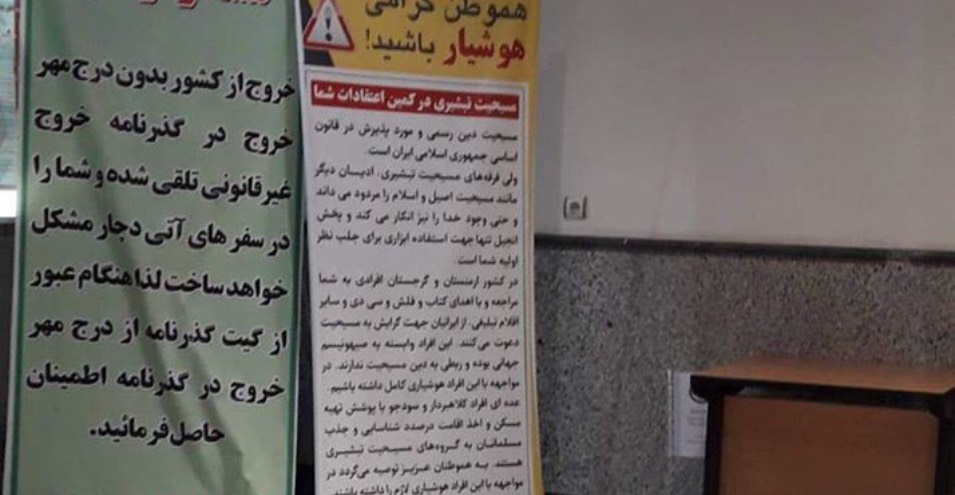
Over the past decade, since Mahmoud Ahmadinejad’s presidency, almost all official Persian-speaking churches have been forced to close their Persian language sessions or shut down entirely. The publication of the Bible and Christian books in Persian has been banned. Those who possess such books or Christian educational materials, especially if in sufficient quantity to be distributed to interested parties, should expect severe consequences and prison sentences. Of course, I should mention that the Iranian government has published only a limited number of Bibles solely for research purposes, which are available only to specific individuals.
In general, among the sufferings of Iranian Christians, particularly Christian converts, we can mention imprisonment, exile, denial of education, job termination, raids on home churches, flogging, confiscation of personal property, and even the deprivation of the right to have an adopted child. Iranian Christians have continued to witness the conversion, destruction, and confiscation of their religious centers. Currently, at least 19 Iranian Christian citizens are imprisoned or in exile, and many more await trial and investigation of their charges.
Article 18 Organization publishes a detailed report annually on the situation of Christians in Iran. To clarify the condition of the Christian community, I will refer to some statistics related to the year 2020.
• Last year, 115 Christians were arrested in Iran.
• Of this number, 38 were detained and imprisoned.
• Christians were forced to pay one million dollars in bail.
• 44 Christians were sentenced to a total of over 150 years in prison and 5 years in exile.
• Two Christian converts also endured 160 lashes.
Each of these numbers concerns the life and world of one person and their family who have suffered greatly simply for holding a different belief. We must not allow each of them to be reduced to just a number.
Christian convert Saheb Fadaei is one such example. His profession was building painting, and he plays guitar well.
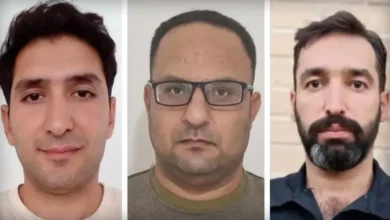
In May 2016, Saheb Fadaei, along with Yousef Nadarkhani and Yousef’s wife, Mohammad Reza Omidi, and Mohammad Ali Mosibzadeh, were arrested by security forces during a gathering at a private residence in Rasht.
This Christian convert was sentenced to 80 lashes in one of his cases in a Rasht court, and his other case, which was brought against him on security charges, was sent to Tehran, to Branch 26 of the Tehran Revolutionary Court. Judge Ahmadzadeh, head of Branch 26 of the Islamic Revolutionary Court, in July 2017 sentenced Saheb Fadaei, Yousef Nadarkhani, Mohammad Reza Omidi, and Mohammad Ali Mosibzadeh to 10 years imprisonment each on charges of “establishing a home church” and “promoting” what was called “Zionist Christianity.”
Saheb Fadaei and Mohammad Reza (Johann) Omidi, last fall, for participating in the Eucharist worship ceremony, or the Lord’s Supper of Christians, and on the charge of “consuming alcohol” or drinking alcoholic beverages, each received 80 lashes. In their religious ceremony called the “Eucharist” or Lord’s Supper, known among Iranians, Christians consume bread and wine or grape juice, which is a remembrance of Christ’s Last Supper with his apostles or disciples. The Islamic Republic government does not effectively recognize Christian converts as Christians, and Christian converts face charges of alcohol consumption when performing this religious rite, which is derived from Islamic jurisprudential laws specific to Muslims. In home churches, Christians worship in a completely peaceful manner based on their beliefs. Equality before the law is an undeniable principle. The Bible of Christian converts is the same book that Armenian and Assyrian Christians read in their churches in their own language. So no criminal act takes place in home churches. From a legal perspective, how is it that home churches are a crime while home mosques and prayer gatherings of Shiite Muslims are permitted? The right to freedom of religion and belief should be for all citizens, regardless of their beliefs.
Meanwhile, last year, the appellate court reduced the sentences of Christian converts Yousef Nadarkhani and Saheb Fadaei from ten years to six years, and that of Mohammad Reza (Johann) Omidi from ten years to two years in prison.
Another example is the Christian convert couple Sara Ahmadi and Hamayoun Zhavi, who have been sentenced to eight and two years in prison respectively for peaceful ideological activities. Hamayoun Zhavi suffers severely from Parkinson’s disease, and his wife cares for him.
Church and freedom of religion and belief are the right of all Christians, whether converts or cradle Christians. Church closures, confiscation of church property, arrest of Christians, and prevention of their attendance at churches and threats against them all constitute a clear violation of Article 18 of the Universal Declaration of Human Rights regarding freedom of religion and belief. This is while Iran is also a signatory to this Universal Declaration of Human Rights.
These actions have faced severe criticism from international bodies. For example, the Third Committee of the UN General Assembly last fall issued a resolution condemning “severe violations” of human rights in Iran, including violations of women’s rights, torture of prisoners, and violations of the rights of religious and sectarian minorities, and called on the Islamic Republic government to end impunity for those ordering and committing crimes against religious and sectarian minorities.
In the annual World Watch List on Christian persecution published by the international organization Open Doors, Iran ranks 8th in the world in terms of persecution and abuse of Christians. Last year Iran ranked 9th in the world, and throughout Rouhani’s government tenure, Iran’s ranking never exceeded 10th, and we have not witnessed any improvement in this regard. This is despite the fact that the difference in scores between Iran and countries ranked 4th and beyond on this list is very small.
To what extent is the nature and severity of pressure on the Christian community in Iran influenced by the president’s decisions? Can one hope for a reduction in persecution of Christians with a change of president, or is there a specific and systematic program against the aforementioned community?
As I mentioned earlier, there are many legal discriminations in Iran’s laws that are in serious conflict with international human rights standards. Unfortunately, the Iranian government systematically, with hate speech and baseless security charges, normalizes the violation of the rights of religious minorities, especially unofficial religions such as Bahais and Christian converts, and this reflects the broader policies of the system. In certain periods, the suppression of religious minorities has been more intense, but in fact, a consistent policy has been followed since the beginning of the revolution. Religious minorities are targeted for harassment, pressure, and prosecution by the Iranian government solely for practicing their own beliefs and faith. Peaceful activities such as celebrating Christmas privately and establishing home churches can result in severe sentences. However, the Iranian judiciary refers to these activities, which should be fundamental rights for every citizen, as measures against national security, illegal church activities, and even the incomprehensible term “Zionist Christianity,” and Iranian presidents have not made much effort to reduce the suffering of religious minorities and prevent these pressures. So in answer to your question, I must say that in Iran, positive changes in human rights usually progress very slowly, and I doubt we will see fundamental changes with a change of president. But people live with hope and we must try and persevere. Our goal as human rights defenders is raising awareness, advocacy, and reducing human suffering, and we will continue this work to the best of our ability.
To what extent is the presidency responsible for human rights violations during its tenure? Can it be claimed that it was not the main decision-maker and could evade accountability?
Although in Iran not all powers rest with the president and parallel security organizations operate, the president and system officials, especially those ordering and implementing [violations], as well as their agents and lobbies both inside and outside the country, as part of this system, should all be accountable for human rights violations in Iran. Mohammad Javad Zarif, Foreign Minister of the Rouhani government, had claimed that religious minorities in Iran are free and had said: “We do not imprison anyone in Iran because of their beliefs.” But on the other hand, about two years ago, Mahmoud Alavi, Intelligence Minister of the Rouhani government, for the first time lifted the veil on this ministry’s actions and cooperation with theological seminaries to counter the spread of Christianity in the country. Also, Mahmoud Alavi in his remarks acknowledged that “people develop a tendency toward Christianity who are ordinary members of society, for example people whose job was sandwich selling and such, and became Christians.”
These statements by the Intelligence Minister are completely contradictory to the security charges that Revolutionary Courts use against Christian converts, introducing them as trained agents and spies of Western countries. Given that countless violations of the rights of religious minorities continued during the Rouhani period and were coordinated and implemented by his ministries, there is no doubt that the president, as the head of government, is completely responsible for the blatant violations of human rights and must be held accountable.
The Iranian government must officially recognize all religious minorities, including unofficial religions and Persian-speaking Christians, as complete citizens before the law and unconditionally release all prisoners of conscience so that they too can enjoy the most basic human rights. Regardless of ethnicity and belief, Iran belongs to all Iranians. In hope of a day when there are no first and second-class citizens in Iran. As Shamloo said: “I await that day, even a day when I will no longer be.”
Thank you for making time available for this conversation.
Source: Hrana