Iran Writers Association: Death Sentences for Protesters Aimed at ‘Creating Terror and Fear in Society’
The Iran Writers Association, in response to death sentences issued for three detainees from the November protests, released a statement characterizing such sentences as the government’s need for “suppressing current protests and preventing potential protests.”
In a statement released on Monday, June 30, the Iran Writers Association responded to death sentences issued for Amirhossein Moradi, Saeed Tamjidi, and Mohammad Rajabi, detainees from the November 2019 protests, as well as charges of “spreading corruption on earth” against eight other protest participants. The statement noted that “both the shooting at November protesters and the killing of hundreds of them (in reports exceeding one thousand) and the issuance of death sentences for some arrested protesters stem from a single governmental need: suppressing current protests and preventing potential protests.”
Referencing the fact that “even some government officials have predicted the emergence of public protests given the conditions prevailing in society,” the statement continued: “This parade of sentences and this judicial march is intended to prevent such predictions from materializing by spreading the melody of fear throughout society.”
The statement further noted that death sentences are “issued and carried out for the purpose of creating terror and fear in society” to discourage people from protesting. The Iran Writers Association emphasized “the right to freedom of expression” in this statement, considered the issuance of these judicial sentences as “the destruction of the human right to life,” and declared the removal of “the sinister shadow of death sentences from society” as an important step in defending freedom of expression.
Following news reports confirming the death sentences for three November protesters, the U.S. State Department spokesperson wrote on Thursday, June 25, in a tweet that the United States strongly condemns Iran’s decision to sentence Amirhossein Moradi, Saeed Tamjidi, and Mohammad Rajabi to death.
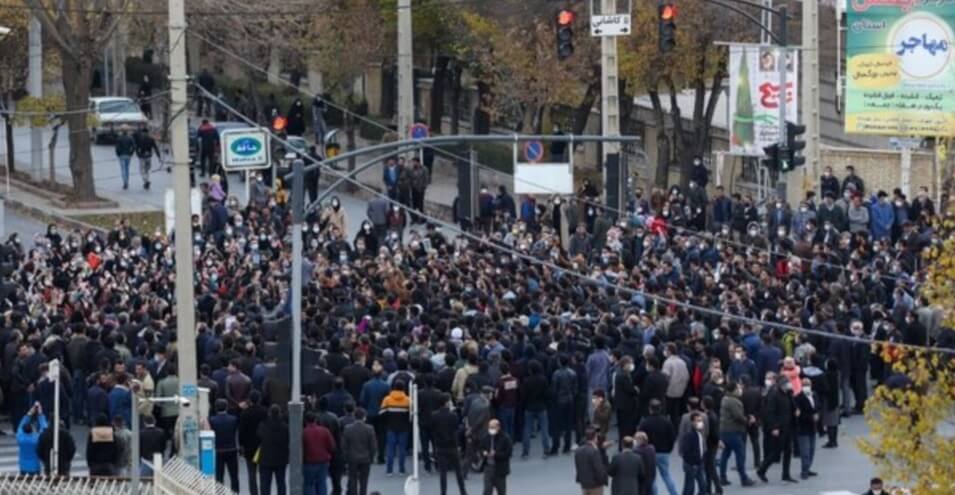
Public protests began on Friday, November 15, following the sudden announcement of gasoline price increases, in various Iranian cities including Mashhad, Khuzestan, Ahvaz, Khorramshahr, and Behbahan, then spread to all regions of the country, with the scope of protest extending beyond the fuel price hike.
Following these protests, Reuters reported the death toll in Iran’s protests as 1,500 people and wrote, citing three sources close to Iran’s Supreme Leader, that Khamenei had ordered government and security officials to do “whatever necessary” to stop the protests.
Among organizations, Amnesty International reported the death toll from these protests as 304 people and stated that according to available evidence, at least 23 children were killed by security forces during the nationwide November 2019 protests.
The United States says the Islamic Republic spends its national wealth on supporting terrorist groups and destabilizing the Middle East rather than serving the Iranian people. The United States has repeatedly condemned systemic financial corruption and the plundering of Iran’s natural resources by regime affiliates and has identified them as major factors in Iran’s economic and financial problems.
Source: Voice of America