UN Special Rapporteurs: Confiscation of Historic “St. Peter” Church in Tehran Violates Human Rights
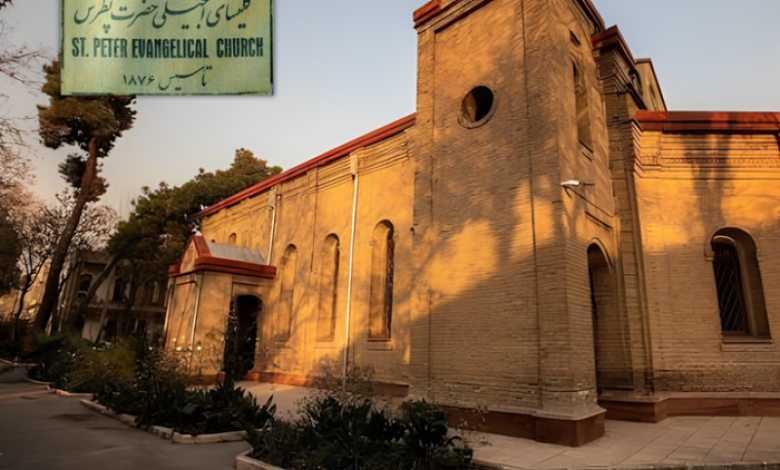
United Nations special rapporteurs have condemned the confiscation of the historic St. Peter Evangelical Church complex in Tehran and the forced eviction of its residents, describing the action as incompatible with international human rights law and warning that continuation of this process threatens Iran’s Christian minorities with homelessness and broader restrictions on freedom of religion and belief.
UN special rapporteurs on freedom of religion or belief and the situation of human rights in Iran have expressed serious concern over the confiscation of the St. Peter Evangelical Church complex on Sittir Street in Tehran and the forced eviction of its residents, calling for an end to this process.
Nazila Ghanea, UN Special Rapporteur on freedom of religion or belief, and Mai Sato, UN Special Rapporteur on the situation of human rights in Iran, stated in a joint statement that the forced eviction of families residing in this complex is incompatible with international human rights standards and could expose members of recognized Armenian and Assyrian minority communities to homelessness. They emphasized: “Forced evictions are incompatible with international human rights law and expose members of recognized religious and ethnic minorities to the risk of homelessness.”
According to the statement, the St. Peter Church complex was not merely a religious building, but served for decades as a home, school, place of worship, and center for the social activities of Iran’s Protestant Christian community. The complex also housed the office of the Council of Evangelical Churches in Iran and the Bible Society.
UN experts did not view this case in isolation from other restrictions imposed on Iran’s Christians and described it as part of a process that has, over recent years, led to the curtailment of Protestant church activities, particularly those conducted in the Persian language. According to them, approximately 50 Protestant churches in Iran previously held worship services in Persian, but now no Protestant church is permitted to conduct formal religious services in Persian, and many of the remaining churches operate only in Armenian or Assyrian languages.
The statement also refers to the closure of three Anglican churches in Tehran, Isfahan, and Shiraz, which have been unable to resume operations since the onset of the COVID-19 pandemic. In the view of the rapporteurs, this demonstrates the continuation of restrictions imposed on Christians’ freedom of worship in Iran.
The St. Peter Church case is rooted in a judgment issued by the Revolutionary Court in 1998, based on which ownership of this historic complex was transferred to the “Execution Headquarters of the Imam’s Decree.” Although the Council of Evangelical Churches in Iran learned of this ruling only years after its issuance, according to human rights sources, it was unable to pursue effective legal remedies to reclaim the property.
Concerns about the future of this historic complex have increased in recent weeks. Reports have been published suggesting the possibility of demolishing the buildings of this complex following the complete evacuation of residents—a matter that, in addition to concerns regarding freedom of religion, has raised questions about the preservation of Iran’s Protestant heritage.