Iranians at a Crossroads: Stay or Leave; Fading Hope, Migration on the Horizon
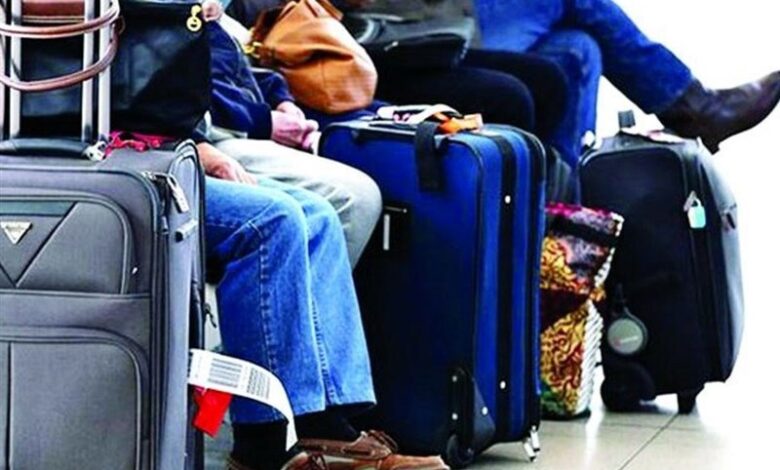
Iranians are trapped at a crossroads between staying and leaving. Hope for change has given way to concerns about the future and a growing inclination toward migration.
Following recent military developments and increasing regional tensions, many international analysts expected Iran to face a massive wave of migration. This prediction was based on a narrative depicting a society tired of repression, grief-stricken and angry, ready to leave the country. However, contrary to this expectation, what actually happened was the persistence of a large portion of the population within the country; a decision that stemmed more than anything else from hope for change in the political and social structure.
At that juncture, signs of collective anticipation for transformation were evident. Many Iranians, despite difficult conditions, preferred to remain in the country and perhaps play a role in a historical process. Even among Iranians abroad, a kind of readiness for return and participation in rebuilding Iran’s future was observable.
However, this hope has gradually faded. Now, with increasing likelihood of the current situation becoming entrenched and speculation about political agreements, signs of change in people’s social behavior are evident. Although a massive migration wave has not yet begun, the inclination to leave the country is noticeably increasing.
Today, many Iranians are exploring migration options through various means. From searching online spaces and social media groups to consulting with acquaintances abroad, all indicate the formation of a gradual yet significant process. This behavioral change, rather than stemming from a sudden crisis, is rooted in deep and long-term concerns about the future.
At the international level, assessments also diverged from field realities. Some European officials had warned of a “massive migration wave,” but official data did not confirm such an increase. Even reports from European institutions showed that the number of Iranian asylum requests had not changed significantly.
This is despite global experience showing that even limited instability can lead to large-scale population displacement. Iran, with its large population, could become one of the world’s primary migration hubs should it enter a deeper crisis.
A historical look at Iranian migration also reveals that this phenomenon has always been intertwined with political and social developments. From the early years following the revolution to various periods of popular protests, whenever hope for reform diminished, waves of migration formed. This process has intensified in recent decades and has been particularly notable among the younger generation and specialized workforce.
According to some research, the inclination toward migration among Iranians is very widespread, with only a small portion of society completely rejecting this option. Reports also indicate that the number of Iranian migrants has increased significantly in recent decades.
Meanwhile, individual narratives provide a more tangible picture of reality. Families worried about their children’s future, young people seeking better opportunities, and individuals wavering between staying and leaving are all part of this complex story.
One such narrative comes from a woman living in Europe who speaks of returning to Iran if real change occurs, yet simultaneously plans for her family members to leave if current conditions persist. She says: “I constantly read messages that the sister of one of the martyrs posts on X social media. I put myself in her place and think that with the continuation of this government, our children’s lives are in serious danger and we must save them.”
In another example, a father in Tehran, worried about his daughters’ future, says: “I’m willing to sell the carpet under my feet to get these two daughters out of Iran. There’s neither a future nor security here.”
Furthermore, reports have been published about the departure of specialized personnel, particularly in technology and new business sectors. Infrastructure limitations such as internet disruptions have also fueled this process, prompting many economic activists to consider migration.
Overall, although predictions of an immediate migration wave did not materialize, evidence suggests a gradual shift is occurring. The hope that once motivated people to stay has now given way to uncertainty. In such circumstances, entrenching the current situation will not only fail to prevent migration but may become one of the primary factors in creating an unprecedented large-scale wave of Iranian exodus; a wave that may be unparalleled in Iran’s contemporary history.