Iranians’ Income Has Declined by One-Third Over the Past Eight Years
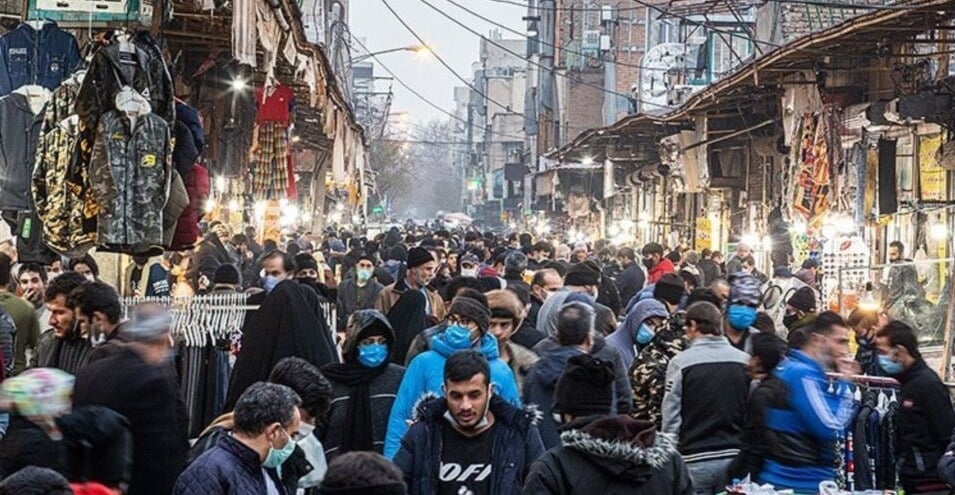
A group of economic experts announced at a conference held by the “Institute for Research, Planning and Management” on Thursday, December 11, that Iranians’ income has declined by one-third over the past eight years.
Mehran Behnia, head of studies and planning at Khwarizmi Investment Company, stated at the session titled “Coronavirus-Induced Stagflation in Iran” that rural residents’ income has returned to 1989 levels and urban residents’ income to 2001 levels, with Iranians’ per capita income declining by 34 percent between 2011 and 2019.
According to him, Iran has experienced economic growth of less than negative five percent and inflation rates exceeding 30 percent over the past three years, which constitutes “the deepest and longest inflationary recession in the country’s economic history.”
Economic expert Mousa Shahbazi-Ghiathi also stated at the conference that the country’s per capita income declined by 34 percent from 2011 to 2019: “In fact, despite the increase in nominal household income, the purchasing power of each Iranian has declined by approximately one-third compared to 2011. If economic growth of eight percent materializes from 2020 onward, it will take at least six years to return to the per capita income level of 2011.”
The dollar’s value in Iran’s free market was around 1,200 tomans in 2011 but has now risen above 25,000 tomans.
Furthermore, based on International Monetary Fund statistics, Iran’s economic growth was negative 5.4 percent in 2018, negative 6.5 percent in 2019, and is projected to be negative five percent in the current solar year.
Behnia stated that with the coronavirus outbreak, approximately 1.5 million jobs were lost in spring 2020 and 1.2 million in summer 2020.
According to him, nearly half of the jobs created over the past five years were lost over two consecutive seasons.
A report from the Parliament Research Center in December also shows that the unemployment rate in the country has increased to 24 percent, which is 2.5 times the unemployment rate announced by the government.
MohammadHadi Mahdavian, an Iranian economic expert, also stated at the conference that beyond sanctions and coronavirus, Iran’s economy faces mismanagement in macroeconomic policy domains.
He pointed to the government budget’s dependence on oil revenues and stated that with rising oil prices and improvement in the global economic cycle, the government budget expands, but it does not contract with global recession cycles and falling oil prices, and the effect is reflected in budget deficits and subsequently in inflation.
His remarks are evident in the budgets of 2018-2021; as oil revenues declined, the government budget not only did not decrease but actually increased significantly.
For example, next year’s government budget increased by 47 percent compared to the current year, while according to the Parliament Research Center’s assessment, one-third of the 2018 and 2019 budgets, as well as the first eight months of the current solar year, have been financed through borrowing.
The government has also estimated next year’s oil exports significantly higher than actual exports, and the research center states that it is likely one-third of the budget, equivalent to 320 trillion tomans, will not materialize.
The government has projected daily oil exports of 2.3 million barrels for next year, while Iran’s actual oil exports under current conditions are around 300,000 barrels.
Source: Radio Farda