Iranians Inside and Outside the Country Gather on Second Anniversary of Mahsa Amini’s Death
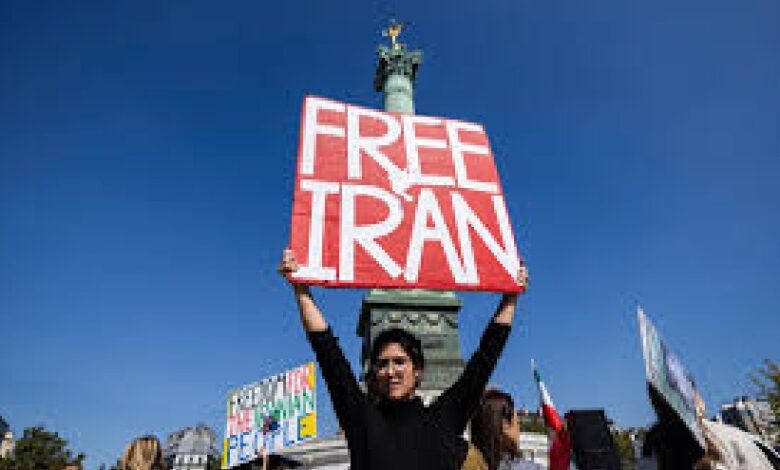
Iranians inside the country and Iranians living abroad gathered on the second anniversary of the death of “Mahsa Amini.”
As two years have passed since the state killing of Mahsa Amini (Zhina), according to reports released, yesterday, Sunday, September 25, marking the second anniversary of “Mahsa Amini’s” death, people gathered in various locations inside and outside the country. The Amini family was threatened that if they left their home to visit Mahsa’s grave, they would be arrested.
Security forces closed the routes leading to “Aichi” cemetery where Mahsa is buried. In addition to people’s gatherings, merchants and business owners in the cities of Piranshahr, Oshnavieh, Dehgolan, Kamyaran, Kermanshah, Mahabad, Sanandaj, Saghez, Divandarreh, and Bukan closed their shops and went on strike.
Although many of those arrested during the nationwide protests are currently serving time in prisons, they stood in solidarity with the people who gathered in support of the “Woman, Life, Freedom” movement. 34 female political prisoners held in the women’s ward of Evin Prison joined the protesting people yesterday in a unified hunger strike against the government’s policies and repression of the people.
In addition to inside the country, Iranians living abroad also gathered in the cities of London, Paris, Berlin, and Los Angeles. It is worth noting that the Los Angeles City Council announced on September 15 yesterday that it had renamed one of the city’s intersections in the Iranian neighborhood to “Woman, Life, Freedom” intersection.
Prince Reza Pahlavi also released a message on the occasion of the second anniversary of Mahsa Amini’s death, writing: “The voice of Mahsa Amini is still alive and the path of all the eternal heroes of the homeland who sacrificed their lives for Iran’s freedom and dignity continues.”
Prince Pahlavi addressed the Iranian people, saying: “Call out their honorable names with a clear voice. Share their stories of courage, support their brave families, and stand together against the Islamic Republic regime. We are stronger together.”
Political activist and analyst “Reza Alijani” also responded to this movement, saying: “The Mahsa movement simultaneously created two social-cultural and political movements. This movement brought about a revolutionary transformation in Iran in the workplace, society, and among different classes, and struck one of the most important blows in history against deep patriarchy in society. Although forced hijab was the symbol of the movement at the social and cultural level, the issue went beyond that and extended to the totality of women’s neglected rights. The convergence trend in society between political and civil forces and, on the other hand, divergence within power, were among the political achievements of this movement.”