Second War Warning, or the Islamic Republic’s Last Gamble at the People’s Expense
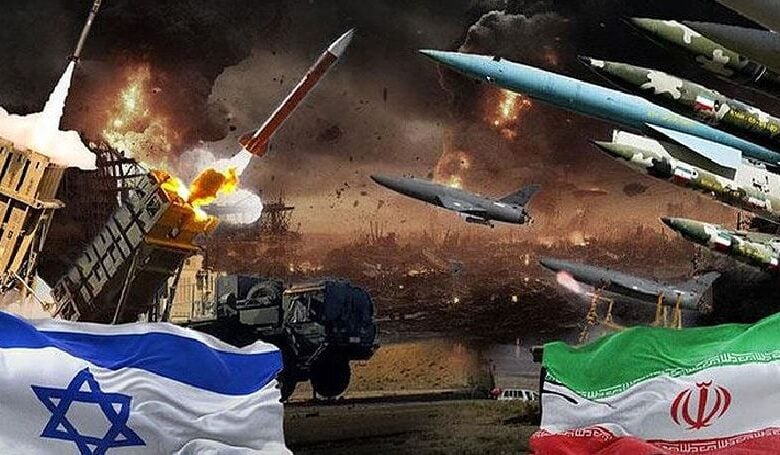
The second war warning from Khamenei’s office has turned it into the Islamic Republic’s last gamble, but at the expense of the people.
Iran today is in a condition where social exhaustion and apathy have reached a dangerous level. The economic crisis, successive blackouts, and water shortages have placed society in a state where perhaps the past fear of war no longer exists within it. This public numbness can turn into a tool in the hands of the ruling system to move toward war more recklessly. While the capacity for civil resistance to prevent destructive decisions reaches its minimum, the Islamic Republic sees the crisis as an opportunity for survival, but its cost will be paid from the pockets of the Iranian people.
This time the alarm bell is heard not from Western analysts or Israeli media, but from within Khamenei’s office. Yahya Rahim Safavi, former commander of the Islamic Revolutionary Guard Corps and senior advisor to the Islamic Republic’s leader, made unprecedented statements: “There may be another war between the Islamic Republic and Israel, but after that there may be no more wars.”
Such ambiguous statements are not raised without reason in the structure of the Islamic Republic. These statements are more like a political message and a green light for initiating military, diplomatic, and media preparation to enter a new phase of crisis.
A look at the history of this system shows that crisis is not only a threat but a vital opportunity for its survival. In the 1980s, the Iran-Iraq War became an excuse to consolidate the rule of the supreme jurisprudent and broadly suppress opponents. In subsequent years, whenever external tensions increased, it helped consolidate internal power. From the nuclear program to presence in Syria and Lebanon, the Islamic Republic has consumed external crises like oxygen to cover its structural weakness.
If a new conflict between the Islamic Republic and Israel takes shape, the main burden will fall on the people. Contrary to official claims about “asymmetric warfare,” Israel is far superior in technology and military power. This time a potential war is not only similar to a short 12-day confrontation, but could lead to full-scale and devastating attacks.
Some of society may be pleased by the government being struck and even the possibility of its collapse, but the cost of this collapse for the people will not be free. Iran not only lacks a safe haven, but is also deprived of civil defense programs and national crisis management. In such circumstances, the government will call every small protest “treason” and until the last moment, before it itself is thrown into the dustbin of history, it will take revenge on its citizens.