The Drying of the Saadi Qanat: A Supplementary Article
Our Lord repeatedly warns His children that you should wish for others what you wish for yourself and should not desire evil for others……..
Curse is the result of wishing evil for others, which we witness daily in the statements of Iran’s officials and rulers. They, without considering that the consequences of this ill-will return to them before anything else, have wished death for the people of other countries and continue with their course. And this is certainly the fruit of human judgments that proceed according to incorrect beliefs without regard for the existence of the living God. It appears that the time has come to openly and clearly address the consequences of these curses in Iranian society. It is time for the Iranian people to know what reason these natural disasters, droughts, and diseases have……..
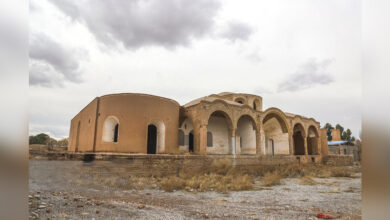
The Saadi Qanat, the qanat of memories of the people of Shiraz, a relic of Wednesday Fire Festival days, has completely dried up.
Qanat or Kariz or Kahriz is a water channel or canal dug underground, so that water flows through it to reach the earth’s surface. This channel or canal in the depths of the earth connects a series of wells that originate from the mother well. Mother wells are usually an underground spring. Qanats are used to direct and manage water for agriculture and other purposes. This qanat channel may extend several kilometers until it reaches the earth’s surface, and its exit point is called the mouth of the kariz or the head of the qanat.
Fars Province and the city of Shiraz are located in southern Iran and have recently been considered among low-rainfall and relatively dry lands. For this reason, water and its provision have always been among the first vital issues of life for the people of this land. Therefore, in ancient times, the people’s need for water was very evident, and respect for it took on an aspect of sanctity. Just as in the religion of Zoroastrianism, which was widely practiced in Fars, water is a sacred element, and Anahita is both a divine river and a goddess who guards the waters and is praised in the Avesta. One of the most beautiful Yashts of the Avesta, the Fifth Yasht, is dedicated to her. She, as a celestial and terrestrial embodiment of water in Zoroastrian cosmology, holds the same status as the Beneficent Immortals Khordad and Amordad. In a section of the Fifth Yasht it states: “That shining, tall, well-formed one who flows like running waters day and night, like all waters that flow on earth.” The name of Anahita first appears in the inscriptions of Ardashir II, as is written in a section of his inscription in Hamadan: “By the will of Ahura Mazda, Anahita and Mithra, I built this palace. May Ahura Mazda, Anahita and Mithra protect me from all calamities and not destroy or harm that which I have built.”
During the Sassanid period, numerous temples were built in honor of the water goddess, among which we can mention the Adarfarnbagh Fire Temple in Kazian, Fars. Also, at Naqsh-e Rostam we see the image of Anahita presenting the royal crown to Narsi, one of the Sassanid kings. After the Muslim conquest of Iran, although the worship of Anahita gradually fell into disuse, respect for water remained among the people. But how did the people of Shiraz obtain their drinking water before the installation of pipes? The most important method of providing water to the city was from springs and qanats in the surrounding areas, and of course there were always many difficulties in this regard.
Al-Muqaddasi says: Shiraz is “a city without a district, without a market, without gardens, without a river and without ornament. The inhabitants obtain their drinking water from small water channels.” And in another place he writes: “The drinking water is good on condition that it is taken from a fountain, but the wells also have sweet water and their water level is not low.” And “The city has running water, but it is not clean, and its well water is not light either.”
However, Shiraz achieved great prosperity and population with the entry of various qanats. One of these qanats, whose name throughout history has been associated with Shiraz, is the water of Rocknabad.
Ibn Battuta writes about it: “Five rivers provide drinking water for Shiraz, and one of them is Rocknabad which has sweet water, and is very cool in summer and warm in winter. It originates from the slope of a mountain that is located there, which is called Qal’eh.”
This qanat was constructed in the year 338 AH by Rokn al-Din Hasan Dailami, and its source is located on the slope of Mount Bamu. From there, flowing on the surface of the earth, it reaches Tangi Allahi Akbar, and then enters the city. This water has been held in such respect among the people for years that poets have also raised their voices in praise of it.
Saadi speaks sweetly:
They do not let go of my skirt
The dust of Shiraz and the water of Rocknabad
Hafiz says:
From Rocknabad we have a hundred difficulties, O God
Whose pure water grants the life of Khezr
Shiraz and its water and that pleasant breeze
Do not find fault with it, for it is the beauty mark of the face of the seven regions
There is a difference between the water of Khezr, where darkness is its place
And our water, whose source is Allahi Akbar
The author of Shiraznama writes in his book: Know that all the qualities and properties that philosophers and masters of medicine have credited in explaining the virtues of water are found in the water of Rocknabad. And then he states six characteristics for it: it is from a distant source – it passes through an elevated place – it passes over pebbles – there are no trees such as walnut and fig on the banks of its water channel that would cause a change in its temperament – no animal exists in it, and it moves from a high place to a low place. The water of this qanat, in addition to Dah Akbarabad, provided drinking water for all the gardens of Tangi Allahi Akbar, Khaki Mosstalli, Jahan Nama Garden, New Garden, Seven People, Forty People, and Hafiziyah.
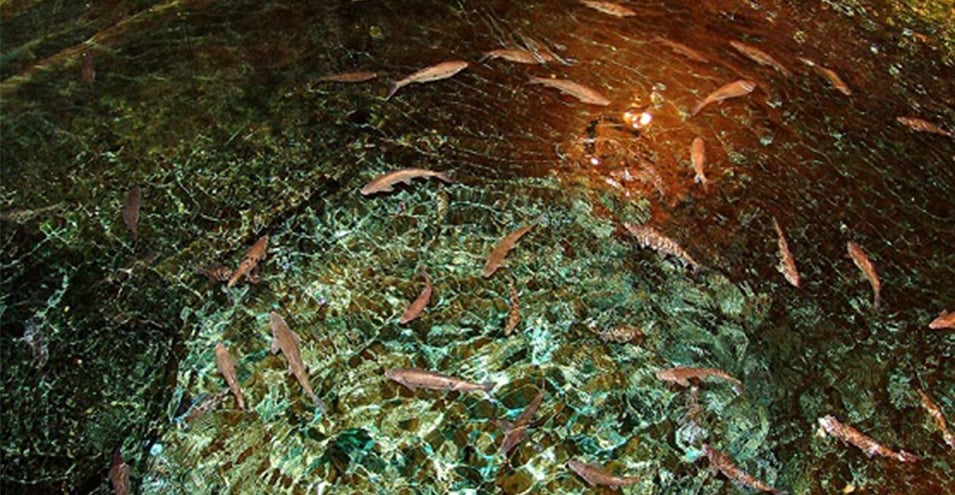
The journey continued until reaching the water, which is known as the Fish Pool due to the small fish that existed in the water. Today the Fish Pool, whose walls are covered with tiles, has been converted into a traditional teahouse adjacent to Saadi’s mausoleum. Outside the mausoleum, a portion of the water flowed into a laundry house that was busy until several years ago, and women washed their clothes there.
Ibn Battuta, during his visit to Saadi’s mausoleum, writes: “Here a marble basin was made at Saadi’s command for washing clothes. For this reason, people come from the city to visit his tomb, eat the food that is there, and wash their clothes in the river. After that, they return. I also did the same there.”
Fotouh al-Douleh, regarding the properties of this water, says: “Although simple-minded people believe that its water is heavy, this is not true. According to the opinions of English scholars who knew chemistry, whatever they cook in it boils faster than other waters by several minutes. I gained this experience.” This water, in addition to being used for agriculture in Saadi’s plain, also filled several of the city’s cisterns.
Zangi water is a qanat that emerges near Rocknabad and was built by Atabak Zangi ibn Maudud in the second half of the sixth century. This water, in addition to providing irrigation for farmers’ agriculture, was also used for the city’s drinking water and was known for its purity and palatability, but today it has turned into a very small spring.
Masque Bardi Water (Qasr al-Dasht): This qanat was constructed by Prince Hossein Khan, the governor of Shiraz during the reign of Mohammad Shah Qajar, and he dug 12 qanats in Qasr al-Dasht and built 12 mills and several gardens there.
● The Water of Six Elders:
The governor was able to bring the water of Six Elders to Shiraz in the year 1261 AH from 17 farsangs west of Shiraz with great difficulty. This water has been the subject of attention of the people of Shiraz since ancient times, so that during the Achaemenid and Sassanid periods, efforts were made to bring this water to Shiraz’s plain, and during the time of Allah Verdi Khan, the governor of Fars during Shah Abbas, and during Karim Khan’s rule, efforts were also made, which did not have positive results. For this reason, the people held festivals for the entry of Six Elders water into the city and named the river the Sultan’s River. Qa’ani also honored this work in a poem of 124 verses, saying in its description:
When that river came from the road of Six Elders, how should I date it
I say that from the road of Six Elders came the Sultan’s River
And as the city’s honor increased through it, I say
The city’s honor increased with the water of the Sultan’s River
● Qavami Water:
This qanat was built by Mirza Ali Mohammad Qavam al-Mulk, the father of Mohammad Reza Khan, the builder of the Narenjestan building, and was named Reza Abad after Mohammad Reza Khan. After it provided irrigation for the Qavam family’s gardens, it entered the city and was used by the people.
● Kheyrat Water:
This channel also originated from Tangi Qara Piri near Bajgah and was endowed for public use. In the late Qajar period, most of the city’s drinking water was supplied from Old Kheyrat and New Kheyrat, and it is still known among the people of Vessal Street as Kheyrat channel. However, since water did not always reach the people easily, they valued water like a precious gem and carefully preserved it. The most common place where people collected water was cisterns. In Shiraz, usually a large underground space was dug and its top was covered, thus creating a large underground reservoir, and a water tap was installed on one of its walls. Rainwater or channel water penetrated into the cistern through holes that existed above it and was stored. People had to go down many stairs to reach the cistern’s tap. However, usually the large population and failure to respect others’ turns caused numerous conflicts and disputes, and drawing water was always accompanied by many difficulties. Although in all neighborhoods of the city, there were both small and large cisterns relative to the people’s conditions.
The external appearance of Shiraz’s water cisterns differed from similar examples that are still in use in Larestan today, because the water cisterns of the Larestan region usually have a dome on top, but Shiraz’s water cisterns did not have this. However, eventually the city’s water cisterns became unused after water pipes were installed and gradually deteriorated. Among the famous cisterns of the city, we can mention the cisterns of Astan-e Qavam (located in Qavam neighborhood), Atashi (on the water edge), Hajj Abbas (next to the National Garden), Moshir (Moshir neighborhood), Bibi Dokhtar (Sang-e Siyah neighborhood), which today nothing remains of them except their names. In houses too, people were forced to store water. For this reason, in the homes of the wealthy, there was a water cistern that was usually filled at a specific turn from the water channel. However, middle-class people used pools for this purpose, which were built in the courtyard or in the basement of the house. The water in them, which was not changed for long periods and was full of green algae, was used for cleaning and washing dishes and clothes. Sometimes in summers, people even swam in them instead of a swimming pool. In the courtyards of some houses, wells were also dug whose water was not suitable for drinking. The water drawn from them by a wheel was used to fill the pool. However, the drinking water brought from the cistern was usually stored in water rooms or earthen jars in houses.
● Water Rooms:
In homes there was a niche where 2 jars were installed for storing water. However, since some houses might not have had a water room, families that were renters poured water into jars that they moved along with household items. A jar was an earthen vessel with a height of one to one and a half meters used for storing water. However, water in the jars, due to prolonged storage, suffered from contamination and worm infestation, so people had to strain the water through thin cloth before drinking it.
To draw water from the cistern, some people did it personally, but many water carriers were women. They transported water to houses in large skins. In public places too, such as mosques, caravanserais, and markets, pools were built in which needed water was stored.
For drinking water in public streets, usually a water room appeared at every corner and under every small market. They would build a niche in the corner of a wall and install a jar in it from which thirsty people would quench their thirst. Such a water room still exists in the elephant market near the Saadi Gate, although today it is unused. Many water rooms, depending on the financial condition of their builders, also had decorations such as tilework, painting, and stucco work.
Another place that had great need for water was the city’s bathhouses, which were found abundantly in all neighborhoods. Usually each bathhouse had a well from which water was drawn by ox, horse, and wheel. An animal was tied with a rope and with its movement, buckets were brought out of the well and water was supplied. Bathhouses usually had three reservoirs, in one cold water, in another hot water, and in the last one lukewarm water were poured. People not only bathed in these reservoirs but also used the same water for washing themselves.
An interesting matter regarding pools was the method of filling and emptying them. Since pools always had to be full, sometimes a wall was built in the middle of them that divided the pool into two separate sections. If the pool became ritually unclean in winter, they waited for rain to cleanse it. But when filling it, when there was less water than the minimum required, and to prevent it from becoming unclean, a piece of cloth was tied to the end of the stone tap at the pool’s edge. Water drawn from the well was poured onto the cloth so that when refilling, the bucket would bring water from the well through the cloth, and the water would be considered flowing and the pool would not become unclean.
However, all these customs and practices, as well as the problems of obtaining clean water, disappeared in 1331 AH, because in that year the city of Shiraz became the first city in Iran to have water pipes. This work was done by Mohammad Namazi with his personal capital.
To execute this work, on the slope of “Three Mills” mountain, 10 wells of 85 meters deep were dug, and with pumps they began drawing water. After the water was purified in special reservoirs, it was brought to people’s homes through pipes whose total length that year amounted to 115 kilometers.
And from that day until today, clean water reaches a large city like Shiraz through pipes everywhere. With the advancement of this, people’s respect for this precious gem has decreased. The current generation, unaware of their fathers’ hardship in obtaining water, does not properly appreciate this treasure that comes to them so easily.
To examine the cause of drying of active qanats in the city of Shiraz and other parts of Iran, one can point to the lack of compassion and mismanagement of officials, the appointment of non-specialist individuals in government departments and ministries, and also the effect and reflection of curses and ill-will of years after the Iranian revolution.
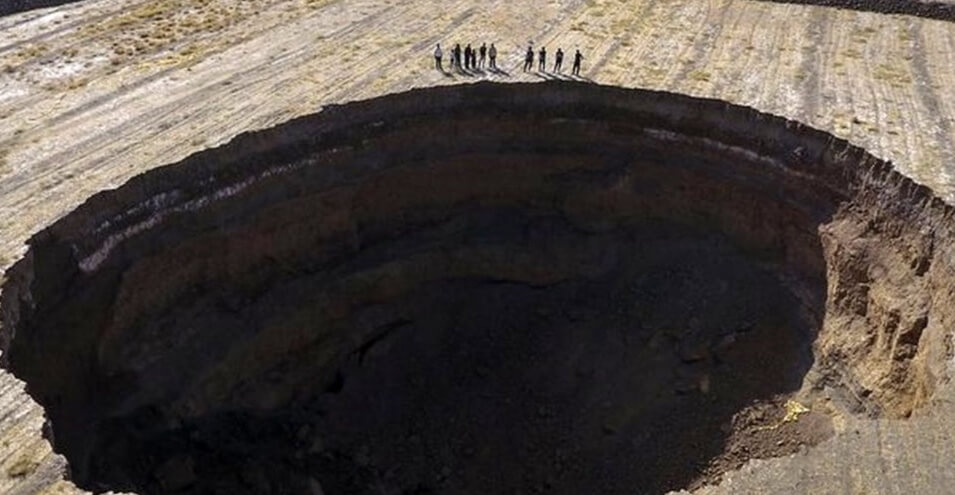
With a look at the surroundings of the Saadi neighborhood, the extent of the tragedy can easily be observed. Along the route of Saadi neighborhood to Khorameh city, a very vast area of urban gardens is seen. While implementing land divisions and large construction projects, they have dug numerous authorized and unauthorized wells. The digging of these wells, whose number is very large and staggering, gradually reduced and then dried up the volume of underground waters.
In another view, the sound of explosions in the mountains around Saadi neighborhood and the destruction of gardens and qanats in the surrounding areas for the construction of the Saadi highway and tunnel project, which has been ongoing for about eight years, is another factor in intensifying and fanning the drought of the lush city of Shiraz.
Meanwhile, Iran’s politicians and rulers, without regard for human principles and without knowledge of urban planning principles and without utilizing specialist personnel, undertake the execution of urban and non-urban projects. They are the main agents of environmental destruction and intensification of drought in various parts of Iran.
Because their minds are daily preoccupied with the curses of enemies of their own making and the plundering of national wealth, and they have no opportunity to think about the future of the country’s people and the preservation of the environment and natural resources. And their thoughts and hearts, instead of worshipping God and contemplating God’s wisdom, are immersed in the worship of worldly wealth and the pursuit of power.
It is much to be regretted that they do not wish to accept that our God is a living God and He is the witness and observer of all things. They do not hear God’s call and are hastily pursuing their worldly desires.
Yes, my Lord, I thank You for Your existence full of love
I thank You for Your great grace
I thank You for the forgiveness of my sins
My Lord, with gratitude and thanks, I humbly seek Your special favor for my country Iran. From You I ask that You place Your strength, power, and salvation for them……….. In the name of Christ….. Amen