Iranians to Buy Meat Online from Thursday
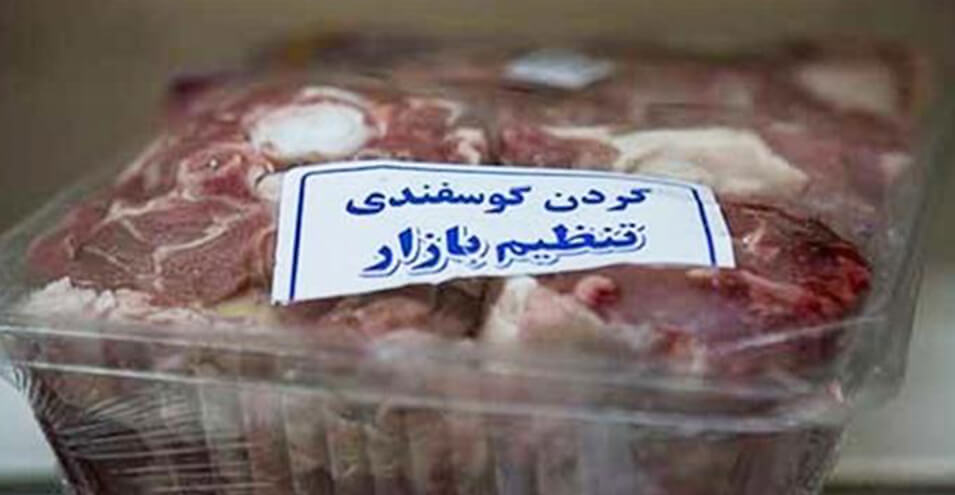
Round-the-clock queues for purchasing government-subsidized fresh and frozen meat prompted government officials to launch an online meat sales program. The plan goes live on February 8th, and each household can purchase up to three kilograms of government meat monthly using their postal code.
Shortages of live livestock and inadequate distribution of meat products in the market under government and Price Control Organization supervision have caused a price increase of at least 50 percent for meat in the free market over recent weeks, leaving families unable to afford various types of lamb and veal.
As public protests intensified over the formation of long “round-the-clock” queues in front of government-designated stores under the Price Control Organization’s supervision, officials recently announced an “online meat sales” program.
The objective of the online meat sales program is to improve people’s welfare, prevent the formation of long queues, and prevent speculation.
Iran imports 120 tons of fresh and frozen meat daily from various countries. The latest shipment of imported meat, totaling 40 tons from Kazakhstan, arrived in Iran at midnight on Monday, February 4th.
Government officials constantly emphasize that they have “no” problems in providing essential goods needed by Iranians.
Three Kilograms of Meat with Postal Code
Media outlets, citing Reza Salemi, director general of the Livestock Support Company of Tehran Province, reported that in the online meat sales program, each household can purchase only once per month approximately two to three kilograms of fresh and frozen imported meat at government-controlled prices based on their postal code.
The price of each kilogram of frozen meat (Brazilian veal) is 29,000 tomans and fresh meat is approximately 40,000 tomans, which varies based on the cut of meat such as head or leg, as well as the country of origin.
It is planned that this Thursday, February 8th, imported meats known as “market-stabilizing meat” will be sold in two stores through online order registration.
Online Distribution of All Goods
Currently, only government fresh and frozen red meat is on the online order registration and sales list, but online distribution of chicken will also be implemented in the next phase of the program.
The online sales plan is not just for sales, and protein products are to be delivered to homes after the buyer registers an order. Officials have chosen the title “online distribution” for this purpose and said that in this program people can purchase the products they need “comfortably” and receive them at home.
The director general of the Livestock Support Company of Tehran Province described the goal of implementing this program as the government’s desire to change the distribution system from the current traditional method to online distribution.
Meat and Poultry Kingpins
Price Control Organization officials constantly complain about the presence of brokers who buy meat at government prices and sell in the free market. They believe these brokers do not need government-approved meat prices and are only engaging in speculation for profit.
With the introduction of the online meat sales program, some media outlets and social network users have raised concerns about the emergence of online meat and poultry speculation, noting that the turbulent and chaotic market is ready for any kind of intermediation.
Iranian officials, with the beginning of two-phase American sanctions and rising prices of essential consumer goods and increased exchange rates in the country, have consistently spoken of “economic saboteurs” and mentioned that the arrest and execution of defendants with titles such as “currency kingpin” and “paper kingpin” have occurred in line with confronting these saboteurs.
Meanwhile, the head of the judiciary and the Tehran prosecutor recently called for serious action by judges and judicial authorities against economic corruption in the field of market regulation and the elimination of brokers.
What Causes Meat Prices to Rise?
In Iran, everyone asks why there is a shortage or rising price of meat and which institution is responsible for it. Officials and economic experts have cited multiple factors for the doubling of meat prices.
Hosein Ali Haji Deligani, representative of the people of Shahin Shahr, on Tuesday, January 29th, in his speech during the parliament session, referred to meat smuggling, which the government is not preventing. While criticizing the government’s performance, he said: “The performance of the Ministry of Agriculture in dealing with meat prices has been wrong, and livestock smuggling must be stopped.”
The Minister of Agriculture recently said in a television program, “We should be grateful for what we have.”
Live Livestock on the Way
These days and weeks, meat prices have been racing with gold prices. The price of meat at 110,000 tomans per kilogram last week in Tehran was not a rate that government officials had anticipated.
Ali Asghar Maleki, head of the Sheep Meat Union, on Tuesday, January 29th, told Iran’s ILNA news agency that meat prices had reached 110,000 tomans and the import of live livestock from Romania would soon begin.
According to Maleki, the government plans to import 50,000 head of live sheep daily from Romania to prevent meat price increases.
The head of the Sheep Meat Union had emphasized that with the arrival of sheep from Romania, meat would be offered in the market at 40,000 tomans. However, the import of live sheep from Romania has not yet materialized.
Iranian state television today, February 6th, with the release of a report on the formation of long meat-buying queues in Tehran streets and some Iranian cities, announced that the import of live livestock shipments is delayed.
Security forces constantly report the discovery of live livestock smuggling shipments from Iran to Persian Gulf Arab countries. Iranian media interpret the publication of these reports as the “vigor” of security forces and Ministry of Intelligence officials in uncovering and neutralizing psychological operations to disrupt the Islamic Republic’s economic system.
Accordingly, it can be expected that with another increase in meat and poultry prices, the buying queues for these goods in Iranian markets will become longer.
The rise in prices of essential goods has not left families hesitant in deciding whether to buy frozen chicken and meat: first frozen chicken and meat, then rice and dairy products. One social media user, in response to the online meat sales program, writes: “Progress and might means going from the bathhouse queue in the 1970s to the meat queue in the 2010s.”
Source: DW