Iran’s New Government; Continuation of Repression of Critics Through Detention of Prominent Activists
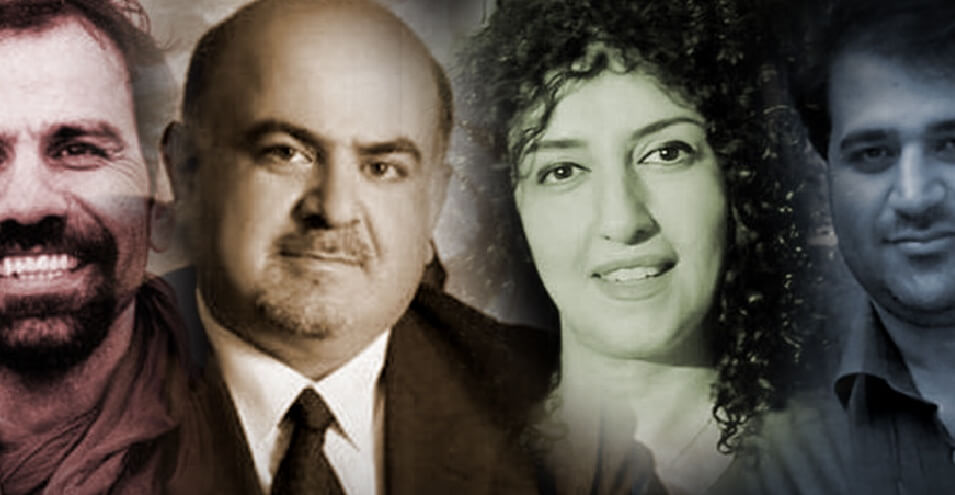
The arrest of four human rights activists by security agencies, only a few months after Iran’s new Islamic Republic government came to power, signals the beginning of a new chapter of severe repression of freedoms in the country.
Hadi Ghaemi, director of the International Campaign for Human Rights in Iran, said: “It is clear that this illegitimate government intends to tighten its grip on power by imprisoning important civil society figures.”
He added: “The Raisi government believes that countries negotiating with Iran will not pay attention to the trampling of human rights in this country. Silence means consent, and if Iran’s tyrannical acts are not condemned, it will be a green light for the government to continue its oppressive behavior.”
Narges Mohammadi, a well-known civil rights activist, announced on the fourth day of Mehr month that less than a year after the end of her lengthy imprisonment, another sentence against her has now become final and enforceable due to her continued civil activities: 80 lashes, 30 months imprisonment, and two financial penalties.
This sentence was issued based on a complaint by Gholamreza Ziaei, former director of Evin Prison, an official who personally participated in the beating of Ms. Mohammadi in December 2019.
Recently, Ms. Mohammadi confirmed that newly revealed images from inside Evin Prison include footage showing drops of her blood on the prison floor following a violent assault by Ziaei and other Evin officials.
Ms. Mohammadi, vice president and spokesperson for the Defenders of Human Rights Center, wrote in an Instagram post on the fourth of Mehr month: “… I will not allow officials of the authoritarian religious government to inflict even one lash on me … I will also not go to prison despite being summoned. If they forcibly return me to prison, I will certainly protest inside the prison.”
The human rights activist wrote that: “During the 10 months since my release until now, I have been arrested five times by security forces, which was accompanied by force and beatings, and these arrests are arbitrary and illegal. Therefore, I reject all baseless and false charges and will continue my activities as long as I am free. Civil institutions and the streets belong to us people, and we will not abandon them.”
Meanwhile, Babak Paknia, a lawyer, announced in an interview that a four-year prison sentence against his client Mehdi Mahmodiyan, a human rights activist, has been carried out due to a call to hold a candlelight vigil in memory of the victims of the Ukrainian plane that was shot down by the Islamic Revolutionary Guard Corps in December 2019 over Tehran.
Also, Arash Keykhosravi and Mostafa Nili, two human rights lawyers, have been detained in Evin Prison for more than a month. Their arrest, along with Mehdi Mahmodiyan and several other lawyers and civil activists, occurred when they intended to file a legal complaint against officials responsible for combating coronavirus due to “negligence in duty that resulted in the deaths of thousands of Iranians.”
The ban on importing vaccines made by America and Britain, ordered by Ali Khamenei, the leader of the Islamic Republic, deprived millions of Iranians of timely access to approved COVID-19 vaccines and caused illness and the death of thousands of Iranians.
This ban was eventually lifted by Mr. Khamenei after eight months had passed, Iranian hospitals were filled with coronavirus patients, and the death toll exceeded one hundred thousand people.
Mr. Keykhosravi and Nili are among the few Iranian lawyers who, despite pressures and obstacles from security agencies against independent human rights activities, have not refused to accept human rights cases. It is worth noting that despite the issuance of an indictment, the charges against them have not been formally announced and the date of their trial is unclear.
The recent wave of repression in Iran demonstrates the continuation of the ruling system’s policy of intensifying pressure on civil activities, particularly by the president and the head of the judiciary, both of whom have been major violators of human rights in the Islamic Republic.
Hadi Ghaemi said: “The international community faces a test: will it view Iran only as a nuclear file and silently witness the destruction of the Iranian people’s justice-seeking movement, or not?”
Source: Human Rights Campaign