Iran’s Oil Industry Subject to ‘Counter-Terrorism’ Laws; U.S. Sanctions Zanganeh
The U.S. Treasury Department announced on Monday, October 26, that it has imposed new sanctions against Iranian officials and institutions in Iran’s oil industry, placing them under “counter-terrorism” laws.
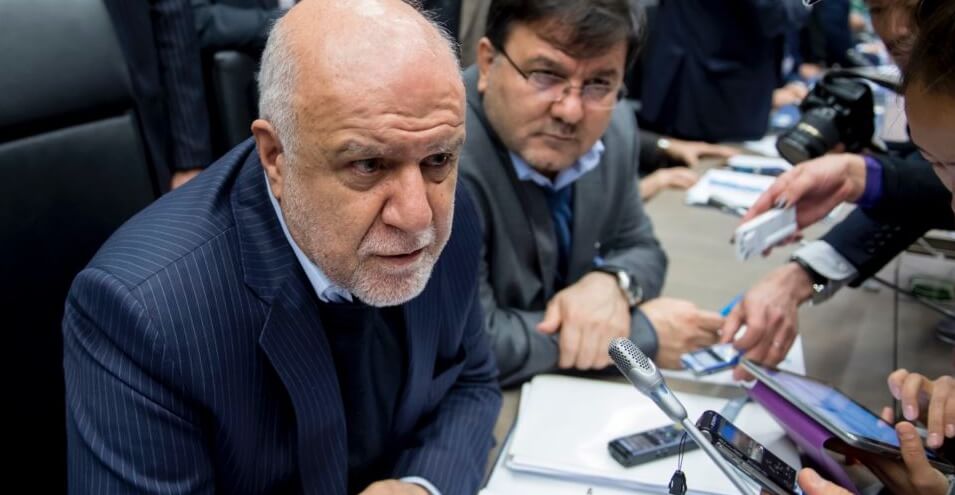
Bijan Namdar Zanganeh, Iran’s Oil Minister, has also been added to the U.S. sanctions list.
In a statement from the U.S. Treasury Department, it was stated that Washington’s new sanctions were aimed at increasing pressure on sectors of the Islamic Republic regime that have played a key role in supporting the Islamic Revolutionary Guard Corps’ Quds Force.
Steven Mnuchin, U.S. Treasury Secretary, stated in the announcement: “The Iranian regime has used the oil and gas sector to finance destabilizing activities of the Islamic Revolutionary Guard Corps’ Quds Force.”
The statement clarified that due to the support provided by the named individuals and institutions to the Islamic Revolutionary Guard Corps’ Quds Force, they are subject to Executive Order No. 13224.
This executive order was signed on September 23, 2001, by then-U.S. President George W. Bush, under which Washington can place individuals and entities involved in “financing terrorism” on its sanctions list.
Under these sanctions, the assets and potential asset income of these individuals in America are blocked, and U.S. citizens and companies are prohibited from direct and indirect trade with these individuals.
Bijan Namdar Zanganeh responded Monday evening to news of his sanctions by the United States, writing on his Twitter page: “The sanctioning of me and my colleagues is a passive reaction to the failure of Washington’s policy to bring Iran’s oil exports to zero.”
Zanganeh added that “the era of unilateralism in the world has ended. Iran’s oil industry will not collapse.”
Iran’s Oil Minister claimed that “I have no assets outside Iran that would be subject to sanctions.”
In addition to the Oil Minister, the National Iranian Oil Company and the National Iranian Tanker Company, as well as several other figures and institutions of the Islamic Republic, have been added to the new U.S. sanctions list.
Accordingly, all assets belonging to the named institutions and individuals in the United States are blocked, and generally, Americans are prohibited from conducting any transactions with them.
Placing Iran’s oil industry under the “counter-terrorism” law makes it difficult to lift its sanctions in the future, as it must be proven that Iran is not involved in terrorist activities.
If Joe Biden, the Democratic nominee, wins the U.S. presidential election on November 3, his hands will be tied for any possible early agreement with Iran.
According to Reuters, Mahmoud Madanipour, an Iranian merchant referred to as a fuel transfer intermediary, and Mobin International Company based in the United Arab Emirates, face sanctions from the U.S. Treasury Department. Both have been accused of cooperating with the Nicolas Maduro government in Venezuela and circumventing sanctions.
U.S. government officials announced in May of this year that the Iranian government receives gold in exchange for selling gasoline and assisting in the reconstruction of Venezuelan refinery equipment.
Meanwhile, among those added to the recent U.S. Treasury Department sanctions list are Masoud Karbassian, current CEO of the National Iranian Oil Company, Behzad Mohammadi, CEO of the National Petrochemical Company, Ali-Akbar Pourabraham, CEO of the National Iranian Oil Trading Company, Alireza Sadegh-Abadi, CEO of the National Iranian Oil Refining and Distribution Company, as well as others.
Also, two other Iranian nationals, including Nasrollah Sardasht, CEO of the National Iranian Tanker Company, and Vian Zanganeh, have been placed on the sanctions list due to their connections with the Islamic Revolutionary Guard Corps’ Quds Force.
Elliott Abrams, U.S. Special Representative for Iran and Venezuela, said on Monday in an interview with the National newspaper that even if Joe Biden wins the November 3 presidential election, he will not be able to lift the sanctions imposed against Tehran so quickly.
He stressed that the structure of sanctions imposed against the Iranian regime is so “comprehensive” and “entrenched” that bypassing it in the short term is not possible.
The United States withdrew from the agreement between six world powers and Iran in May 2018, and since then has imposed severe sanctions against various military, political, and economic sectors of Iran.
The scope of these sanctions has even included Ayatollah Ali Khamenei, the Leader of the Islamic Republic, and his subordinate institutions.
Source: Radio Farda