Iran’s Parliament Approves Plan to Suspend Cooperation with International Atomic Energy Agency
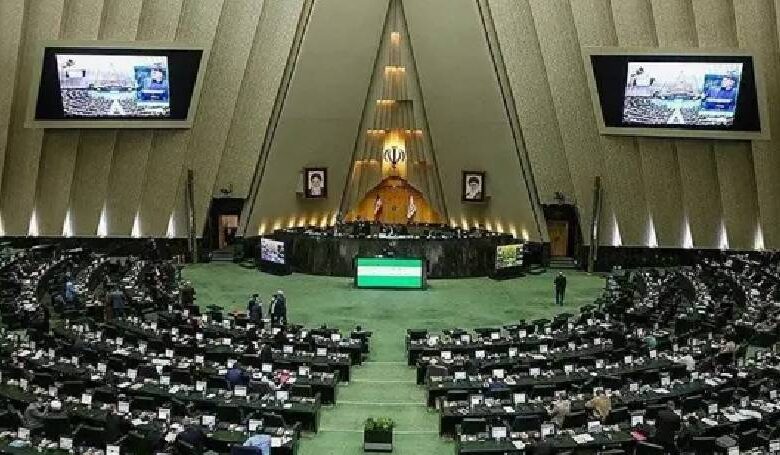
Representatives of Iran’s parliament announced the approval of a plan to suspend cooperation with the International Atomic Energy Agency.
The plan to suspend cooperation with the International Atomic Energy Agency was reviewed last Tuesday, June 24, by the National Security Commission and, after amendments were made, was approved by the Islamic Consultative Assembly. The plan was approved with 221 votes in favor, one abstention, and no votes against, out of 223 representatives present in parliament.
According to this plan, activities such as “installation of surveillance cameras, inspections, and reporting to the agency will be halted, unless the security of Iran’s nuclear facilities is guaranteed.” The approval of this plan came as the International Atomic Energy Agency in its latest report criticized Iran for lack of cooperation with the agency and asked them to answer questions related to undeclared nuclear facilities. The agency also stated in its report concerns that existed regarding the accumulation of enriched uranium in Iran.
Mohammad Baqer Qalibaf, Speaker of the Islamic Consultative Assembly, while referring to the fact that Iran is not seeking to build nuclear weapons, said: “The International Atomic Energy Agency has not fulfilled its duties and has been turned into a political tool.” He also stated that the Islamic Republic will continue to advance its nuclear program at a faster pace.
The approval of Iran’s plan to suspend cooperation with the International Atomic Energy Agency has increased the possibility of tensions with international nuclear bodies. Moreover, it also raises concerns about the transparency of Iran’s nuclear program and its consequences for regional and global security.
Alireza Salimi, spokesperson of the parliament’s leadership board, while referring to the approval of the plan to suspend cooperation with the agency, said: “According to the parliament’s resolution, agency officials do not have the right to enter the country for inspections unless the security of the country’s nuclear facilities and peaceful nuclear activities are guaranteed, which is also conditional on the approval of the Supreme National Security Council. Moreover, in its resolutions, parliament has also set punishments for those who allow agency officials to enter the country. The parliament’s resolutions include intra-regional and extra-regional cooperation.”
The statements of parliament representatives regarding the approval of the aforementioned plan come as Rafael Grossi, Director General of the International Atomic Energy Agency, has called for the immediate resumption of verification of nuclear activities in Iran.
Abolfazl Zohrevand, a member of the National Security Commission of the Islamic Consultative Assembly, regarding the ceasefire between Israel and the United States with Iran, called it a “strategic error and mistake” and said that the ceasefire makes no sense at all. He added in his remarks: “The ceasefire was established when the Islamic Republic could destroy Israel within three to four more days. It is unclear who initiated this ceasefire plan in the system; let this person come forward and introduce himself.”
Other officials of the Islamic Republic also, following the ceasefire in the Iran-Israel war, emphasized the acceleration of the nuclear program.