Iran’s Small Airlines Face Bankruptcy
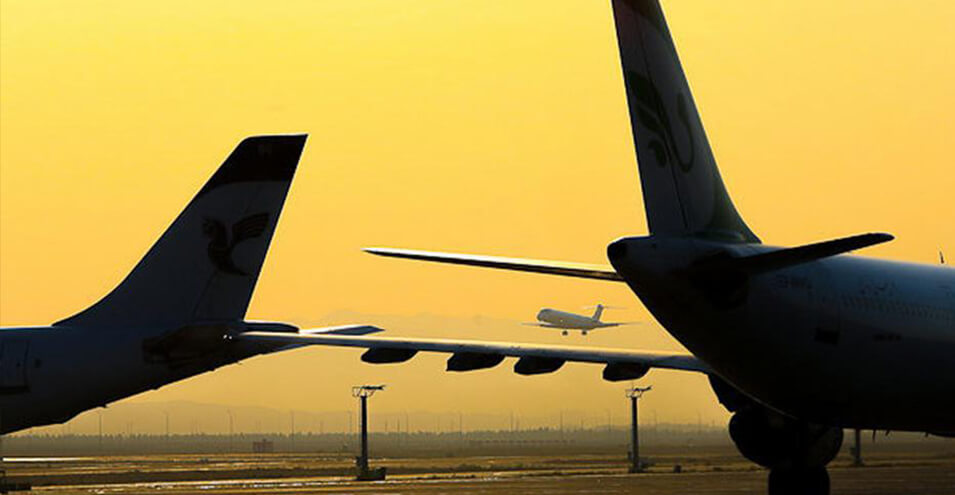
With rising currency prices, Iran’s small airlines can no longer afford to purchase new aircraft with their previous capital. The return of sanctions has made conditions more difficult. According to experts, they face a dilemma between bankruptcy or merger.
The return of US sanctions against the Islamic Republic has made conditions more difficult for the survival of Iran’s small airlines. According to an aviation industry expert, if Iran’s small airlines cannot find a way out of the current economic situation, they “must prepare for bankruptcy”.
Hoshing Sadegh, former CEO of Zagros Airlines, on Wednesday, December 12, stated that while small airlines have faced economic difficulties in recent years due to extensive international sanctions, “today, with new American sanctions, conditions have become difficult once again.”
On one hand, the fleet of small airlines is limited, and on the other hand, due to the approximately threefold increase in currency prices compared to early 2017, these companies lack the capital to purchase new aircraft.
For this reason, Hossein Sadegh emphasized that given such circumstances, Iran’s small airlines “will see only two options before them: either merger with other companies, or bankruptcy.”
This aviation industry expert told ISNA news agency that although merger discussions have been raised in Iran’s Civil Aviation Organization for several years, “it has never reached the implementation stage, because none of the airlines are willing to change their current situation.”
According to the former CEO of Zagros Airlines, because of this lack of incentive for merger, “the country’s Civil Aviation Organization has also been unable to take action and has even been forced to grant operating licenses to new companies so that each of them can introduce a limited number of aircraft into their fleet and begin operations.”
Mr. Sadegh also spoke about possible ways to exit the current situation: “Perhaps if the government intervenes and, by making some airlines public, chooses a new name for them, there might be a possibility for merger, but otherwise we must wait for these small airlines to approach bankruptcy.”
Confused Between “Secondhand or Eastern” Aircraft
Even if Iran’s small airlines had the financial capacity to purchase new aircraft, the path to buying these planes would still be effectively closed to them due to America’s withdrawal from the JCPOA and the return of unilateral US sanctions against the Islamic Republic. ISNA reported that under such circumstances, these companies “must again be confused between secondhand or Eastern aircraft options”.
Iran Air, the Islamic Republic’s flag carrier, which had finalized the purchase of 200 aircraft (100 Boeing, 80 Airbus, and 20 ATR) before America’s withdrawal from the JCPOA, was only able to receive 16 of them following the reimposition of sanctions.
Alireza Monzari, former deputy of Iran’s Civil Aviation Organization, said ten days ago: “While currently large aircraft manufacturers like Boeing and Airbus do not have the ability to sell their aircraft directly to us, Iranian companies must examine all available options in the market and act to meet Iran’s fleet needs for purchasing new aircraft.”
The former deputy of the Civil Aviation Organization, referring to the entry of “Western secondhand aircraft” into Iran in the past, also said: “If the procurement of Western aircraft is not possible in the current timeframe, there is a possibility that Eastern aircraft might be used to meet short-term needs.”
Approval for “Sukhoi” Entry into Iran
It appears this option is now being implemented. Today, Wednesday, Iran’s Civil Aviation Organization announced its approval for the entry of the Russian “Sukhoi” aircraft into the country’s passenger fleet.
Ali Abedzadeh, head of Iran’s Civil Aviation Organization, said: “If Iranian aircraft companies are willing to use this aircraft [Sukhoi] and the seller is also willing to sell this aircraft to Iran, Iran’s Civil Aviation Organization is prepared to present its final opinion on this aircraft; however, in any case, this aircraft complies with international standards and is currently in operation, meaning there is no reason for us to reject its use.”
The US Treasury Department announced in early June 2018 that it had imposed new sanctions against several companies related to Mahan and Meraj airlines, as well as Caspian and Pouya airlines.
In a statement, the US Treasury Department announced that these companies had provided services to sanctioned airlines of the Islamic Republic and through this had helped the Iranian government in “transferring weapons, fighters, and money” to its allies, including the Lebanese Hezbollah, and were also complicit in Iran’s support for the Assad regime in Syria.
The statement also warned international companies and world governments about “the danger of providing aviation services and granting landing rights to Iranian airlines or carriers that the Islamic Republic uses to expand terrorism in the region”.
Source: DW