IRGC Missile Attack on Deir ez-Zor Region in Syria in Retaliation for Tehran Attacks
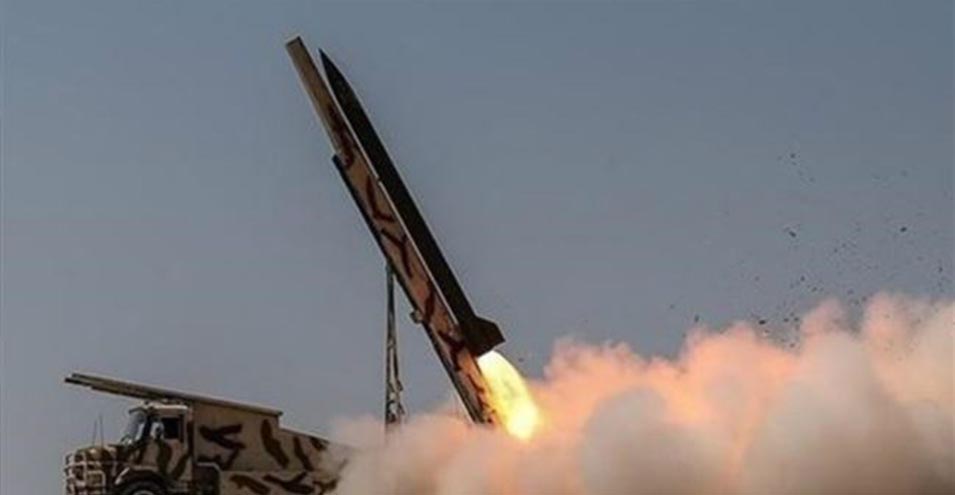
The Islamic Revolutionary Guard Corps (IRGC), while threatening countries it describes as “regional and extraregional supporters of takfiri terrorists,” announced that in retaliation for attacks on June 7 in Tehran, it had struck what it called a “command and support center for takfiri terrorists” in Syria with missiles.
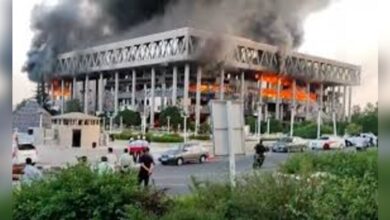
According to Tasnim News Agency, the IRGC announced that in retaliation for the attack on the Iranian parliament and the mausoleum of Ayatollah Khomeini, on the evening of Sunday, June 18, it struck “the command headquarters and gathering centers and support facilities and suicide vehicle manufacturing centers for takfiri terrorists in the Deir ez-Zor region in eastern Syria” with missiles.
According to this report, these “medium-range ground-to-ground” missiles were fired from “missile bases of the IRGC Aerospace Force in Kermanshah and Kurdistan provinces.”
The IRGC, without mentioning the number, announced that “received reports” indicate the killing of “a large number” of individuals present at this center.
Deir ez-Zor province is located on the Syria-Iraq border, on the banks of the Euphrates River. However, this report has not yet been confirmed by independent sources.
Meanwhile, Tasnim News Agency, in a report about the reasons for choosing this location, claimed that “many” members of the Islamic State group relocated to Deir ez-Zor in eastern Syria and some surrounding areas after retreating from Aleppo in Syria and Mosul in Iraq.
The Islamic State group, ISIS, claimed responsibility for the attack on the Iranian parliament and the mausoleum of Ayatollah Khomeini, which resulted in the deaths of 17 people.
However, the IRGC in its statement did not explicitly name this group and used the term “takfiri terrorists.”
Iranian Islamic Republic officials refer to ISIS, Al-Qaeda, and individuals ideologically close to Salafi groups as “takfiri groups.”
In the IRGC statement, the group, according to the organization’s terminology, “takfiri terrorists,” as well as countries described as “regional and extraregional supporters of these terrorists,” have been warned that if attacks similar to the Tehran incidents are repeated, “revolutionary wrath and the flames of vengeance of the Revolutionary Guards will engulf the perpetrators and architects and will lead the criminals to hell.”
The organization emphasized that “to safeguard national security and defeat seditions and anti-security phenomena, it will spare no effort and will place appropriate measures on its agenda.”
In this statement, it was promised that “supplementary news” about this IRGC action will be released.
A number of Islamic Republic officials, including the IRGC commander and the head of the judiciary, have accused Saudi Arabia of involvement in the attack on the Iranian parliament and the mausoleum of Ayatollah Khomeini without providing evidence and documentation, merely by referring to statements made by Saudi Arabia’s former defense minister.
They have also accused Israel and the United States of “supporting” these attacks.
Meanwhile, one day after the Tehran attacks, Gholamali Khoshroo, Iran’s permanent representative to the United Nations, in a letter to the UN Secretary-General and the Security Council, called for attention to the “terrorist” incident in Tehran and the “motives and conspiracies” of the perpetrators of these attacks, implicitly accusing Saudi Arabia of playing a role in these attacks.
The leader of the Islamic Republic also emphasized in his condolence message that the “inevitable result” of these attacks is “nothing but increased hatred of the American government and its agents in the region such as Saudi Arabia.”
This position taken by Islamic Republic officials comes as one of the individuals in a video attributed to the perpetrators of the Tehran attacks threatens that after Iran, it will be the turn of “Al Saud” (Saudi Arabia).
However, accusations by Islamic Republic officials against Saudi Arabia on this matter continue.
Iranian officials have not presented evidence regarding this claim and have only cited statements by the country’s former defense minister, who said in an interview with the “MBC” network that Iran is seeking to dominate Muslim countries and therefore there is no possibility of negotiation with Tehran.
Mohammed bin Salman, the Saudi Crown Prince and Defense Minister, in this interview emphasized that Riyadh will not wait for war to come to Saudi Arabia and will instead work to bring the conflict to Iran.
Source: Radio Farda