Amnesty International: The cycle of bloodshed by Iranian authorities must not continue
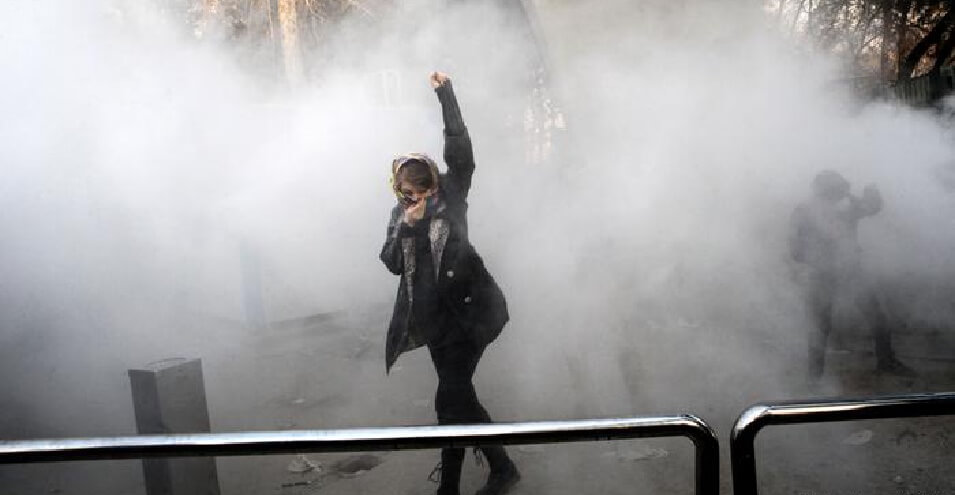
Amnesty International, on the third anniversary of the December 2017 protests, called on the international community to establish an independent investigative body to prevent the continuation of the “cycle of bloodshed” by the Islamic Republic.
On the third anniversary of the nationwide protests in December 2017, Amnesty International called on the international community through a statement to pressure the authorities of the Islamic Republic of Iran to stop the practice of “unlawful use of deadly force to suppress protests.”
The human rights organization also called for the establishment of an independent international investigative body by the UN Human Rights Council to impartially investigate the events of December 2017 and November 2019 in Iran.
Public protests in December 2017 initially began in Mashhad in protest against rising prices, but within a short time swept across Iran, with people taking to the streets in more than a hundred cities. The spokesperson for the judiciary announced on December 24 of that year that 25 people were killed during the protests, but Amnesty International suggests that the actual number of deaths may be higher.
The independent non-governmental organization in its statement emphasizes the “necessity of delivering justice for dozens of protesters, including children killed by Iranian security forces across the country.”
During the December 2017 and November 2019 protests, a large number of people under 18 years of age were killed; including Ahmad Heidari, a 13-year-old student whose family called him Sohrab. He was an only child and lived only with his mother.
Iran’s state newspaper also announced on December 13, 2017, citing the minister of education, that two of those killed in these protests were students. Shayan and Armin, who were residents of Khomeini Shahr and were killed by gunshots.
Widespread arrests and at least one execution
Amnesty International, in continuing its statement, while recalling “the arbitrary detention of thousands of protesters during the protests, the commission of torture and other inhuman, cruel and degrading treatment against detainees,” condemned the issuance of death sentences for some of those arrested in these protests and called for “truth-seeking and justice.”
According to the organization, at least one protester named Mostafa Salehi was executed in August 2020 in connection with the December 2017 protests, and five other protesters including Mohammad Bastami, Mehdi Salehi, Hadi Kiani, Abbas Mohammadi and Majid Nazari remain at risk of execution.
Amnesty International wrote that instead of following up on the status of detainees and investigating those killed, the judicial and security authorities of the Islamic Republic over the past three years “have threatened, harassed, intimidated and terrorized the families of victims to prevent them from publicly protesting.”
The statement continues: “The immunity of security forces from prosecution and punishment and the silent response of the international community emboldened Iranian authorities to escalate the unlawful use of deadly force during the subsequent nationwide protests in November 2019, leaving hundreds dead.”
Increase in executions for intimidation
Amnesty International also referred to the increase in the issuance and implementation of political death sentences after December 2017, considering it a tool for intimidating people and political repression.
The organization in this regard referred to the execution of Rouhollah Zam, the administrator of the Telegram channel AmadNews, and wrote: “In an unprecedented move in recent decades, authorities also executed Rouhollah Zam, an opposition journalist, in December 2020 in connection with his popular Telegram channel, ‘AmadNews,’ which authorities believed had incited the December 2017 protests.”
At the end, Amnesty International called on the international community to establish an independent fact-finding group to prevent the continuation of the “cycle of bloodshed by Iranian authorities.”
Source: DW