Dollar Exceeded 25,000 Tomans and Euro Surpassed 29,000 Tomans
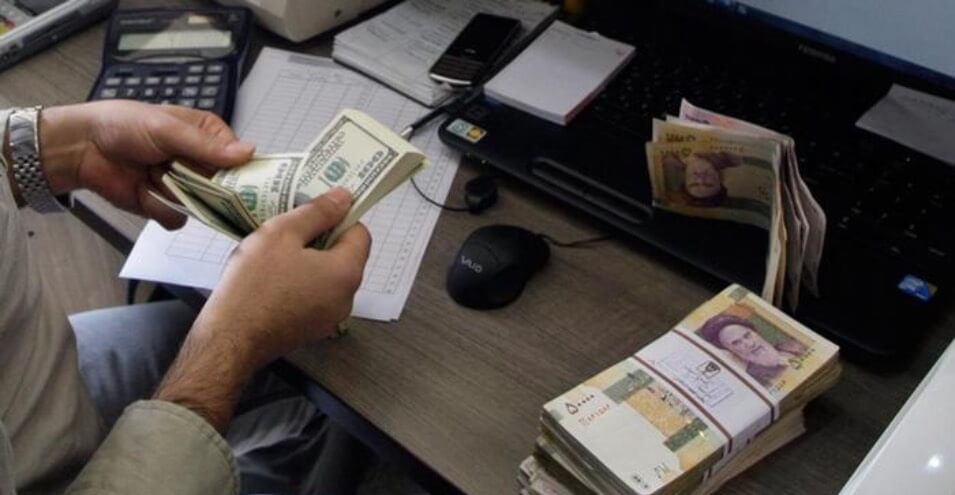
The renewed increase in the dollar price in Iran’s currency market indicates the failure of the Central Bank of Iran’s policy and currency injection into the market. The dollar exchange rate against the rial, after a brief decline in the final days of Mordad, has resumed its upward trend.
The dollar supply rate in the free market on Tuesday, September 18 (September 8) reached over 25,000 tomans (25,250). Thus, the upward trend of the dollar price in Iran’s currency market has continued.
Based on statistics released by the “Economics World” publication, the dollar exchange rate against the rial increased by approximately 600 tomans over the past two days.
This is while the monetary and fiscal policy pursued by the Central Bank of the Islamic Republic in relation to controlling the dollar-rial exchange rate has effectively failed to respond to developments in Iran’s currency market.
It is said that the Central Bank, in order to contain the increase in dollar prices, once again injected billions of dollars into Iran’s currency market.
Injection of 280 Billion Dollars
Abdolnasser Hemmati, the Central Bank Governor, announced three months ago (June 3) that the financial institution had injected 280 billion dollars into Iran’s currency market over the past 15 years.
Even the injection of such a substantial amount in the currency market has not been able to prevent the upward trend of the dollar exchange rate in Iran’s currency market over the past years. For example, the dollar sale rate in 1384 (15 years ago) was approximately 900 tomans.
Dollar injection into Iran’s currency market is occurring at a time when Hassan Rouhani, the President of Iran, has repeatedly stated that “we do not intend to put our hand in the Central Bank’s pocket.” This is while currency injection into the market is actually “putting one’s hand in the Central Bank’s pocket.”
Hemmati said the following regarding the Central Bank’s monetary and fiscal policy and dollar and currency injection into Iran’s market:
“We have injected 280 billion dollars over the past 15 years, which means on average 18 billion dollars annually into the currency market to control the exchange rate. Therefore, it is natural that many of these currencies have left the country as capital. All these facilities that have been purchased abroad have been due to these cheap currencies and rents.”
In other words, despite the annual injection of 18 billion dollars of currency into Iran’s market, the dollar price in this 15-year period has increased 27 times.
The euro exchange rate on Tuesday, September 18 also reached 29,382 tomans. The prices of other foreign currencies, including the UAE dirham and Turkish lira, have also shown an upward trend.
Gold Coins Also Became More Expensive
Hoshanq Shishebran, the head of the Isfahan Gold and Jewelry Union, attributed the increase in currency prices as well as gold and jewelry prices in Iran to sanctions and the coronavirus pandemic.
Referring to the increase in gold and jewelry prices in Iran, he stated that the market has stagnated and actually “gold and jewelry sales have reached zero.”
This is while, despite the “stagnation” of the gold market, the price of each coin on Tuesday, September 18 increased by 200,000 tomans compared to the previous day. Currently, the price of coins in Iran’s markets has reached 11 million and 600,000 tomans.