Christian Activists Warn of Iran’s Collapse: ‘No One is Neutral’
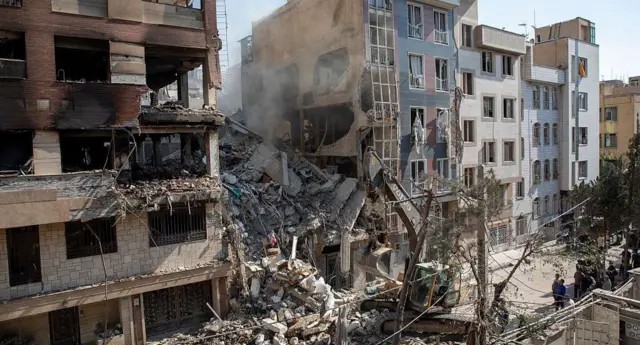
Christian activists, while warning about Iran’s collapse, declared that no one is neutral and the responsibility for decisions will be lasting.
Following the intensification of political, social, and security crises in Iran, the organization “Christian Activists for Free Iran” released an unprecedented statement addressing a wide spectrum of government officials and forces, warning about the country’s future. This statement presents a concerning picture of the current situation and emphasizes that Iran is on a path that could lead to collapse and widespread destruction.
The statement, released yesterday, Sunday, April 5 (corresponding to Farvardin 16), is not considered merely a domestic position; a copy of it was also sent to some Western politicians at the United Nations. This action shows that the statement’s authors are attempting to draw global attention to current developments in Iran and warn about their consequences.
The statement reads: “What is happening in Iran today is no longer an ordinary crisis.” This sentence forms the central point of the message; a message based on the belief that conditions have moved beyond the stage of temporary crises and entered a deep, structural situation.
The organization also emphasizes that the continuation of the current process is not a sign of authority, but rather a sign of “loss of control and an increase in costs that will directly affect the people and Iran’s future.” Such an assessment reflects growing concerns that have been raised in recent months by human rights organizations and international analysts.
In another section of this statement, the concept of “individual responsibility” is prominently emphasized. The authors make clear that under current conditions, no one can consider themselves neutral or merely an executor, and any action or even silence is regarded as a conscious choice whose consequences will affect the individual.
This statement, referring to current decisions within the government structure, adds that these measures have “resulted in increased suffering of the people, destruction of the country, and deepening of the crisis”; a matter that, according to this organization, shows signs even within official institutions.
The statement then places its addressees before a moral and historical choice: “Participating in a path that leads to violence, destruction, and greater harm to the people, or distancing oneself from it and standing with the people who bear the cost of these decisions.”
In the form of four specific requests, this organization asks government forces and officials to:
- Stop any participation in repression and violence against the people as soon as possible.
- Refrain from executing orders that lead to greater harm.
- Use their positions and authorities to prevent the escalation of the crisis.
- At this fateful juncture, stand beside the people and join them.
At the end of this statement, it is emphasized: “No structure is permanent, but the consequence of your decisions will be lasting.” This sentence is a clear conclusion to the statement’s approach, placing individual accountability beyond structures of power.
Additionally, through thought-provoking questions such as “When I knew, why did I continue? When I could have stopped, why didn’t I?” an effort was made to encourage addressees to reconsider their role and conduct.
The statement’s authors conclude by emphasizing that this text is not merely a warning, but rather “a description of a reality”; a reality that, in their view, has placed Iran’s future at a critical and decisive point.