IRGC Spokesman Says Quds Force Deputy Commander Did Not Die from Heart Condition
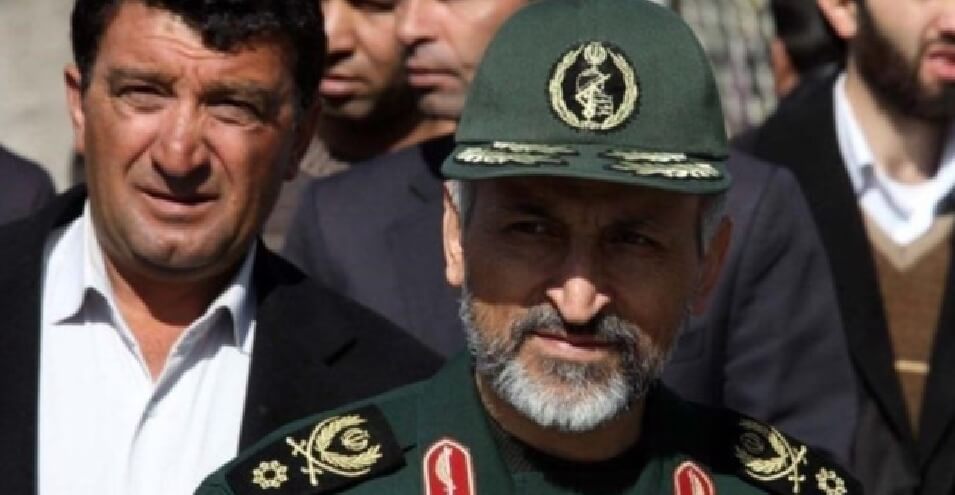
Although the Islamic Revolutionary Guard Corps (IRGC) Public Relations announced that Mohammad Hejazi, the deputy commander of the Quds Force, died from a “heart condition,” the IRGC spokesman denied this claim and stated that he died due to “chemical injuries” resulting from the Iran-Iraq War.
According to Ramezan Sharif, Hejazi had contracted coronavirus a few months ago but had “recovered.”
He also stated that a special commission at the Baghiatollah Hospital, affiliated with the IRGC, identified Hejazi as a “martyred disabled war veteran” and considered “chemical injuries” as the primary cause of his death.
Regarding the possibility of the assassination of Hejazi, the IRGC spokesman said that the Israeli government “had been pursuing the assassination” of the deputy commander of the Quds Force for years.
Following the publication of the IRGC Public Relations statement yesterday, Mohammad Mahdi Hemat, son of Mohammad Ibrahim Hemat, one of the most renowned commanders killed in the Iran-Iraq War, tweeted that the cause of Hejazi’s death was “not and is not a heart condition.”
He provided no further explanation on this matter but used the hashtag “martyr.”
Mohammad Hejazi became deputy commander of the Quds Force on January 18, 2020, following the killing of Qasem Soleimani, commander of the Quds Force, in an American military strike.
Before his appointment as deputy commander of the Quds Force, Mohammad Hejazi played an important role in Iran’s regional policies, particularly in the Syrian war.
He was the highest-ranking IRGC commander in terms of military hierarchy who had direct presence in the Syrian war and when the Syrian conflict began, he was in Lebanon collaborating with Hezbollah, the largest and oldest proxy group of the Islamic Republic in the Middle East.
During the 2009 post-election protests, Hejazi was responsible for the Tharallah headquarters in Tehran, which was considered the main institution in suppressing the protests in the capital. Dozens of people were killed and thousands were arrested in those protests.
His role in suppressing protesters and human rights violations led to his name being placed on the European Union’s sanctions list from September 2011.
Source: Radio Farda