Isa Kalantari: We Have Become a Country of Scrapped Vehicles
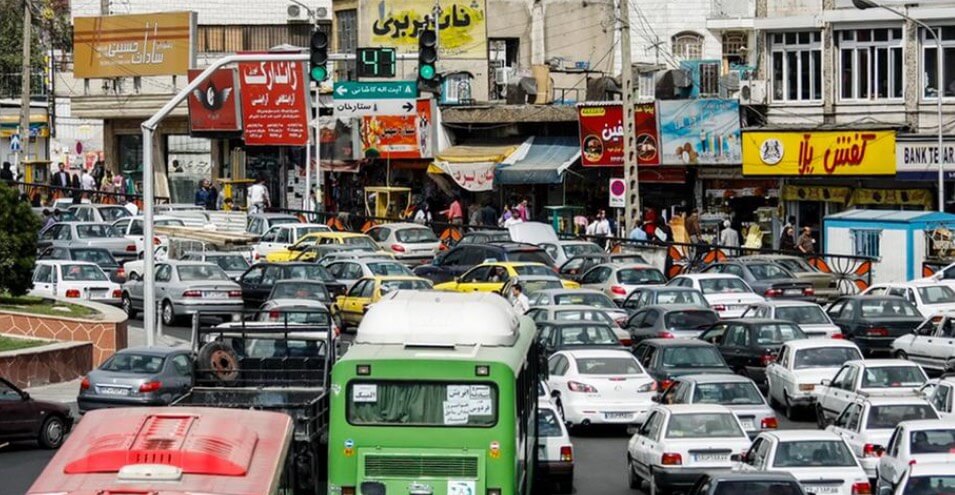
The head of the Environmental Organization says 87% of minibuses, 81% of motorcycles, 73% of buses, and 61% of trucks in Iran are scrapped, and with this fleet and daily consumption of 140 million liters of fossil fuel, one cannot expect clean air.
Isa Kalantari, head of the Environmental Protection Organization, says that in none of the five-year plans of the Islamic Republic has a budget been allocated for clean air. In a meeting in Tehran, he described clean air as a citizens’ right and emphasized that unhealthy air is far more dangerous than unhealthy water and food.
According to ISNA news agency, Kalantari said: “In the past, our population was smaller and consequently energy consumption was lower, so we had more healthy air, but with population growth and fossil fuel consumption and wasteful energy use, we have reached a point where clean air has become merely a wish.”
Kalantari, at the ceremony of “unveiling the national system for compiling the list of air pollutant emissions in the country’s metropolises,” referring to the number of worn-out vehicles and the addition of more than 1.5 million vehicles to urban systems, said: “If it weren’t for the efforts of the Oil Ministry in recent years, and if our fuel quality was like it was five years ago, the country would be uninhabitable today.”
Kalantari acknowledged that 87% of minibuses, 81% of motorcycles, 73% of buses, and 61% of trucks in Iran are scrapped: “Currently, about 9.6 million out of 11 million motorcycles in the country are scrapped, but they say these are people’s means of livelihood and must operate and produce polluted air.”
The head of the Environmental Protection Organization noted that each scrapped motorcycle produces seven to eight times the pollution of a car, and added that 61% of air pollution in winter is caused by diesel vehicles and scrapped trucks.
He said that one cannot expect clean days without spending money: “On the other hand, sanctions have prevented the Oil Ministry from exporting its produced fuel oil. When we stopped the consumption of fuel oil in power plants, refineries became full of fuel oil, as a result power plants resumed burning fuel oil and we fell victim to polluted air. We have fallen into a closed cycle and don’t know how to escape it under these conditions.”
Kalantari stated that closing schools and universities does not solve the air pollution problem. At the same time, in another part of his remarks, he acknowledged that many standards have been overlooked in passenger car production, because there is no capacity for complete correction under sanctions conditions: “…The fleet we currently have in the country produces no other air…if we want to implement these standards, the entire automotive industry of the country must shut down…”
Health and Economic Losses
Air pollution in Iran’s metropolises is always discussed along three axes: low-quality gasoline, the automotive industry, and sanctions, with each official blaming the opposing sector. The National Oil Refining and Distribution Company recalls that trucks, buses, and minibuses consume polluting diesel, while car gasoline is standard. The head of the Environmental Protection Organization accuses automakers, while the secretary of the Automakers Association mentions sanctions problems and lack of contact with foreign parts manufacturers for sensor standardization.
A month earlier, Kalantari, naming the automobile mafia in Iran, had said this mafia had such financial power that it could buy decision-makers. He said in December at a conference of managers of the country’s wetland provinces in Ahvaz: “When Iran Khodro gifts four cars to the Environmental Protection Organization, it means we will have polluted air and millions of people will breathe it.”
In late November, Shina Ansari, director general of environment and sustainable development at Tehran Municipality, citing a World Bank report, announced the economic consequences of air pollution for Tehran residents as equivalent to 2.4 billion dollars; a figure nearly equal to half the amount allocated in the 1398 budget for development projects. Two years earlier, Vahid Hosseini, then CEO of Tehran Air Control Company, said the economic cost of Tehran’s air pollution is 12 to 15 billion tomans; a figure equivalent to the municipality’s budget.
In 2016, the World Bank announced that 21,000 people die annually from the effects of pollution in Iran. According to the same bank’s report, the cost of air pollution for the Middle East and North Africa is 9 billion dollars, of which Iran and Egypt bear the most. In the latest report of the Parliamentary Research Center, it is also cited from Iran’s Ministry of Health statistics that 4 to 5 thousand Tehran residents annually lose their lives due to inhalation of suspended particles.
The World Health Organization recognizes governments as directly responsible for air pollution and says they must take three urgent steps: creating green belts around cities, halting the movement of low-quality and polluting vehicles, and preventing the spread of dangerous gases and controlling factories.
Source: DW