Islands Called ‘Luxury’ Schools in a Sea of Widespread Poverty
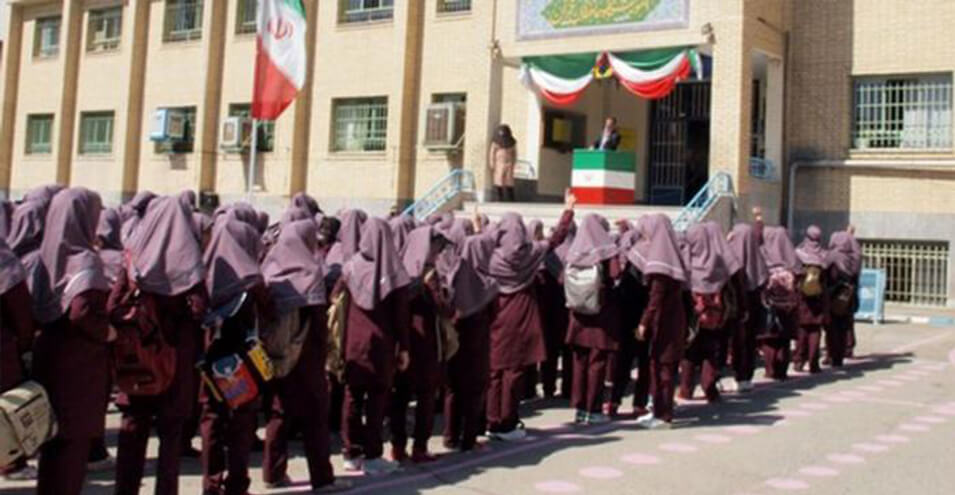
A parliamentary representative has criticized the astronomical tuition fees of “luxury” schools in Tehran and spoke of the high costs that families pay for special services in these schools, including European trips. The Speaker of Parliament has requested follow-up on the matter.
Alirezá Salimi, a member of parliament, raised the issue of expensive private or “luxury” schools in Tehran during the open session on Sunday, June 5 (May 26) of the Islamic Consultative Assembly, pointing to the staggering costs that families pay to send their children to these schools.
According to the Mehr News Agency, he stated: “These schools have received 80 million tomans from families and have taken students to Sweden and France.” He objected to the fact that such schools operate in Tehran “at a time when a significant portion of society is under economic pressure.”
Ali Larijani, the Speaker of Parliament, has also asked the Parliamentary Commission on Education and Research to follow up on the issue of luxury schools in Tehran.
What facilities do these schools provide to their students?
ISNA News Agency published a detailed report on Saturday, June 4 (May 25) in which it conducted fieldwork research on these schools. The agency referred to the statements of Mojtaba Zeinivand, head of the Organization of Private Schools, who stated: “The maximum tuition for primary schools in Tehran is 9 million and 400 thousand tomans, for first cycle secondary schools the maximum is 11 million tomans, and for second cycle secondary schools excluding the twelfth grade the maximum is 15 million tomans.”
This is a base amount that does not include many ancillary services and varies greatly depending on the classification of non-profit private schools. The report states that according to the approved model of the Ministry of Education and Training, the base tuition does not include transportation, food, and student uniforms, and the cost of the schools’ supplementary programs adds 3 to 4 million tomans to the approved tuition by the Ministry of Education and Training, which many cannot afford under current economic conditions.
Certainly, these ancillary expenses at highly “luxury” schools include many things, including foreign trips, which sometimes cost several times the original tuition.
The report examined the classification of schools and emphasized that first-class schools “are established with power and wealth. Schools that are not accessible to every student, and even the Ministry of Education does not have much power to oversee their activities.”
These schools offer different levels from kindergarten to high school and receive tuition ranging from 15 million tomans to 23 million tomans. The mandatory programs and services of these schools also differ significantly from other schools. From requiring the professional learning of a music instrument to “a second foreign language, a specialized sport, swimming, yoga, zumba, computer training,” and so on.
Participation in special camps of these schools is accompanied by paying tens of millions of tomans; for example, paying approximately 50 million tomans for a trip to France or 30 million for a trip to Sweden, as some families have mentioned.
While inflation and high prices have severely lowered the standard of living of the general population in Iran, and some face difficulties in providing dinner for their families, according to the report, this group of families have no problem paying staggering costs.
The report also examined second and third-tier non-profit schools that provide fewer services and charge lower tuition. However, they sometimes require payment of up to 18 million tomans for high school as base tuition. A cost that does not include ancillary services such as extracurricular classes.
The head of the Organization of Private Schools and Institutions of the Ministry of Education and Training said that joint supervisory teams with educational offices in different areas of Tehran are being deployed. However, it is unclear how these teams intend to prevent various methods of collecting educational costs from families. Furthermore, as long as “a group can afford to launder money,” by what law can this process be stopped for them?
A comparison between the facilities and special educational services that this group of schools provides to students from “luxury” families in society with the tragic state of public schools reveals the depth of the disaster. A “disaster” that is not limited to Tehran and becomes even more tragic the farther one goes from the capital. The facilities of these schools, the dire situation of their students, and the painful incidents that have occurred in them have been repeatedly covered in the media.
Source: DW