Israel Calls for Immediate Halt to Nuclear Talks with Iran
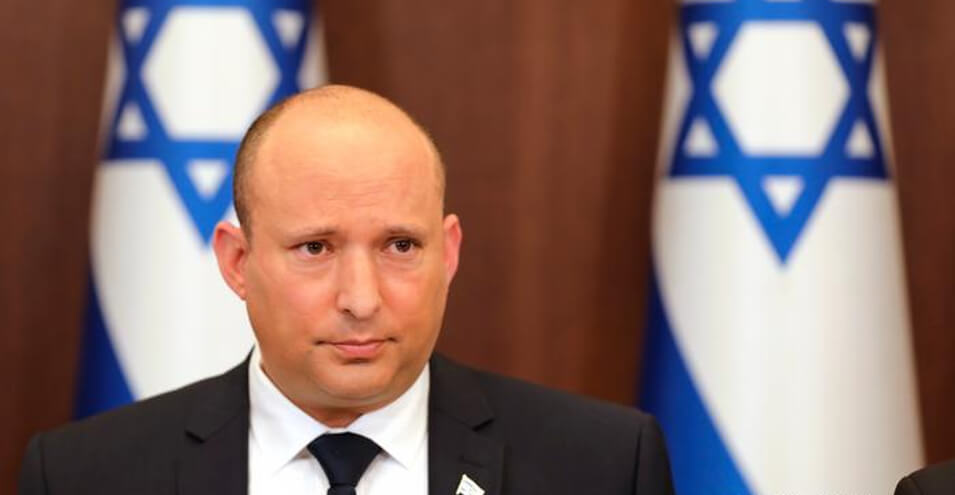
Israel’s Prime Minister accused the Islamic Republic of “nuclear extortion” and called for an immediate halt to negotiations with Iran in Vienna. Israel’s Foreign Minister recently stated that a “credible military threat” is the only way to prevent Iran from obtaining an atomic bomb.
Naftali Bennett, referring to reports about Iran’s use of advanced centrifuges at the underground Fordow facility, accused the Islamic Republic of “nuclear extortion” through negotiation tactics and called for an immediate halt to talks on reviving the JCPOA in Vienna.
Reuters reported on Thursday, December 2, citing Israel’s Prime Minister’s office, that Bennett, in a telephone conversation with Anthony Blinken, U.S. Secretary of State, demanded an immediate stop to JCPOA revival negotiations in Vienna and emphasized that world powers should confront Iran with stricter measures instead of talks.
The International Atomic Energy Agency announced on Wednesday in its latest report that Iran has launched uranium enrichment at the 20 percent level at the Fordow facility near Qom by installing a cascade of 166 advanced IR6 centrifuges.
According to the nuclear agreement between the Islamic Republic and six world powers and the Joint Comprehensive Plan of Action (JCPOA), Iran is not permitted to use advanced centrifuges and should not enrich uranium beyond 3.67 percent.
One year after the United States’ withdrawal from the nuclear agreement in May 2018 and the reimposition of sanctions on the country, Iran gradually reduced implementation of its JCPOA commitments step by step, a process that has continued to date.
Talks to revive the JCPOA began in mid-March of this year, and by the end of June, six rounds had been completed. The ultimate goal of these negotiations is described as the United States’ return to the nuclear agreement and Iran’s resumption of implementing JCPOA commitments.
On Monday, after approximately six months of pause, a new round of negotiations of the JCPOA Joint Commission began with the presence of the new negotiating team of the Ibrahim Raisi government and representatives of the five remaining signatories to the agreement in Vienna.
Enrique Mora, the Deputy in charge of foreign policy of the European Union, oversees the coordination of these negotiations, and the United States participates indirectly.
Israel’s Emphasis on Military Threat Rather Than Negotiation
Concurrently with the start of Vienna talks, Yair Lapid, Israel’s Foreign Minister, during a three-day trip to London and Paris, discussed the Islamic Republic’s nuclear activities with British Prime Minister Boris Johnson and French President Emmanuel Macron.
According to the Times of Israel, Lapid, in his conversation with Macron, while opposing the lifting of sanctions against the Islamic Republic, emphasized that Iran’s nuclear programs can only be halted through a “credible military threat.”
From Iran’s perspective, the ultimate goal of Vienna negotiations is described as the lifting of all U.S. sanctions, while the United States considers the lifting of certain sanctions contingent on Tehran’s return to implementing JCPOA commitments.
Israel’s Prime Minister on Monday morning, on the eve of the start of a new round of Vienna talks, in a video message urged world powers not to “succumb to Iran’s extortion.”
Bennett warned that the Islamic Republic, which seeks to lift sanctions, offers nothing in return, and lifting sanctions would mean hundreds of billions of dollars flowing into Iran’s nuclear programs.
Continuing Israel’s efforts to counter the JCPOA revival, Benny Gantz, Israel’s Defense Minister, is scheduled to travel to Washington next week to explain in talks with his American counterpart and the U.S. Secretary of State the reasons for his country’s opposition to the agreement.
Iran Submits Two Draft Texts
Meanwhile, Ali Bagheri Kani, Deputy for Political Affairs of the Foreign Ministry and head of the Islamic Republic’s negotiating delegation, announced on Friday that Iran submitted its two draft texts regarding the subjects under negotiation in recent days to the opposing parties the previous night.
According to ISNA, Bagheri Kani said about these two documents: “The first document concerns the lifting of sanctions and the other concerns Iran’s nuclear activities. The opposing side must review these and gain the necessary readiness to enter into serious negotiations about these texts.”
After preliminary talks, two working groups began reviewing the issue of sanctions and the Islamic Republic’s nuclear activities on Tuesday and Wednesday.
So far, no reports have been published regarding the possible outcome of these reviews and the content of Iran’s proposed texts about them. According to Bagheri Kani, “the status of reviewing these documents and the timeline for addressing them” will be clarified today.
The Deputy for Political Affairs of the Islamic Republic’s Foreign Ministry says if the opposing parties complete their reviews and are willing, Iran’s negotiators are still in Vienna and are “ready for the continuation and persistence of talks in this round.”
Source: DW