Journalist Assaulted While Reporting on Vaccination Process in Iran
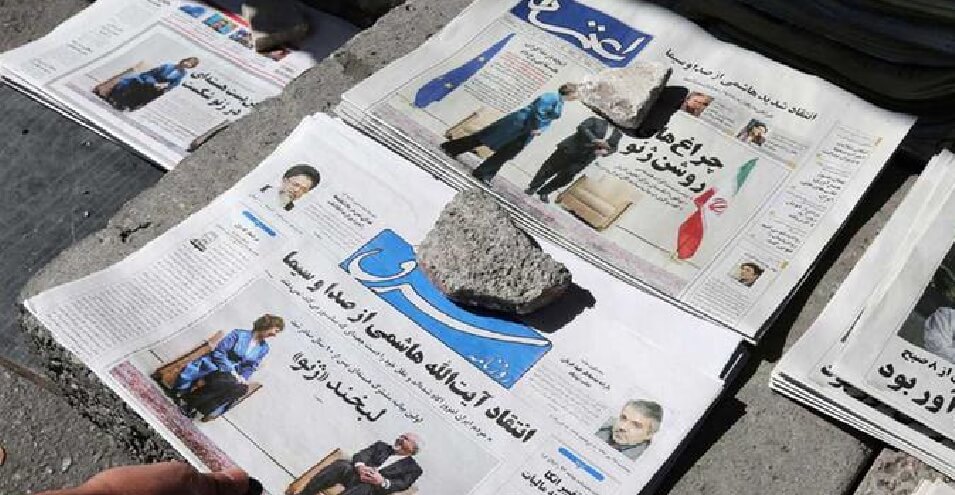
A journalist working for an Iranian newspaper has been attacked by security personnel at Shahid Beheshti University of Medical Sciences. The Tehran Association of Journalists has described this action as a consequence of officials’ disregard for the rights of media and journalists.
The Iran Association of Journalists expressed regret in a statement posted on their Telegram channel regarding the assault of a female journalist while preparing a report on vaccination at the Saei complex.
According to the statement, Faezeh Momeni, a journalist for Sobh-e No newspaper, was stopped by hospital security personnel on Monday, May 17, while preparing the aforementioned report after conducting interviews with several medical staff members at Shahid Beheshti University of Medical Sciences Hospital, and was subjected to interrogation.
Momeni’s resistance to the illegal demands of security personnel to hand over her journalistic equipment resulted in the assault of the journalist, breaking her hand, which subsequently required surgery. The security officer forcibly took the journalist’s equipment and deleted the interviews she had conducted.
The Iran Association of Journalists strongly condemned this incident, describing it as “one of the worst attacks against a journalist that occurred in a completely unlawful manner” and considered it “a manifestation of intensifying insecurity in the journalism profession in Iran.”
The statement further stated: “Officials’ disregard for the rights of media and journalists and the multiplicity of violations of the security of journalism in various forms has reached such an extent that anyone feels permitted to conduct such criminal, vulgar, and aggressive behavior toward a journalist.”
The association called on the officials of Shahid Beheshti University to hold their personnel accountable for their unlawful and arbitrary conduct and to apologize to the journalist of Sobh-e No.
The association also called upon the judiciary to address the complaint of Momeni and her colleagues at Sobh-e No without discrimination and in a fair manner, and to investigate this case in a way that is “worthy of the dignity and security of the journalism profession.”
Lack of Transparency in Public Information
The attack on the Sobh-e No journalist occurred on the same day that eight national newspapers of the country issued a joint statement to the government, describing “contradictory news and information about vaccine imports” as “a sign of confusion in the decision-making system regarding this vital issue.”
Sobh-e No, which is close to Mohammad Baqer Qalibaf, the current speaker of parliament, was not among these eight relatively progressive newspapers of the country, but both that statement and the assault of the journalist suggest efforts to maintain lack of transparency in the information system to society, which has consistently been among the major weaknesses of state institutions in Iran and has become increasingly apparent during the coronavirus crisis.
The issue of weak performance by public relations departments, which by their duty should provide maximum information to society, remains a topic of discussion, and journalists’ efforts to keep society transparently informed of the ups and downs of events in the country and the poor and weak performance of state institutions continue to face numerous problems and limitations that have only been reduced to some extent under pressure from social networks.
Nevertheless, the case of the attack on the Sobh-e No journalist shows that the security of information work in Iran remains threatened not only by hidden and overt security pressures but also by physical assaults.
Source: DW