Labor Protests Continue in Iran with Start of Ibrahim Raisi’s Presidential Term
With Ibrahim Raisi beginning his work as Iran’s new president, professional and public gatherings protesting poor living conditions and demanding wage and labor rights continue.
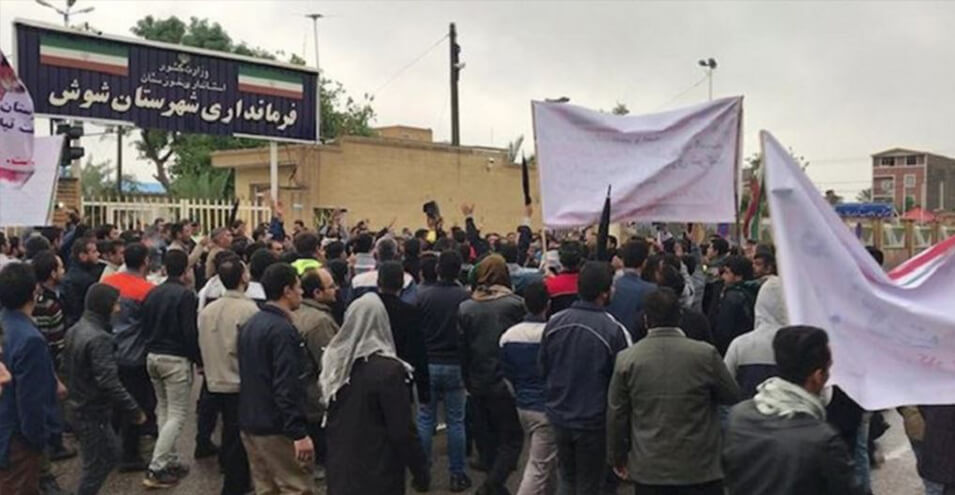
Based on videos published on social networks, Haft Tappeh workers on Sunday, August 17, for the twenty-seventh consecutive day held a gathering in front of the Shush governorate office demanding immediate provision of outstanding claims and determination of the company’s transfer status following the announcement of privatization, as well as the return to work of laid-off colleagues and the extension of contracts for all workers in the pest control department. These workers announced in continuation of their strikes that the Islamic Labor Council is not protecting the interests of the company’s workers.
Striking workers at the Haft Tappeh sugar cane complex on Saturday also rejected a proposal by their representatives to negotiate with provincial officials due to mistrust of these officials.
On Sunday, also in continuation of the 1400 strike campaign comprising workers from oil and gas and petrochemical projects in Iran, workers at the Pars Gas platforms announced in a letter to the CEO of the Pars Oil and Gas Company that if the company does not pay five months of outstanding wages in the August salary slip, they will resume protests.
These workers protested the manner of the general wage increase for 1400 and held several protest gatherings in response.
On this day, medical students at Kermanshah University also held a gathering on the second consecutive day protesting living and working conditions and what they described as the difficult situation of the internship period, objecting to long working hours, very low stipends, and the failure to consider work experience and collective insurance. They held placards demanding the separation of educational staff from medical staff.
Today, steel retirees in Isfahan and Khuzestan regions also held gatherings in front of pension fund offices protesting the non-payment of their outstanding wages and salaries.
Simultaneously, depositors and account holders of the Caspian Institution in Saadatabad, Tehran, employees of the Saveh Fire Department, and workers of the Hawizeh Water and Wastewater Department held protest gatherings objecting to the lack of attention to their demands.
In recent years, various segments in Iran, including retirees, teachers, and workers, have protested living and wage conditions by holding multiple gatherings, and most of these gatherings have been accompanied by physical confrontation with police and security forces and the arrest of protesters.