Latest Status of Case and Health of Hamed Gharaoughli, Political Prisoner Detained in Urmia Central Prison
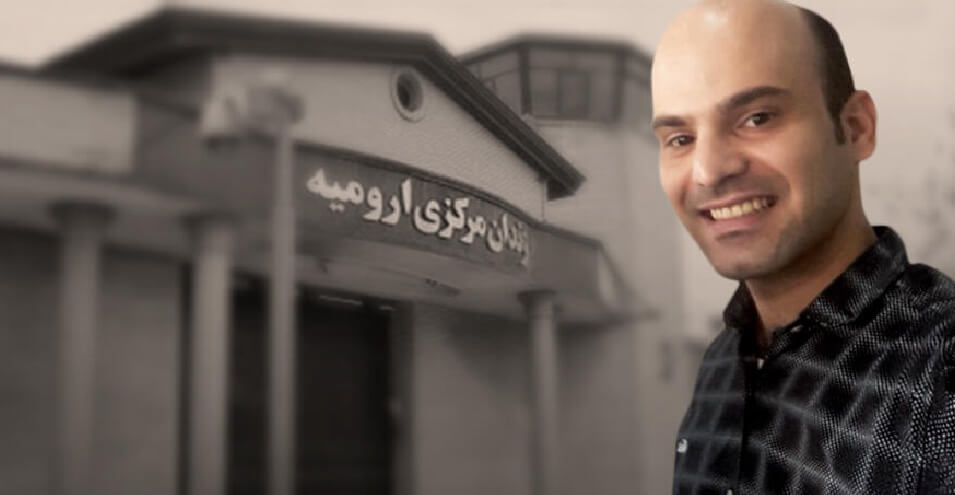
The sister of Hamed Gharaoughli says that the authorities of Urmia Central Prison are refusing to transfer this political prisoner, who is in poor physical condition, to a hospital outside the prison.
Haniyeh Gharaoughli, sister of Hamed Gharaoughli, a political prisoner, said in an interview with Voice of America that this political prisoner, who suffers from “grand mal epilepsy,” is not in proper physical condition, and prison authorities are refusing to provide medications prescribed by his treating physician and delivered to the prison by his family.
According to Ms. Gharaoughli, Hamed Gharaoughli should be examined by a specialist doctor every month, and brain and nerve-related examinations should also be conducted regularly every six months, but due to obstruction by prison authorities, these examinations have not been performed, leading to deterioration of Hamed Gharaoughli’s physical condition in prison.
She further told Voice of America that the prison’s physician also refused to visit Mr. Gharaoughli and said that treating this political prisoner is not within his specialty. In addition, a psychiatrist in the prison met with him once, but “rather than addressing specialized medical issues, he interrogated his beliefs.”
Hamed Gharaoughli, a 34-year-old political-ideological prisoner, was arrested by Ministry of Intelligence agents on June 28 of this year and was transferred to Urmia Prison after 26 days. According to available information, the trial hearing of this political prisoner was held in early December at Branch 2 of the Urmia Revolutionary Court for ten minutes, and this political prisoner, without being given the opportunity to defend himself in this case, despite denying the charges, was sentenced to 14 years and one month in prison on charges of “propaganda against the system,” “insulting the leadership,” and “membership in opposing groups and efforts to achieve their goals”.
Haniyeh Gharaoughli, reading the case file of her brother as a security matter, told Voice of America: “They did not even allow Hamed to read the sentence carefully, and before December when the verdict was sent to Hamed, we heard about this sentence from the lawyer.”
Ms. Gharaoughli cited Hamed Gharaoughli’s membership in the Mujahedin-e Khalq Organization as examples of the charges in the verdict and, referring to this political prisoner being subjected to forced confession, told Voice of America: “The forced confessions extracted from him led to accusations that he was a member of the Mujahedin-e Khalq Organization and worked for their purposes, while he has no connection whatsoever with this group.”
Amnesty International also recently issued an appeal asking people and human rights activists around the world to write letters to the head of the judiciary demanding the immediate and unconditional release of Hamed Gharaoughli, a prisoner of conscience detained solely for the peaceful exercise of the right to freedom of expression and the right to freedom of communication
The sister of this political prisoner further told Voice of America that in order to obtain “forced confessions,” this political prisoner was threatened during interrogations with the killing of his mother and the arrest of his sister; on the other hand, after Hamed Gharaoughli’s arrest, his mother and Ms. Gharaoughli were also summoned for interrogation and during the interrogation were forced to sign a commitment not to insult “sacred values” and “the leader of the Islamic Republic.”
The U.S. State Department has repeatedly condemned the violent conduct of the Islamic Republic regime toward the Iranian people, including civil activists, under various pretexts, as well as the repeated and ongoing violation of the rights of Iranian citizens by agents of the regime.
Source: Voice of America