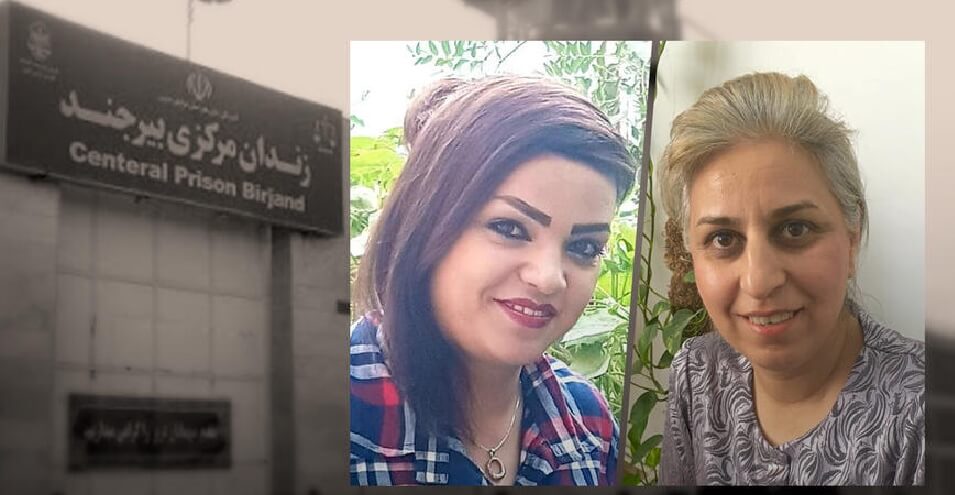
Lawyer of Lisa Tabianian, Imprisoned Bahai Citizen: Supreme Court’s Reversal of Acquittal Was ‘Illegal and Unjust’

The defense lawyer of Lisa Tabianian, a Bahai citizen imprisoned in Iran, says that the authorities of the Islamic Republic cannot accept that a court in the Islamic Republic does not consider “propagating Bahaism” a crime, and that is why after Tabianian’s acquittal, she was convicted.
Mozdak Ettemadzadeh, the defense lawyer of this Bahai citizen residing in Karaj who was recently arrested to serve his sentence and transferred to Shahid Kachouei Prison, told Voice of America that the hearing of this Bahai citizen’s case up to the court of appeals was held without the presence of a lawyer, and Branch 4 of the Islamic Revolutionary Court of Karaj in Mordad 1397 (August 2018) convicted her of “propaganda activity against the system” to seven months in prison.
This attorney says that verdict was overturned in Dey 1397 (December 2018) by Branch 12 of the Appeals Court of Alborz Province. However, after two years, the Supreme Court of the Islamic Republic reversed the acquittal verdict of Lisa Tabianian on Saturday, Mordad 25 (August 15, 2019), ordering her arrest. Accordingly, she had to be transferred to Kachouei Prison to serve a sentence from which she had previously been acquitted.
Mr. Ettemadzadeh told Voice of America that Tabianian’s acquittal was reversed by the country’s Supreme Court while the head of Branch 12 of the Appeals Court of Alborz Province had previously stated in a judgment dated Dey 1, 1397 (December 22, 2018) that this Bahai citizen “has not engaged in any propaganda activity against the system” and with the reasoning that “mere propaganda for the Bahai faith is not considered propaganda against the system and what is certain is that propaganda must be against Iran’s political system, and therefore according to Article 500 of the Constitution, religious propaganda that is not considered against the system of the Islamic Republic of Iran and its sovereignty is not a crime,” issued an acquittal verdict.
This attorney, referring to his lack of knowledge about the reversal of the verdict by the country’s Supreme Court, told Voice of America: “It is not yet clear on what grounds the retrial was conducted. But based on Article 477 of the Code of Criminal Procedure, which states that if the verdict is contrary to Islamic law, the head of the judiciary can have a new hearing of a final verdict at any time and in any place, the Supreme Court ruled and upheld the verdict of the primary court.” According to Mr. Ettemadzadeh, this action is illegal, unjust, and unlawful.
Based on available information, Ms. Tabianian was arrested on Esfand 25, 1395 (March 15, 2017) by the Intelligence Ministry officials in Karaj and was released from Rajaei Shahr Prison in Karaj in early Farvardin 1396 (March 2017) by posting bail until the end of the legal proceedings.
Mr. Ettemadzadeh says that after accessing this Bahai citizen’s file, it became clear that there was no evidence suggesting that Ms. Tabianian wanted to present any teachings of the Bahai faith even to a single Bahai person; however, the Islamic Republic authorities pursue Bahais under various pretexts.
This attorney says that despite the fact that the Charter of Citizens’ Rights in Iran’s Constitution states that “any person, regardless of any beliefs they hold, can benefit from these rights,” human rights violations against Bahais continue to occur. He added that a legal solution must be found to convince and force the Islamic Republic system to stop preventing certain citizens who hold particular views from pursuing education and employment and to stop persecuting them.
This is not the first time a Bahai citizen has faced a prison sentence. In late Ordibehesht (May 2020), the global Bahai community issued a statement expressing concern about the increase in persecution of followers of the Bahai faith in Iran and the conviction of these citizens to long-term prison sentences, and despite the spread of the coronavirus in prisons, called for the release of prisoners of conscience from Iranian prisons.
Sam Brownback, U.S. Ambassador-at-Large for International Religious Freedom, said on Ordibehesht 25 (May 14, 2020) in a special press conference in Washington: “Bahais in Iran, and unfortunately in some other countries around the world, are subjected to severe persecution and harassment.”
The U.S. Commission on International Religious Freedom also expressed concern in early Ordibehesht (May 2020) in its annual report about the state of religious freedoms in Iran; part of this report states that the Islamic Republic has increasingly targeted Muslim minorities, particularly Sunnis and Dervishes, as well as followers of other religions and sects, including Bahais and Christians.
Source: Voice of America