Letter from Former European Officials: US and Iran Should Revive the JCPOA
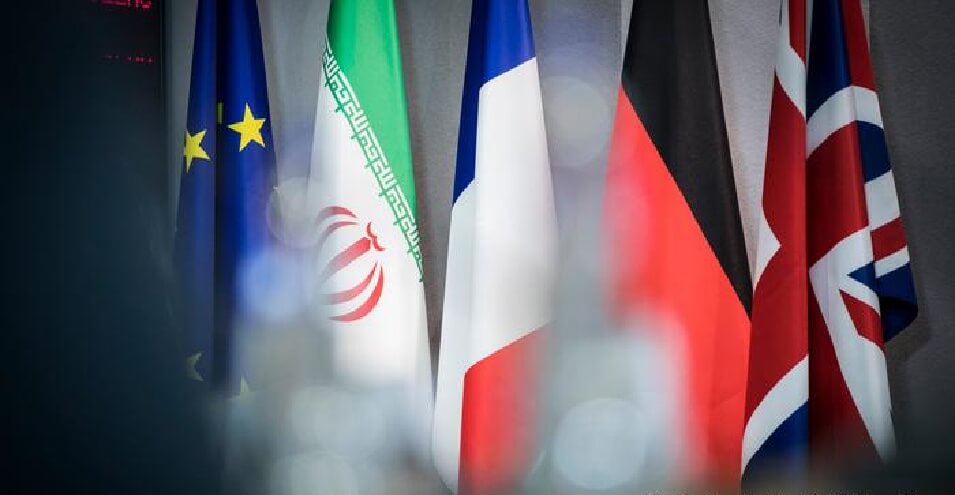
43 senior former European political officials have called on the governments of the United States and Iran in an open letter not to miss the opportunity to revive the JCPOA amid the critical conditions of the Ukraine war and to bring it to a successful conclusion.
A group of 43 former senior European officials published a letter on Tuesday, April 26 (Ordibehesht 6) on the website of the “International Crisis Group” calling the JCPOA (nuclear agreement with Iran) a successful agreement and calling for its rapid revival.
In their open letter, they wrote: “At a time when cooperation between countries on both sides of the Atlantic has become more vital than ever in responding to Russia’s unjustified aggression against Ukraine, it would be a major mistake for American and European leaders to miss the opportunity to contain a nuclear crisis in the Middle East.”
The authors of this letter justified why “European governments rejected the reckless decision of the Trump administration to abandon the agreement without a suitable alternative and after the United States’ withdrawal in 2018 worked hard to keep the agreement alive” by describing it as limiting Iran’s enriched uranium reserves and their enrichment level and delaying a process that could lead to Iran’s acquisition of nuclear weapons, under the supervision of the International Atomic Energy Agency.
Among the signatories of this letter are Joschka Fischer, former Foreign Minister of Germany, Jack Straw, former Foreign Minister of Britain, Javier Solana, former head of the European Union’s foreign policy, Wolfgang Ischinger, former president of the Munich Security Conference, Carl Bildt, former Foreign Minister of Sweden, and Hans Blix, former Director General of the International Atomic Energy Agency.
These individuals believe that Donald Trump’s maximum pressure policy, former US president, “has resulted in nothing but escalating nuclear tensions, dangerous regional war, and economic hardship for the Iranian people.”
They pointed to the consequences of the “strategic error” of the former US administration, namely the Trump administration’s withdrawal from the JCPOA, which “led to the accumulation of enriched uranium to weapons-grade levels and enabled Iran to acquire it in a short timeframe.”
This group therefore recognized the efforts of Joe Biden, the current US president, to return to the JCPOA and mutual commitments of the United States and Iran to the 2015 agreement as a necessary “course correction.”
Two Possible Scenarios
Former senior European officials have foreseen two possible scenarios. First scenario: “The United States quickly demonstrates the decisive leadership and necessary flexibility to resolve the remaining issues from political (not nuclear) differences with Tehran.”
Second scenario: “The two sides enter into a costly stalemate that could lead to escalating nuclear tensions and ultimately result in hostile actions and the use of hostile tools.” They have emphasized that this scenario is not in the interest of either party.
In their letter, they have emphasized that they understand that issues such as delisting the Islamic Revolutionary Guard Corps from the US list of foreign terrorist organizations, which is the latest major difference between the two sides, are difficult.
The authors of this letter, while stressing that “decision-making in this area is exclusively with US policymakers and government,” added that “Iran’s demands could be accepted and counterterrorism solutions could be implemented in other forms.”
They also asked Iran: “Do not expect the nuclear agreement to address broader areas of disagreement with the United States.”
These former European diplomats warned both sides that the strategic consequences of the failure of these negotiations “will be very serious and profound.”
They consider the agreement entirely possible and have asked Biden and Iran’s leadership to show the necessary flexibility.
Source: DW