Medical Staff Testify About Government Efforts to Turn Healthcare Centers ‘Into Part of a Killing Machine’
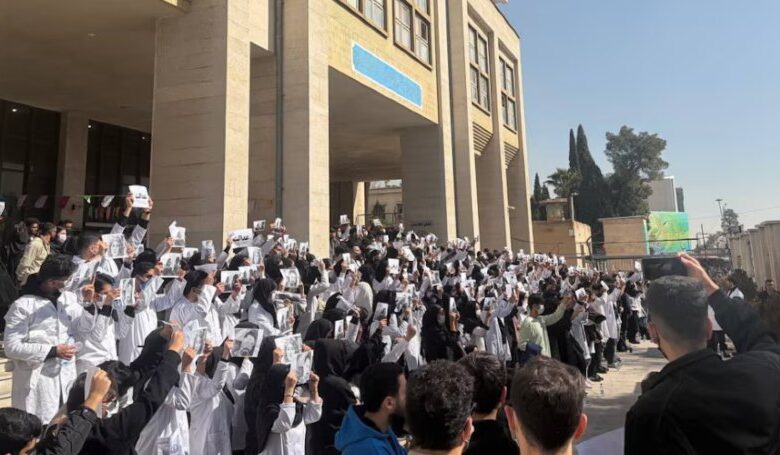
The Iran Human Rights Organization, based in Norway, has published a report documenting widespread human rights violations by the Islamic Republic in Iran’s healthcare centers.
The report, released on February 3, states that direct testimonies from doctors and medical staff from various Iranian cities have been submitted to the Iran Human Rights Organization, showing that during the suppression of December protests, the Islamic Republic transformed hospitals and healthcare centers “into part of a killing and suppression machine.”
The report also documents accounts of the deliberate killing of wounded protesters, abduction of the injured from hospital beds, detention of medical staff, deprivation of citizens from treatment, and mass burial of the dead.
In part of the report, quoting a medical staff member, the described situation is characterized as resembling “actual wartime conditions.”
The Iran Human Rights Organization cited testimonies from several medical staff members from different parts of the country. What emerges from their accounts is all indicative of severe, bloody, and organized suppression against protesters.
According to the report, a doctor in Lorestan confirmed previous reports about the disconnection of artificial respirators from wounded protesters in some hospitals, stating: “For example, wounded individuals who had tubes inserted in their noses and were connected to oxygen devices had the tubes removed from their mouths and were placed in the morgue while still alive.”
An eyewitness from Lorestan Province also confirmed that security forces transferred the bodies of the dead using “Mihan ice cream refrigerators” to the hospital yard—an allegation that had been raised in previous widespread protests in Iran against the dairy company Mihan. Although Mihan managers had denied involvement in the bloody suppression of protesters at that time.
Another point repeated in witness accounts concerns receiving “blood money” from families of protesters. A process that relatives of some victims of the December protests confirmed in conversations with Radio Farda.
Family members and relatives of those killed in the December protests told Radio Farda that Islamic Republic security agencies demanded exorbitant sums in exchange for releasing the bodies of their loved ones.
According to those interviewed, government officials told them to sign documents in exchange for receiving the bodies, stating that the deceased was either a security officer or member of the Basij militia, or was killed by protesters. According to these individuals, if families refused, the bodies could only be released upon payment of substantial sums.
The Iran Human Rights Organization report states that an eyewitness told the human rights organization that families of the deceased were told that if they did not accept declaring their loved ones as “Basij members,” they must pay “750 million to one billion tomans in blood money.”
The Iran Human Rights Organization also cited a doctor working in several Tehran hospitals regarding the falsification of medical records. According to this doctor, “Bullet-wounded protesters, if admitted to hospitals, are treated under false pretenses, such as accidents or tumors.”
The report notes the high number of those killed who were shot in the head.
The report states that many of the wounded, fearing confrontation with security forces, abandoned their treatment midway and resorted to hidden and informal medical care.
Among other points raised in the recent report is the forced disappearance of wounded and hospitalized protesters. Accordingly, a number of injured patients were transferred by security forces to unknown locations, and their fate remains unclear.
The Iran Human Rights Organization also provided statistics on doctors, nurses, and other medical staff who were detained for insisting on fulfilling their duty to treat and assist the wounded. The organization states that security forces forcibly raided the homes and clinics of medical staff, violently arrested them, and destroyed their property.
The report mentions the names of 35 detained medical staff members.
The Iran Human Rights Organization also reported that while medical staff who faced brutal treatment for their commitment to professional and ethical principles were targeted, some management officials affiliated with the government in healthcare centers also cooperated in killing protesters.
Mahmood Amiri-Moghadam, director of the Iran Human Rights Organization, considered the testimony of doctors in the organization’s recent report as evidence of the Islamic Republic’s systematic use of hospitals as tools of suppression and killing.
Mr. Amiri-Moghadam stated in the introduction to this report that “the deliberate disconnection of breathing devices, preventing treatment of the wounded, and detaining patients from hospital beds are instances of crimes against humanity and signs of the complete collapse of any moral and legal standards in this government.”
The Iran Human Rights Organization has asked the World Health Organization to examine reports of widespread human rights violations in Iranian healthcare centers. According to the director of this organization, “These findings are necessary for protecting human lives currently and for ensuring accountability and justice in the future.”
Previously, Iran’s Supreme Medical Council also issued a statement expressing “serious concern about the safety of medical staff’s lives, mental health, and employment” during the suppression of December protests, requesting that officials and relevant authorities prevent “threatening or interfering” conduct.
During the bloody suppression of December protests, in addition to thousands killed, tens of thousands of protesters were wounded and injured across Iran, but official statistics on the number of wounded have not yet been released. The Hrana human rights database reported the number of those affected by the suppression of December protests as at least 11,000 people. Human rights organizations say the actual number could be substantially higher than these figures.
Source: Radio Farda