Merkel: Between 10,000 to 40,000 Afghan Citizens Should Be Transferred to Germany
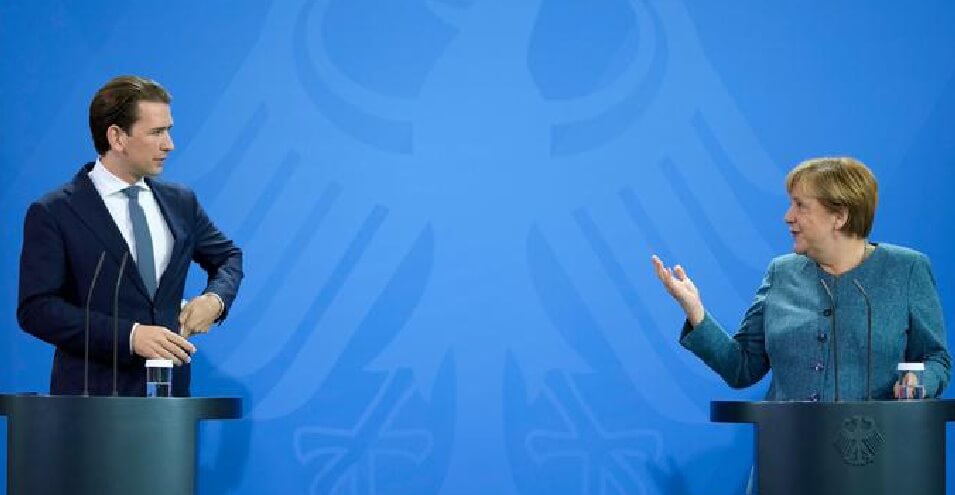
Germany’s Chancellor announced the number of Afghan citizens eligible for relocation to the country as between 10,000 to 40,000 people. Merkel stated that the exact number of these individuals, who include local employees of German institutions and their families, needs to be determined.
On Tuesday, August 31st, the last American military personnel left Kabul airport while thousands of Afghan citizens still seek ways to exit the country.
Given the rapid and surprising Taliban takeover of Kabul, the United States and its allies were unable to evacuate all eligible individuals from Afghanistan before the end of their presence.
Angela Merkel stated at a joint press conference with her Austrian counterpart in Berlin that between 10,000 to 40,000 Afghan citizens still need to be transferred to Germany.
Germany’s Chancellor said these individuals include local employees of German institutions and their relatives, whose exact number needs to be specified.
Heiko Maas, Germany’s Foreign Minister, expressed hope that the Taliban extremists would cooperate in evacuating eligible citizens from Afghanistan.
Maas, who is traveling to several neighboring countries of Afghanistan and has visited Pakistan, said the Taliban have committed to ensuring the security of Afghan citizens leaving the country.
Half a Billion Euros in German Humanitarian Aid
Heiko Maas also announced that the German government intends to allocate 500 million euros in humanitarian assistance to support Afghanistan and its neighboring countries.
Foreign Ministers of European Union member states discussed the expected wave of Afghan migrants and refugees at an extraordinary meeting in Brussels and emphasized support for Afghanistan’s neighboring countries to assist them.
Horst Seehofer, Interior Minister of the German Federal Government, stressed on Tuesday that European countries do not want to repeat the situation of 2015.
Six years ago, European Union member countries faced an unprecedented wave of refugees without prior preparation, leading to crisis and tensions in countries like Greece and Italy, one consequence of which was the rise in power of far-right extremist groups.
Germany’s Interior Minister says eligible asylum seekers should be distributed fairly among European Union member states. Accepting a specific number of refugees was one of the challenges facing European countries in 2015, and no agreement was ever reached on this matter.
Since two weeks ago when Taliban extremists took control of Kabul, tens of thousands of Afghan citizens have left the country and tens of thousands more are attempting to leave.
With the Taliban’s rise to power, not only local employees of foreign forces in Afghanistan but many civil activists and women’s rights advocates, including media activists, see their safety at risk.
European countries intend to adopt coordinated measures to prevent a new wave of “uncontrolled migration” while avoiding a repeat of the 2015 experience.
Apparently, European Union member states’ concerns are not unrelated to the latest report from the United Nations High Commissioner for Refugees, which estimates that the number of Afghans leaving their country by the end of the current calendar year could reach 500,000 people.
Source: DW