Michelle Bachelet: November 2019 Crackdown in Iran ‘Worst Example of State Violence in Decades’
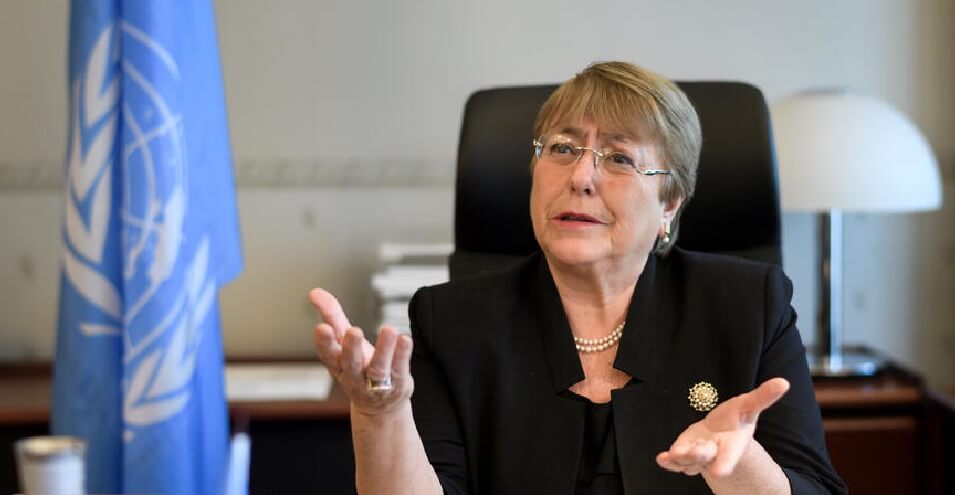
The United Nations High Commissioner for Human Rights, in reference to a recent report by the UN Secretary-General, stated in a statement that the report indicates “a concerning human rights perspective” for men and women in Iran of all religions, ethnicities, and social classes.
Michelle Bachelet, UN High Commissioner for Human Rights, said on Tuesday, June 21, in a statement referring to the UN Secretary-General’s report covering the period from June 12 to March 18 of last year: “We are deeply concerned that the framework for political participation rights in Iran is not in line with international standards.”
Describing the November 2019 protests as “the worst example of state violence against protests in recent decades,” she stressed that protesters, human rights defenders, lawyers, journalists, and civil activists in Iran are subject to intimidation, threats, arbitrary detention, and criminal prosecution, including capital punishment.
She also stated that to date, there has been no accountability for gross human rights violations by security forces in response to the November 2019 protests, and no significant effort has been made to address numerous complaints of documented torture and mistreatment of children, women, and men related to forced confessions by the judicial apparatus.
Michelle Bachelet further stated that the continued impunity for human rights violations in Iran remains a “serious concern.”
The UN High Commissioner for Human Rights also spoke about the issuance and execution of death sentences, saying that at least 267 people, including 9 women, were executed in Iran in the past calendar year, with only 91 of these executions being announced. Additionally, 95 people have been executed since the beginning of 2021 to date.
She also said regarding the statistics of child offenders imprisoned in Iran who are awaiting execution: “More than 80 child offenders in Iran are on death row, and at least four of them are at risk of imminent execution.”
Ms. Bachelet warned in this statement that the number of executions related to drug offenses, particularly for citizens of ethnic and religious minorities, including Kurds, Arabs, and Baluchis, is on the rise.
The UN High Commissioner for Human Rights, also referring to the deteriorating economic and livelihood conditions, high inflation, and widespread unemployment in Iran that have caused increased public discontent and protests, said: “Authorities have shown no willingness to implement meaningful political reforms.”
Michelle Bachelet, also noting that a large number of civil activists have been convicted and imprisoned for supporting women’s rights and opposing mandatory hijab, described the bill “Preserving Dignity and Protecting Women Against Violence,” which is currently in parliament, as lacking necessary enforcement guarantees, and said this bill does not criminalize child marriage and marital rape and does not repeal multiple discriminatory provisions against women in Iran’s civil law.
The statement also referred to the dissolved group “Imam Ali Society” in line with suppressing civil society activities in Iran.
The statement also emphasizes that the existence of sanctions does not exempt the responsibility of preventing the spread of coronavirus in accordance with human rights laws, including preventing the spread of COVID-19 in prisons and treating infected prisoners.
Ms. Bachelet concluded this statement by saying that the UN Human Rights Council is ready to cooperate with Iran’s leaders to establish a “safer human rights foundation” for the country.
Source: Voice of America