Mojtaba Zolnour: We Will Sign a Document with Russia Similar to China
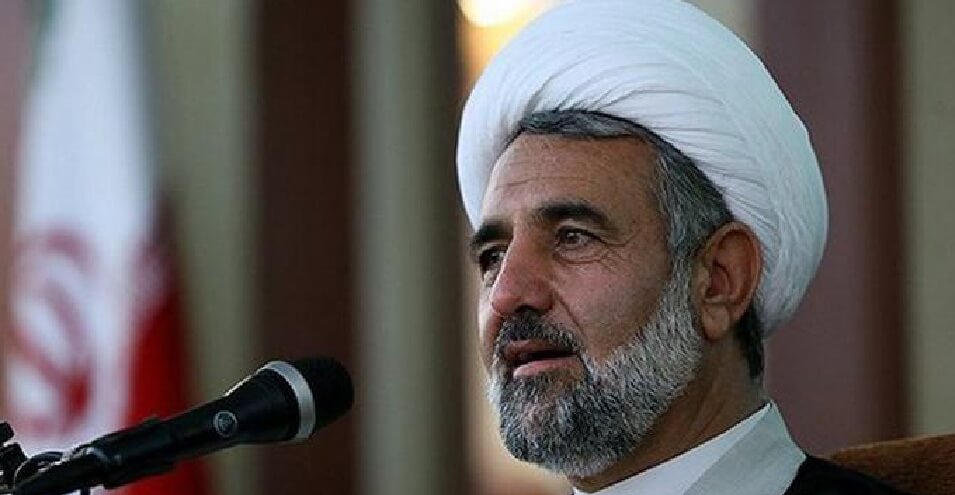
Although Iran’s cooperation agreement with China has been accompanied by considerable criticism and faced numerous protests, the head of Iran’s parliamentary National Security Commission stated that we will also sign similar long-term and strategic documents with Russia.
Mojtaba Zolnour, head of Iran’s parliamentary National Security Commission, said on Monday, April 29, referring to Iran-China cooperation agreement: “The Islamic Republic of Iran, in addition to China, seeks to conclude long-term and strategic documents with Russia as well.” According to him, these strategic documents include “bilateral economic interactions” and other areas of mutual cooperation.
Shafaqna news agency reported that Mojtaba Zolnour said engaging in such relations with China, Russia, and neighboring countries is “one of the most important ways to neutralize American sanctions” against the Islamic Republic.
According to him, the mentioned joint cooperation with these countries includes rail services, road services, refineries, petrochemicals, automotive manufacturing, oil, gas, gasoline, environment, and knowledge-based companies.
This comes as on Monday, April 29 (March 20), protest gatherings took place on the streets of Tehran against the signing of this document.
A Document Even Parliament is Unaware Of
Apparently, aside from a handful of figures among Iran’s officials, even parliamentary representatives do not have precise information about the document’s content. According to the head of the parliamentary National Security and Foreign Policy Commission, the commission intends to invite Mohammad Javad Zarif, Iran’s Foreign Minister, to present “necessary explanations” to representatives in the parliamentary chamber or commission regarding this matter.
He said that “if any obligations have been created for Iran in relation to other countries in international treaties and agreements,” it must be approved by parliament, and parliament must exercise “its oversight role” over the process of these agreements “to ensure that no national interests are overlooked.”
The head of Iran’s parliamentary National Security and Foreign Policy Commission spoke of “long-term and strategic documents” with Russia at a time when the essence of Iran-China strategic document and many concerns raised in connection with it have not yet subsided.
One of the most important reasons for concern about the “comprehensive cooperation agreement with China” is its lack of transparency and the public’s ignorance of its contents. A concern that in the future will likely also affect the cooperation agreement with Russia.
Moreover, if the cooperation agreement with China imposes obligations on Iran that require parliamentary oversight, it is unclear why similar documents with Russia are being promised in advance.
A Document That Has Eliminated the Possibility of Clear Criticism
On Saturday, March 27, the foreign ministers of Iran and China signed a comprehensive cooperation document between the two countries, which has been drafted for 25 years, at the headquarters of Iran’s Foreign Ministry in Tehran.
The scope and details of this document are unclear, and the Iranian government has provided no clarification about it. According to published reports, no specific agreement on any project has yet been finalized. Many observers of Iranian affairs believe that any signing of agreements or contracts in this regard may be deferred to the period after American sanctions are lifted.
The possibility of criticizing or analyzing this document precisely is impractical as long as its details are not made available to the public mind, and even if there is protest, it would not be based on evidence and documentation and cannot lead anywhere.
Among the incomplete information released about the document is that the two countries have signed a 25-year document for 400 billion dollars of Chinese investment in various sectors of Iran’s economy. A package that includes various economic, industrial, commercial, infrastructural, and even political sectors. Many critics also point to possible security cooperation. It is also said that Iran will pre-sell part of its oil in exchange for receiving Chinese loans and capital.
This is not unprecedented. In the past, Chinese companies have also extracted part of the oil produced from the Azadegan and Yad Avam fields in exchange for their investment, as payment settlement.
Economic analysts also say that in this document, China will always have the upper hand, and perhaps the possibility of investment by other foreign companies in Iran will be limited. Iranian officials have merely contented themselves with reassuring that no concessions have been given and there is no reason for concern.
Letter to the President of China
Nevertheless, many in Iran are concerned. Some even compare this document to the Treaty of Turkmenchay. Coinciding with the Chinese Foreign Minister’s visit to Iran, a letter was published in cyberspace addressed to the President of China, asking him not to sign this document.
The authors of the letter wrote that “the Islamic Republic system is collapsing, and therefore signing a 25-year agreement with such a system is inherently doomed to be void.”
They also referred to the crises that the Islamic Republic currently faces and considered the 25-year Iran-China agreement “in contradiction with Iran’s national interests” and “morally, politically, legally, and humanitarianly rejected.” However, experts do not find it likely that the Chinese government would be influenced by such petitions.
10 Years of Negotiations and Still Hidden
The history of negotiations regarding this strategic document dates back more than 10 years ago and at least to the second term of Mahmoud Ahmadinejad’s government. In the past two years, negotiations on this document intensified, and the Hassan Rouhani’s third administration in June 2020 formally authorized the Foreign Ministry to begin final negotiations and sign the comprehensive cooperation program document. Despite 10 years of negotiations, the secrecy of the document’s contents has led to considerable speculation to the point where some groups consider it a betrayal of national interests, and some see it as development.
In this regard, even Iranian domestic newspapers have criticized it. The Islamic Republic newspaper in its editorial on June 8 criticized keeping the content of this document secret from public opinion, writing that China and Iran have been trying for a year to finalize the 25-year document, so “why are people unaware of the details of this document? Some people have claimed to have been informed of the content of this document. If so, why shouldn’t the general public be informed?”
In response to officials who “consider” and “China’s willingness” as their focus, the newspaper wrote: “It has been said that China is concerned that perhaps publicly announcing the content of this document would cause American sabotage. If the Chinese really have such a strange concern, this alone is enough to conclude that they are not trustworthy. A country that claims to be a superpower, why is it concerned about American sabotage? Is it concerned about itself or Iran?”
The history of China’s relations with Iran also leaves little room for optimism. The Islamic Republic newspaper referred to China as an “ally” that throughout its relations with Iran has only paid attention to its own one-sided interests. The newspaper wrote: “Precisely at a time when discussions about the 25-year Iran-China agreement are being raised, China openly announces that it has replaced Iranian oil with Saudi oil. While we still bear the wounds of China’s violations in the currency agreement during Ahmadinejad’s administration, which was a monetary Treaty of Turkmenchay, we should not succumb to another agreement, especially a 25-year one with China.”
Source: DW