Murder, Corpse Theft, and Secret Burial: An Account of State Crime
The security crimes of the Islamic Republic, beyond brutal repression and plunder, have added to the suffering of families by forcing them to secretly bury the bodies of their loved ones.
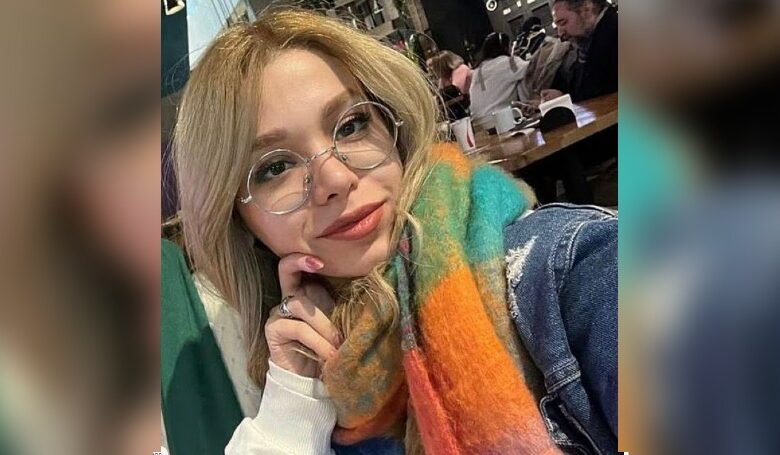
In the midst of nationwide protests in Iran that began in late December 2025 / Dey 1404 and transformed into one of the bloodiest periods of suppression of protesters in recent decades, the death of “Rubina Aminian,” a 23-year-old Kurdish girl and fashion design student in Tehran, has presented a symbolic and horrifying image of “state oppression and the destruction of lives.”
According to multiple reports, including those from the Associated Press and human rights organizations, Rubina’s family believes that she was killed by a direct shot from behind by Islamic Republic security forces, and this was only the beginning of the nightmare.
When Rubina’s mother learned of her death through her friends on January 8, 2026 / 18 Dey 1404, she was forced to go through thousands of bloodied bodies in morgues and warehouses and open every body bag to find her daughter.
She described those seemingly endless moments, saying that she was searching among beautiful, lifeless faces to identify Rubina—a scene that challenges any human description.
According to reports, after finding the body, the family faced an indescribable horror. The infiltration and power of security forces was such that they could not simply bury the body. Dozens of other families have also reported being asked for money by intelligence forces in exchange for the return of their loved ones’ bodies—a practice that the Iran Human Rights Center described as “a recognized and customary procedure” for intimidating families and preventing public mourning ceremonies.
For this reason, Rubina’s family was essentially forced to remove their daughter’s body from the morgue themselves. Minuye, Rubina’s uncle from Oslo, stated: “When Amene, Rubina’s mother, found Rubina’s body, her husband, daughter and son joined her and together, in haste, they removed the body.” Minuye said: “In fact, she stole her own daughter’s body and was ultimately forced to bury it in an unmarked grave beside the road so that security forces would not stop them again and take Rubina’s body and extort money from them in return for its return, adding further to their suffering.”
After Rubina’s death, her mother contacted relatives abroad and recounted to them what had happened during these protests. She had been in Kermanshah when Rubina was killed, and after hearing the news from her friends, she set out for Tehran at midnight. She explained in her call how she opened the body bags one by one to find Rubina.
“Hale Nouri,” Rubina’s aunt from Oslo, also said about this: “She passed through all those beautiful faces searching for her daughter, and what is horrifying to me is the thought of the feelings my sister had while searching for her child.”
Another similar case, whose identity is protected, shows that this family was also forced, immediately after their child was killed in the protests—when their child was shot in front of the family’s eyes and lost his life—to quickly remove their child’s body from the scene and bury him in the courtyard of their house to prevent security forces from stealing their child’s body.
The story of Rubina and the individual whose identity is protected are not the only cases that have occurred, and there are likely many other similar cases. This account reflects the broader violence of the Iranian government against civil society. According to reports and estimates by human rights organizations, thousands have been killed during recent protests, but the Iranian government has refused to provide independent and reliable statistics.
According to “Amnesty International,” many other families are also searching for their loved ones in morgues filled with the bodies of the killed, bodies piled on top of each other in trucks, shipping containers, and warehouses.
Iran’s Human Rights Organization and other international bodies have also emphasized that many victims, like Rubina, unarmed and in peaceful protest routes—particularly youth, women, and students—have been directly targeted by security forces.
In many other similar cases, families have reported going to morgues overflowing with bodies to find their loved ones, and after receiving their bodies, mourning ceremonies and burials have been banned by authorities or met with severe restrictions and threats, and they have often been forced to choose between secret burial in the desert or risking arrest and further harassment by security forces.
It is obvious that this crisis goes beyond a personal tragedy; this painful testimony is a symbol of a policy of ruthless suppression and a fundamental violation of human rights that deprives families not only of the right to life, but also of the right to dignity in death and human mourning.
The death of Rubina Aminian and the manner of her burial is not merely a report of an event, but a reflection of systematic violence, censorship, intimidation, and disrespect for human life that has transformed Iran’s recent protests into an unprecedented point in the history of urban suppression.
This event reminds us that when governments are able to control even the bodies of the dead, fundamental freedoms and social justice are increasingly in danger, and the world must hear the voices of families who were forced to steal and bury the bodies of their loved ones, before many more join history.