Najafi’s Pardon and Social Media Reactions
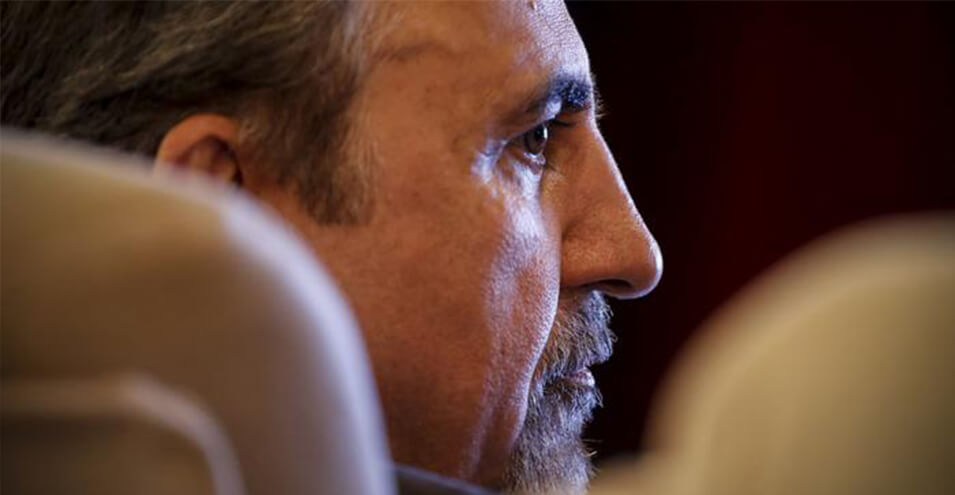
It was brief news: “Mitra Asad’s family pardoned Mohammad Ali Najafi.” But the reactions to it and speculation about the behind-the-scenes premature acquittal of Tehran’s former mayor from the death penalty verdict continue.
On Wednesday morning, 23 Mordad (August 14), a brief news item topped Iranian media headlines, drawing attention much like the news published on June 7, 1998: “Najafi was pardoned by Mitra Asad’s family.”
Mitra Asad, a candidate for the fifth round of Islamshahr City Council elections and the second wife of Mohammad Ali Najafi, former mayor of Tehran, was killed on June 7 of this year by a gunshot fired by him, according to Najafi’s confession.
This murder and the manner of its media coverage from beginning to end sparked discussion in public opinion.
Some, such as Ahmad Zeidabadi, a well-known reformist activist, have written in praise of this pardon. He wrote on his Telegram page: “The pardon of Dr. Mohammad Ali Najafi by the family of the deceased Mitra Asad is deserving of respect and appreciation in every way. May God reward them for saving the life of a well-known and experienced personality.”
Dr. Maheen Borkhordari, a university lecturer and educational science expert, also expressed her appreciation for this decision on her Instagram page: “Our violence-ridden and angry society needs kindness and compassion.” She complains that “but now Instagram and social media are filled with criticism of Najafi’s forgiveness. Users who were opposed to capital punishment in similar situations are now saddened that they do not see Najafi hanged!”
But apparently it is not the pardon itself that has become the focus of discussion on networks, but rather the pardon of the “rich” and a specific class that has provoked users. Nima Pooryagoub, a human rights activist, wrote in a tweet that the poor are “being executed, but the rich like Mohammad Najafi” escape from this verdict.
A few weeks after Mitra Asad’s murder, Gholam Hossein Ismaili, spokesman for Iran’s judiciary, announced on August 8 the issuance of a “death penalty” verdict against Najafi.
The court hearing Mitra Asad’s murder case found the second wife’s death to be “intentional” contrary to the defendant’s statements, and Najafi’s exemption from the “death penalty” was then left to the decision of the victim’s heirs.
One day before Mohammad Ali Najafi’s primary verdict was issued, the newspaper “Shargh” published the text of a conversation with Mitra Asad’s family lawyers in which the possibility of reconciliation between Mitra Asad’s family and Mohammad Ali Najafi was mentioned.
Masoud Afrazie and Mahmoud Hajilouei, Najafi’s lawyers, told the newspaper: “We consider it our duty that after the verdict is issued, provided that the psychological and mental atmosphere prevailing over the Asad family is improved and at the first opportunity, we will pay attention to this important matter. If reconciliation or forgiveness takes place, the spiritual status of the Asad family will certainly be higher than before.”
Finally, this reconciliation took place, and 46 days after the murder, Asad’s brother Masoud announced on his Instagram page that Najafi had been pardoned.
He wrote: “We have pardoned Mr. Mohammad Ali Najafi and forgone the blood of our beloved, and we are pleased that we have not made any transaction with that great person’s blood.”
Masoud Asad expressed hope that Najafi would “in the remaining mornings ahead stay away from politics and focus on self-purification”. He also emphasized: “But regarding myself, who was once called an unknown commander and once a commander of the Sepah, I say that I now have neither a job nor an official position that I have taken from anyone… I studied a doctorate in aerospace engineering at the most reputable universities in the country without any bribery… and now I am only a university lecturer.”
Previously, it had been rumored that the Asad family agreed to forgiveness in exchange for receiving 10 billion tomans. But Masoud Asad denied the accusation and threatened to sue those who published such news.
Nevertheless, one can still find traces of speculation such as the possible “connection” of Mitra Asad with the “Intelligence Ministry” and the question of “who is her real killer” on social media networks.
Users and Their Reactions
A user who calls himself “Acquainted” wrote in a tweet: “I don’t know why I have the feeling that Najafi himself did not pull the trigger of this weapon and Mitra Asad’s physical elimination was really outsourced?!”
Nefise, another user, by posting a smiling photo of Najafi in a tweet wrote: “I’m free, I’m happy mom – God willing, intentional murder is for everyone.”
There are also users who, according to a report on the website of “Sazandegi” newspaper, have called “forgiving the blood of a beloved child” “great” and praiseworthy.
But the flood of negative reactions does not subside, and many like a Twitter user have questioned this entire scenario: “A political scenario; from inquiring and drinking tea to the satisfaction of the victim’s heirs.”
A user wrote: “We are grateful to you all for diverting our attention to Najafi and his affair for a while.” Another wrote: “From the beginning, from the laughter, from the formality, from the bowing, it was clear that forgiveness was at the bottom of this affair.”
A user praising this pardon writes: “The good thing about it is that the culture of forgiveness takes root in society and becomes a role model.” And another writes: “How quickly they forgave.” It seems that the story of this case is over and Najafi has been spared from execution, but speculation about the reasons and manner of this case continues.
Source: DW