Narges Mohammadi Warns About Health of Cancer Patient Zahra Seyadi in Evin Prison
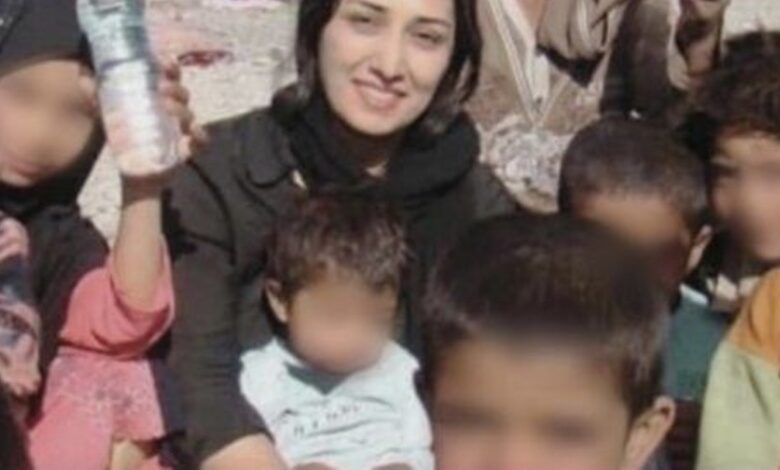
“Narges Mohammadi” warned about the health risk to “Zahra Seyadi,” a prisoner undergoing chemotherapy held in Evin Prison.
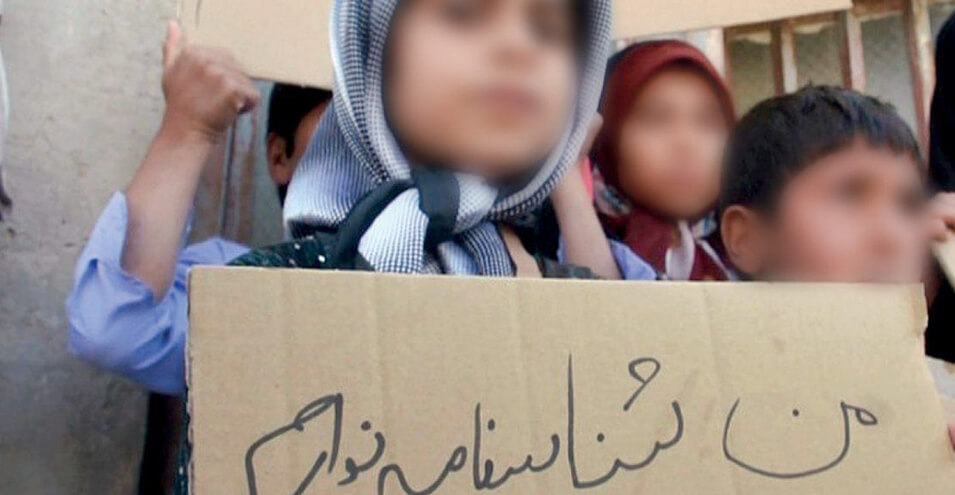
Zahra Seyadi is a civil activist and advocate for child laborers’ and undocumented children’s rights. She was arrested by security forces in the Andisheh neighborhood of Tehran in December 2019 and transferred to Evin Prison, but was released on bail the following month.
Zahra Seyadi was arrested again in 2022 during nationwide protests and sentenced to one year imprisonment on charges of “acting against national security” and “disrupting public order,” with her sentence beginning in June 2023. She is from Sistan and Baluchestan province and had been active in the areas of child labor rights, abandoned children, undocumented children, and literacy education for women and children in deprived areas of Sistan and Baluchestan.
Zahra Seyadi suffers from cancer, and specialist doctors have not yet determined the origin of the disease. A tumor that formed below the diaphragm membrane has forced her to undergo chemotherapy. Her second phase of chemotherapy began in March 2023 and continues every three weeks until the end of March 2024. She is currently serving her sentence in prison under these physical conditions.
Human rights activist Narges Mohammadi warned about Zahra Seyadi’s situation and wrote: “In what school did the judges of the Islamic Republic learn to commit such crimes against humanity? There is fundamentally no talk of courts, due process, and the rare gem of justice in the Islamic Republic’s judicial system. The question is about the existence of a shred of humanity, compassion, and human responsibility, which is seen neither in the non-independent judicial system nor in the oppressive security system and unfortunately not even in forensic medicine under the supervision of the judiciary.”
I know the judge and the prosecutor, but I cannot believe that a doctor, knowing that human life is in danger with unbearable pain caused by cancer, does not dare to write on pieces of paper about Zahra’s inability to bear imprisonment. What really was the custom and practice of such procedures?”
Narges Mohammadi continued: “Since her imprisonment, Zahra has been transferred to prison twice in July, for 24 hours after chemotherapy, and even prison doctors believe that tolerating this condition is impossible for her. Zahra is a patient, resilient, and determined woman. I can never speak in words about her physical weakness and the pain running through her veins after each chemotherapy. Each time she undergoes chemotherapy under an ice cap that is extremely painful so that when we are imprisoned and beside her, we will not be upset by seeing her fallen hair and her changed face.”
The Islamic Republic’s government cannot commit a greater crime than throwing innocent people, including human rights activists, writers, labor activists, teachers, university professors, students, ideological individuals, and others into prisons on flimsy pretexts that are mostly charges of “acting against national security,” subjecting them to harassment and abuse, and ultimately condemning them to lengthy imprisonment, torture, and even execution through unjust sentences.