New Details from Mohsen Lorestani Case; Singer Accused of ‘Spreading Corruption on Earth’
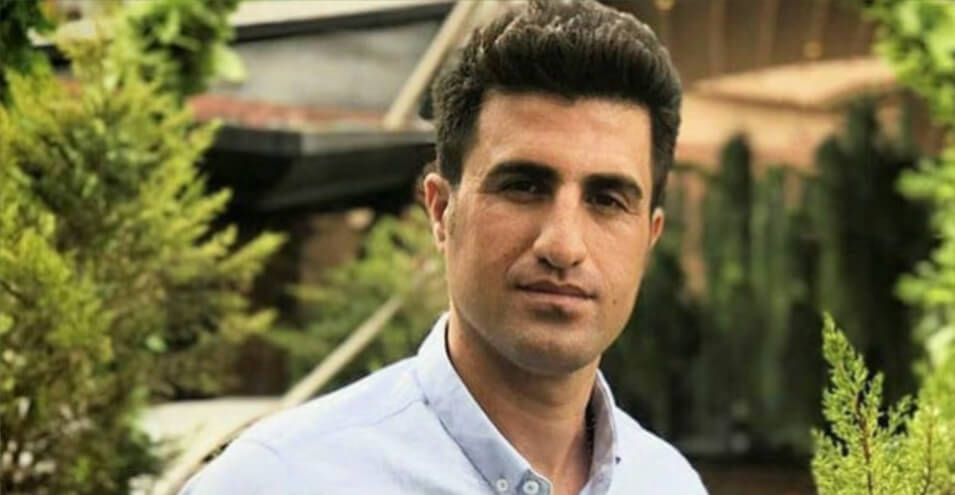
An informed source told Voice of America that the court hearing for Iranian singer Mohsen Lorestani, accused of “spreading corruption on earth” (Efsad-fil-Arz), was held without the presence of his lawyer at the Islamic Revolution Court in Tehran.
An informed source told Voice of America that the court hearing for Iranian singer Mohsen Lorestani, accused of “spreading corruption on earth” (Efsad-fil-Arz), was held without the presence of his lawyer at the Islamic Revolution Court in Tehran.
On Monday, October 6, Voice of America contacted Seyyed Kazem Hosseini, Lorestani’s defense attorney, for more information regarding the status of Mohsen Lorestani’s case; however, he declined to comment. Nevertheless, an informed source told Voice of America that Mr. Lorestani’s court hearing on Monday, October 6, was held without his defense attorney present in Branch 28 of the Islamic Revolution Court in Tehran.
Previously, Iranian media outlets had described Mohsen Lorestani’s charges as “spreading corruption on earth.” Although there is no precise information about the specifics of this charge, media outlets close to security institutions reported, citing this Iranian singer’s lawyer, that the charges against Mr. Lorestani relate to “moral and private matters” that he published in “cyberspace,” and that he has no “private complainant.”
Some websites close to security institutions have accused this singer of “homosexuality.” However, a source close to Mr. Lorestani, rejecting this claim, said these allegations are incorrect and expressed hope that everything will be clarified very soon.
Article 286 of the Islamic Penal Code, due to its ambiguity and generality, covers a very broad range of diverse activities, thus leaving the door open for accusers and judges to interpret the law as they see fit. The scope of this legal provision is so comprehensive that it encompasses various types of charges—from concrete acts such as “crimes against the physical integrity of individuals,” “burning and destruction,” and “distribution of toxic, microbial, and dangerous substances,” to intangible matters primarily based on interpretation such as “crimes against the country’s internal or external security,” “spreading lies,” “disruption of the country’s economic system”—and based on these, individuals are deemed spreaders of corruption and sentenced to execution.
Mohsen Lorestani was arrested by security forces at his mother’s home in Saadat Abad, Tehran, on March 2, 2019, and has been imprisoned since then.
According to a report by Amnesty International last year, a total of 253 executions were carried out in Iran, accounting for more than one-third of all documented executions worldwide.
The U.S. State Department has repeatedly condemned violent conduct and widespread suppression of protesters, as well as the recurring and continuous violations of Iranian citizens’ rights by the ruling regime in that country.
Source: Voice of America