New Law Enacted; Government Must Pay Subsidies for Essential Goods to ’60 Million People’ by Year-End
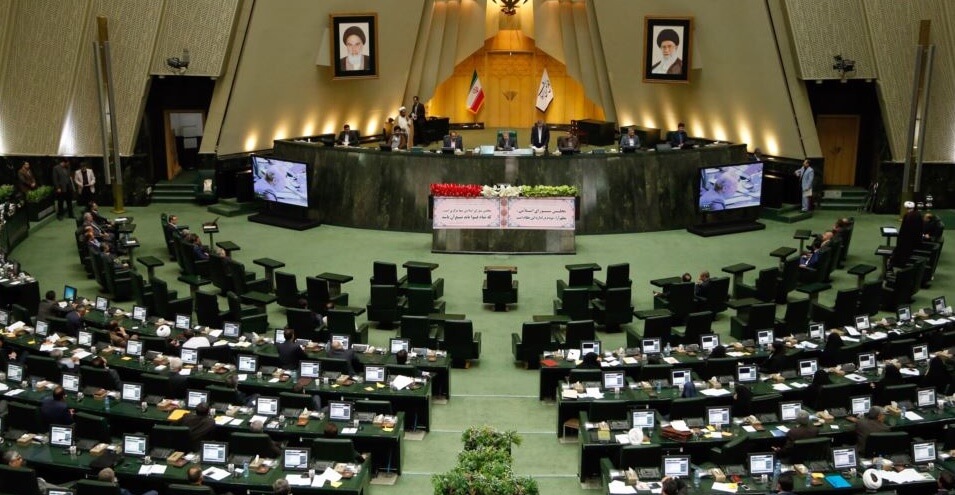
Mohammad Baqer Qalibaf, Speaker of the Islamic Consultative Assembly, notified the President of the law obligating the government to pay subsidies for essential goods.
The Parliament’s News Information Center, Khaneh Mellat, reported Sunday evening that according to this law, which was approved by the Guardian Council last week, the government must pay subsidies for the purchase of essential goods to 60 million people by the end of the year.
Abbas Ali Kadkhodaei, spokesman of the Guardian Council, wrote on his Twitter page on November 28 that the bill obligating the government to pay subsidies for essential goods, which had previously faced Article 75 objections, did not violate Islamic law or the Constitution after amendments made by parliamentarians.
The eleventh parliament’s bill to obligate the government to pay subsidies for essential goods had previously been returned to parliament by the Guardian Council.
Uncertainty regarding the beneficiaries of the bill and ambiguity about securing the necessary financial resources and its financial burden on the government were among the Guardian Council’s objections to this bill.
Now the government is obligated to begin distributing these subsidies to the people by providing executive mechanisms for the law.
Previously, Hamid Reza Haji Babaei, chairman of the Seventh Parliament’s Budget and Planning Committee, told the Farsnews Agency on November 7 that the resources needed to implement this law, amounting to thirty trillion tomans, would be provided from government assets, franchise rights of government share transfers, and ownership rights arising from it under the framework of law by the Ministry of Economic Affairs and Finance.
Haji Babaei also stated that if the collected resources are insufficient, the government is obliged to compensate for the resource deficit from existing budget credits and increased treasury wage reserves, or substitute resources generated from the sale and transfer of government assets.
Accordingly, 120,000 tomans per month will be paid to each member of the first three deciles, including those covered by the Imam Khomeini Relief Committee, the Welfare Organization, low-income veterans, and those earning less than the minimum wage and salary.
Also, an amount of 60,000 tomans will be paid to each member of other deciles.
Of course, subsidies will not be distributed in cash to the people.
IRNA reported on November 27, citing Mohammad Mahdi Mofteh, spokesman of the Budget and Planning Commission, that according to this bill approved by the Guardian Council, the government must organize in such a way that households’ basic needs at prices approved by the Organization for Consumer and Producer Protection are provided to the people at a preferential exchange rate through commodity vouchers or electronic cards with priority given to domestic products.
According to Mr. Mofteh, “In this bill, money is not given to the beneficiaries of this bill, but they are allowed to purchase goods up to a ceiling of 120,000 tomans.”
He stated that the government could earn 12 trillion tomans from the sale of industrial factories, 28 trillion tomans from the sale of its shares in banks, and also 18 trillion tomans from its shares in refinery companies, and these revenues should be allocated for implementing the essential goods supply plan.
Source: Radio Farda