Official COVID-19 Statistics in Iran; Disease Flare-up is ‘Result of Strategic Error’
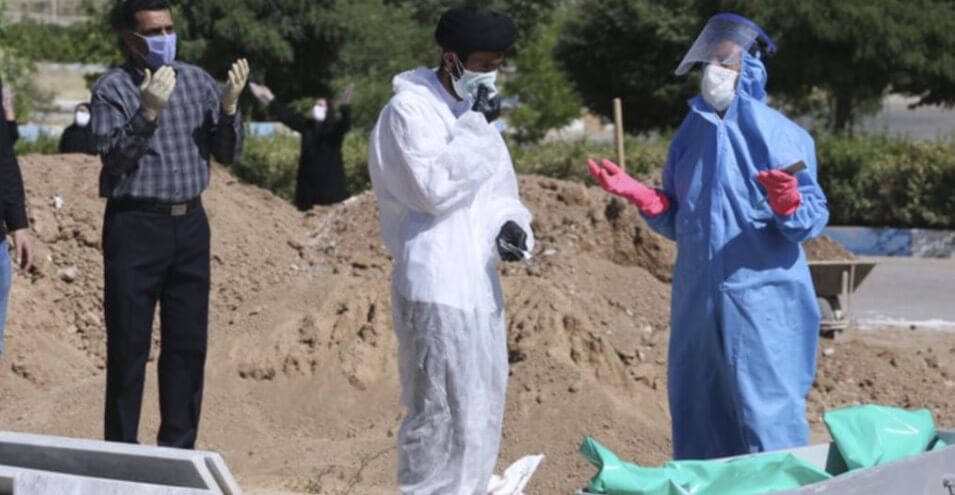
Iran’s health ministry spokesman announced that during the past 24 hours, 169 more people died from coronavirus in Iran, and the official death toll from the virus reached 19,331.
Meanwhile, the head of Tehran’s coronavirus task force has stated that the recent flare-up of the disease is the result of a strategic error, not just public behavior.
Sima Lari, the health ministry spokesman, said on Friday, August 15, that during the past 24 hours, 2,501 new coronavirus cases were identified in Iran, of which approximately half, 1,173 people, were hospitalized.
With these figures included, the official number of coronavirus cases in Iran reached 338,825, of which 3,956 people are in critical condition and under special care.
There are serious doubts about the accuracy of the daily statistics announced by Iran’s health ministry. Previously, some experts and government agencies have mentioned two or several times these figures and even “statistics manipulation in line with certain interests.”
According to the health ministry announcement, the situation in the provinces of Mazandaran, Tehran, Qom, Golestan, North Khorasan, Ardabil, Isfahan, Alborz, Razavi Khorasan, Kerman, Semnan, East Azerbaijan, Central, Yazd and Gilan remains red.
Based on this report, the provinces of Fars, Ilam, Lorestan, Hormozgan, Zanjan, Qazvin, West Azerbaijan, Bushehr, Hamadan, Chaharmahal and Bakhtiari and Kohgiluyeh and Boyer-Ahmad are also on alert status.
Ms. Lari also noted in her report today that while the epidemic of this virus continues to accelerate, she urged the public to observe health principles to break the chain of disease transmission.
Positions of Tehran’s Coronavirus Task Force
The health ministry’s recommendations to the public are being repeated while Alireza Zali, head of Tehran’s coronavirus task force, criticizing the government’s strategic error in recent months, said: “If we do not have a realistic view of coronavirus, we will lose public confidence.”
According to Mehr news agency on Friday, August 15, Mr. Zali described the recent flare-up of coronavirus as a result of a strategic error in dealing with the spread of this disease and explained that the strategic error was that “we only blamed the people for this factor, when in fact that was not the case.”
Mr. Zali’s reference is to certain negligence and lifting of restrictions after the initial peak of coronavirus in Iran. In recent months, most of the recommendations by officials have been aimed at people maintaining physical distancing and observing health regulations themselves.
The head of Tehran’s coronavirus task force said in this regard: “People are forced to think about livelihoods for survival and continuation of life, while hastiness in creating reopenings can lead public opinion in the direction that the disease has been contained.”
At the same time, one of the deputies of this task force announced the presentation of a proposal to impose fines and deprivation of social services for individuals and occupational groups who do not comply with health protocols.
Ali Maher, deputy planning of Tehran’s coronavirus task force, said the proposal has been submitted to the national task force by Tehran’s coronavirus task force and if approved, will be issued for implementation.
While the discussion among Islamic Republic officials about whether or not to hold Muharram mourning ceremonies continues, Mr. Maher asked the public “not to participate in gatherings.”
The three health principles, namely the use of masks, physical distancing and continuous hand washing, continue to be introduced as the most effective method for combating further spread of the coronavirus, but compliance with some of these principles requires the formulation and implementation of special regulations by governments in all countries.
Source: Radio Farda