Oil Slicks Return to Qeshm, Iran’s Largest Island
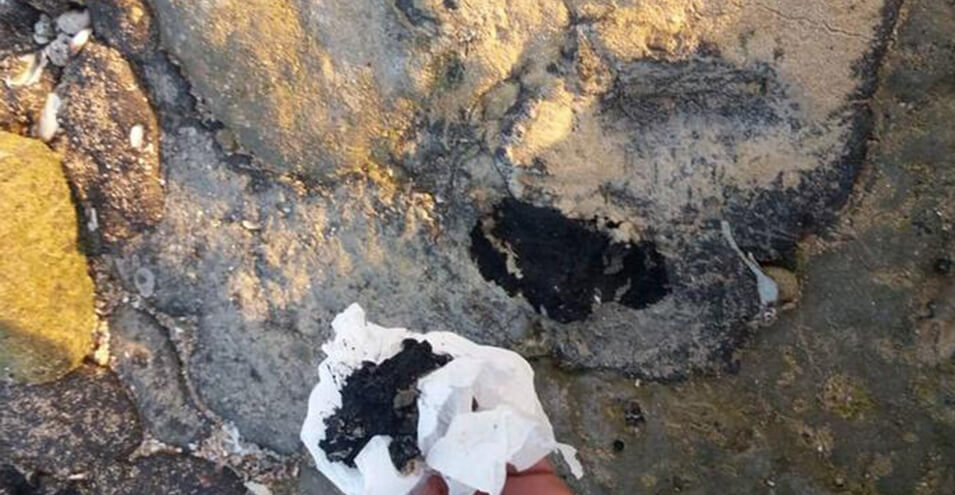
Two months after oil pollution contaminated the shores of Qeshm Island, the region is once again experiencing tar balls of unknown origin. The contamination that began in early September prompted speculation about possible ballast water flushing from oil tankers or illegal cargo dumping.
According to eyewitness reports, significant quantities of oil slicks have reappeared 2 to 5 kilometers off the coast of Qeshm Island. The Iranian news agency IRNA, reporting on this development, emphasizes the abundance of tar balls along the shoreline and notes that it is unlikely these are merely remnants of previously dispersed tar balls.
Experts say that the appearance of oil slicks on shores is typically one of the first warnings of oil pollution. According to existing definitions, tar balls are “lumps or spheres” of oil that form after crude or refined oil enters the sea. When crude oil or petroleum accidentally enters the ocean from facilities, oil rigs, pipelines, or tankers, atmospheric factors, solar radiation, and evaporation of lighter components cause it to thicken and take on a tar-like consistency. Wind and waves then carry these masses to shore.
Where is this pollution coming from?
The primary cause of these tar balls in Qeshm has not yet been officially announced.
The first report of oil pollution on Qeshm and Larak shores was released in September this year. Days after the initial warnings in September, the Environmental Director of Qeshm Free Zone Organization reported the deployment of 100 personnel to collect tar balls. According to this official, while marine pollution and cleanup operations fall under the domain of ports and maritime navigation, various institutions and agencies—including environmental protection, ports and maritime administration, diving clubs, and even local residents—have taken action to clean Qeshm’s shores of oil pollution.
The head of Qeshm’s Ports and Maritime Administration discussed the origin of the pollution with IRNA in September this year, suggesting the possibility that pollution may have resulted from ballast water flushing by oil tankers or illegal cargo being dumped at sea. The Director General of Environmental Protection for Hormozgan province also mentioned the possibility of oil tanker ballast water flushing.
Danger to Humans and Ecosystems
Since tar balls become sticky masses under sunlight, they can adhere to any object, shoes, feet, or swimmers’ bodies, making removal extremely difficult. Additionally, tar balls pose a threat to ecosystems. According to Qeshm’s Environmental Director, due to their high stickiness, these pollutants can destroy seabirds and small animals such as snails and crabs.
Experts state that tar ball persistence depends on various factors, including the type and composition of the beach. These masses are resistant to weather changes and may sometimes become hidden under a layer of sand. The IRNA correspondent who reported the renewed tar ball invasion of Qeshm’s shores suggests, given their abundance, that these appear to be new masses.
Qeshm Island, with an area of 1,491 square kilometers, a length of 135 kilometers, and an average width of 11 kilometers, is Iran’s largest island, situated in the Persian Gulf and Strait of Hormuz, with a coastline of 300 kilometers.
Source: DW