On the Edge of War and Diplomacy: Contradictory Messages About Iran in Washington and Europe
From sharp warnings in Washington to regional efforts to contain the crisis, the Iran file has been placed on the edge of war and diplomacy.
As the Iran crisis has reached a sensitive point, contradictory messages are being transmitted from Washington, Europe, and the Middle East about the future of confrontation with the Islamic Republic. On one hand, figures close to the White House speak of “decisive action,” and on the other, intensive diplomatic efforts continue to prevent escalation of tensions. Meanwhile, reports about the role of proxy forces in suppressing protests within Iran have added new dimensions to this crisis.
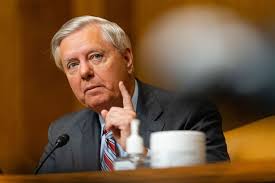
“Lindsey Graham,” the Republican senator and a close ally of Donald Trump, took a firm stance on Thursday, January 15, by rejecting reports about the American president’s withdrawal from attacking Iran. He wrote on the X social media network: “All headlines of this kind are examples of reports that are beyond false. The conditions surrounding the necessary and decisive action that must be taken against the evil regime of Iran have nothing to do with the will or determination of President Trump. It is completely the opposite, wait and see.”
These statements show that in the camp close to Trump, the option of a hard approach against the Islamic Republic remains a serious scenario on the table, even if signs of pause or hesitation are seen at the official level.
On the other hand, a group of members of the European Parliament sent a letter to the head of that body, requesting an invitation for Reza Pahlavi, an opponent of the Islamic Republic, to appear and speak in the European Parliament. The signatories of this letter warned that the European Union’s response to developments in Iran may once again be limited to issuing statements of condemnation; an approach that, according to them, is ineffective in the face of the severity of repression and the current crisis.
In this letter, the policy of dialogue with the officials of the Islamic Republic was also heavily criticized, and the Islamic Revolutionary Guard Corps was explicitly described as “a terrorist organization.” This positioning demonstrates an increase in the gap in Europe’s approach toward Tehran and the growth of pressures to adopt a tougher policy.
Meanwhile, a senior Saudi official reported that Riyadh, along with Qatar and Oman, has tried to prevent escalation of the crisis. According to this official, these three countries have managed to convince Donald Trump to give Iran another chance. This Saudi official explained that these countries engaged in lengthy, urgent, and tense diplomatic efforts in the last moments to convince President Trump to give Iran an opportunity to demonstrate its goodwill.
These moves occurred under circumstances where reports indicated Iran’s threat to attack American bases in the Gulf countries if military operations begin; a threat that has created deep concern among Iran’s southern neighbors.
Simultaneously with these diplomatic developments, concerning reports have been published about the Islamic Republic’s use of foreign paramilitary forces to suppress domestic protests. The American media outlet “TML” reported that groups of Iraqi paramilitaries played a role in suppressing demonstrations in Iran.
According to this report, the exact number of these forces is unclear, but according to an employee of the Iraqi Ministry of Interior who serves at the Shalamcheh border, more than 60 buses crossed the border by Sunday evening. This employee said the bus passengers were introduced as pilgrims, but their appearance and behavior did not align with this claim.
In a conversation this media outlet conducted with the mother of one of the deployed forces, she said her son was offered 600 dollars a month to join the Iraqi “Kata’ib Hezbollah” to help suppress protesters in Iran.
In response to these reports, officials of the Islamic Republic have once again raised the narrative of foreign conspiracy. Iran’s Defense Minister also in reaction to these statements on the current Thursday, January 15, equivalent to December 25, attributed recent protests to the United States, Israel, and some of their allied countries.
“Aziz Nasirzadeh” said about this: “We have precise information that the United States, the Zionist regime, and some of their allied countries formed a dialogue center to map out a future for separatists and terrorists. They even planned for each separated region to write its own constitution and directed weapons smuggling, financial and logistical support.”
He also claimed that: “In meetings in one of the countries in the region, even the rate of destruction in Iran was determined.”
Iran’s Defense Minister further claimed that a person was arrested with the promise of receiving 900 million tomans for murder. He added in this regard: “Setting the rate of killing each person at 500 million tomans means the goal is to create casualties. They had said to kill anyone in front of you and receive 100 million tomans.”
He also claimed: “Elements of unrest threatened traders and merchants, saying if they opened their shops, they would burn them down and kill them.” The claims of Iran’s Defense Minister come at a time when videos released on social networks show the killing of people by forces of the Islamic Republic, not forces from outside the country; furthermore, the entry of many proxy forces from Iraq into Iran has confirmed the killing of people by the Islamic Republic.
All these developments show that the Iran file is in an unstable and multi-layered phase; where military threats, diplomatic efforts, European political pressures, and conflicting narratives about domestic protests occur simultaneously. While Washington has yet to send a clear message about its final direction, the role of regional actors and reports about internal repression have made the Iran equation more complicated than ever. The future of this crisis depends more than ever on the decisions that will be made in the coming days and weeks.