Parliament Approves Allocation of One Million Tons of Free Asphalt; Concerns Over ‘$600 Million Rent-Seeking’
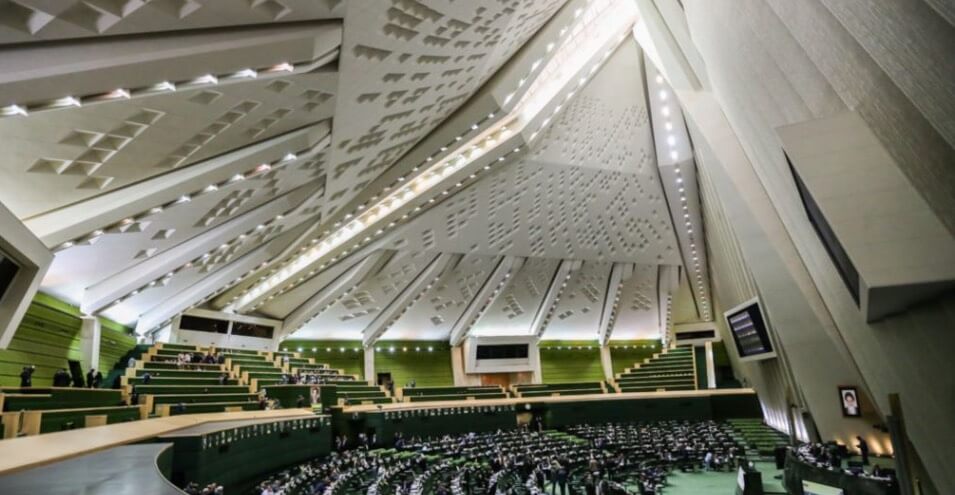
Members of the Islamic Consultative Assembly approved the general framework of an urgent bill to provide free asphalt needed by cities with populations under 100,000 people. Meanwhile, concerns have been raised about the creation of a “$600 million rent-seeking opportunity” in this regard.
Representatives in the open session on Wednesday, the first of Mordad, agreed with the general framework of the bill “allocation of one million tons of free asphalt needed by cities with populations under 100,000 people,” according to which the National Iranian Oil Company is obliged to provide one million tons of raw asphalt material free of charge from the feedstock delivered to refineries.
Mehdi Toghayaneh, representative of Isfahan, opposing the general framework of this bill, said: “Why are we once again approving something that was previously removed and had led to various types of corruption and rent-seeking, and why are we re-injecting corruption into the country’s economy?”
He added: “All types of corruption from this bill item in the budget are being injected into the national economy. Every year in budget audit reports, one of the anomalies is this very item.”
Ehsan Khandouzi, representative from Tehran, also said: “The method considered for allocating one million tons of asphalt is not appropriate; in 1399 [2020], with warnings from the country’s supervisory bodies and the inspection organization of the Expediency Discernment Council and the Guardian Council, this issue was removed from the budget law.”
On Monday, Bijan Zanganeh, the country’s oil minister, had said “the government is opposed to free asphalt for certain reasons. The issue is not only a financial matter, although securing financial resources is also important. From the government’s perspective, the mechanisms that were previously implemented have been problematic mechanisms.”
Previously, numerous reports had been published about rent-seeking from the distribution of free asphalt for road construction projects.
Saba Aazarpeyk, an Iranian journalist, also tweeted about “multi-billion dollar financial flows from free asphalt corruption.”
In this regard, Mehr News Agency reported that multiple violations by relevant bodies and contractors have occurred, including receiving free asphalt outside the time of project execution and selling it on the free market, as well as delivering asphalt to contractors after project completion for settlement purposes, which are just two of countless violations in the field of free asphalt supply.
The report adds that the statistics presented on actual asphalt consumption in the country and the volume of asphalt delivered indicate that a large portion of these shipments has actually been smuggled out of the country.
In Khordad of this year, the commander of Hormozgan Police announced the discovery of a 1.27 million liter shipment of smuggled asphalt that had been exported to India and Indonesia with forged documents before seizure, but two people involved in the smuggling were arrested.
Jahan Sanat newspaper also reported on this matter, stating that the approval of the urgent bill to distribute two million tons of free asphalt in the Islamic Consultative Assembly sounded the alarm for creating a new “rent-seeking” opportunity in the country’s economy.
Mahmoud Bagheri, an economic analyst, in response to the news of the bill’s approval, said: “Unfortunately, the parliament chose the worst path to amend Article 1 of the budget law of 1399, and by tasking the government with distributing two million tons of free asphalt, is effectively creating a $600 million rent-seeking opportunity.”
The government has long been providing free asphalt or subsidized asphalt for some infrastructure projects, and asphalt smuggling is not a new issue. Seyyed Hamid Hosseini, a member of the Oil Products Exporters Union, reported in 1391 [2012] in an interview with Mehr News Agency that 500,000 tons of asphalt annually go missing in infrastructure and road construction projects in the country.
In this regard, Jahan Eghtesad newspaper reported on Tuesday that parliamentarians in years 1396 and 1397 [2017-2018] approved a bill obligating the government to provide free asphalt for infrastructure projects, and with the implementation of this law, an average of about 2 million tons of asphalt annually was made available to projects.
Last year, representatives also approved a bill according to which free asphalt equivalent to 2,000 billion tomans would be placed at the disposal of the Ministry of Roads and Urban Development. Now, representatives in the eleventh parliament have also drafted a bill according to which free asphalt would be provided for project execution.
Source: Radio Farda