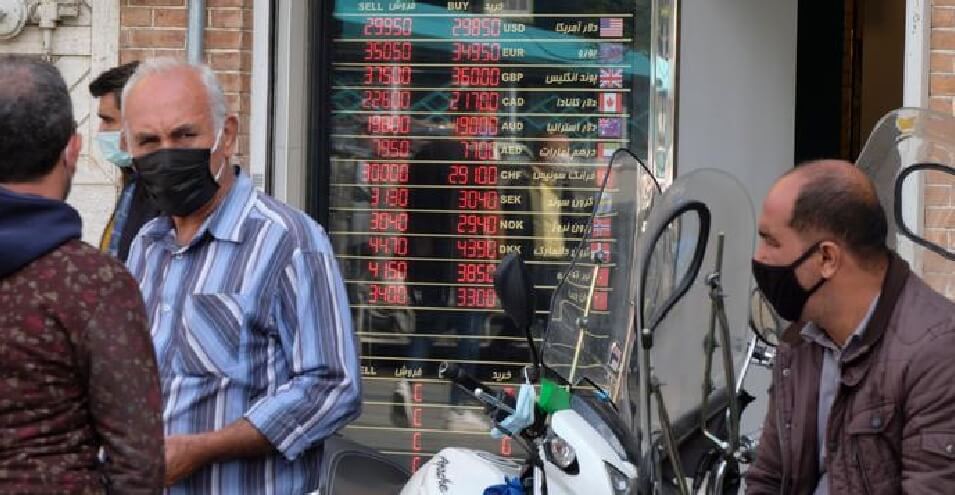
Eliminating the preferential exchange rate will help the government save approximately 9 billion dollars. Critics, however, believe this measure will increase inflation in the country. Parliament has asked the government to assist people by eliminating the preferential exchange rate through coupons (Kalabrg).
Members of the Iranian Parliament on Sunday morning, 15 Esfand (March 6), with 194 votes in favor and 42 votes against, abolished the preferential exchange rate (dollar at 4,200 tomans).
The law eliminating the preferential exchange rate was approved on the proposal of Elias Nadaran, a member of Parliament’s reconciliation committee. According to this law, the government is permitted in 1401 to remove any commodity from the preferential exchange rate basket; to compensate for consumer losses, it must act through electronic coupons (Kalabrg).
Hassan Rouhani’s government announced the dollar rate of 4,200 tomans in Farvardin 97 on the eve of the United States’ withdrawal from the nuclear agreement to prevent currency market turmoil.
This decision was announced by Ishaq Jahangiri, Rouhani’s first vice president, and for this reason became known as the “Jahangiri dollar.”
The most important objective of allocating the 4,200 toman exchange rate was the import of essential commodities, controlling their prices, and preventing sharp price increases for the end consumer.
Officials of the Raisi government and critics of the preferential exchange rate argued that allocating billions of dollars as preferential exchange rate did not prevent inflation and increase in essential goods prices and only intensified corruption and rent-seeking markets.
The government was required to spend 9 billion dollars at the 4,200 toman exchange rate for importing essential commodities. Now with the elimination of the preferential exchange rate, this amount will be saved.
However, with the elimination of this exchange rate, there is concern that essential commodities will become more expensive, and such a situation, given the rampant inflation prevailing in Iran, could double the financial pressures on low-income households.
Source: DW