Persian Gulf Cooperation Council Calls for Extension of Iran Arms Embargo
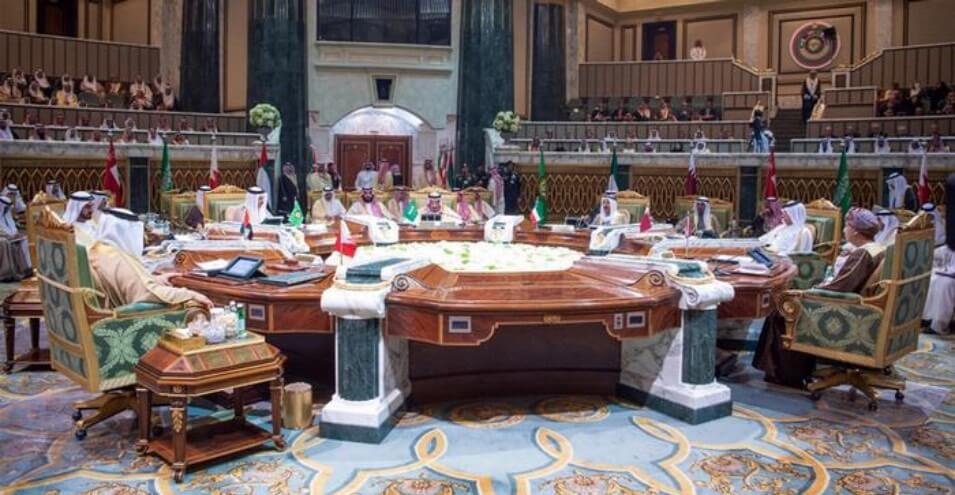
The Cooperation Council of the Arab States of the Persian Gulf has called on the UN Security Council to extend Iran’s arms embargo. The United States has prepared a resolution for this purpose, which is expected to be vetoed by China and Russia.
Bloomberg News reported on Sunday, August 9 (Mordad 19) that it had obtained a copy of a letter sent the previous day by members of the Cooperation Council of the Arab States of the Persian Gulf to the UN Security Council Secretariat.
In this letter, the Security Council has been asked to extend the arms embargo against the Islamic Republic, which under the JCPOA expires in October of this year after a five-year period.
This action is assessed as aligned with U.S. efforts to persuade China and Russia not to veto a resolution on this matter. The Donald Trump administration had prepared a draft resolution last month to extend Iran sanctions, which was not put to a vote and has now been placed back on the agenda with minor modifications.
According to the report, six Arab states of the Persian Gulf have asked the Security Council in their letter to, alongside extending the arms embargo, implement other measures necessary to prevent “destabilizing expansion of Iran’s weapons.”
Bahrain, Kuwait, Oman, Qatar, the United Arab Emirates, and Saudi Arabia have emphasized in this letter that these measures could include targeted asset freezes and travel bans for individuals involved in the shipment, sale, or transfer of weapons and related materials from or to Iran.
Members of the Cooperation Council of the Persian Gulf in a letter signed by the council’s Secretary-General, Nayef Falah Al-Hajraf, claim that the Islamic Republic continues to send weapons to all countries in the region as part of its expansionist policies and interference in the internal affairs of Arab states, thereby violating the UN Charter.
Two Striking Features of the Arab States’ Letter
This letter is particularly noteworthy for two reasons: first, the timing of its submission, which coincides with the presentation of the U.S. proposed draft resolution, and second, the joint cooperation and unified voice of the six Persian Gulf states following approximately three years of tensions among them, particularly regarding Qatar.
Apparently, the efforts of Brian Hook, the former U.S. State Department Special Representative for Iran, who recently began consultations with the Arab states of the Persian Gulf, played a significant role in these countries’ joint action.
Of the six Persian Gulf states, Qatar, especially following its dispute with four member states of the Cooperation Council, has maintained closer relations with the Islamic Republic, and Oman, which typically remains neutral in regional disputes, has repeatedly mediated between Iran and the West, including to initiate nuclear negotiations in 2013.
U.S. Secretary of State Mike Pompeo announced several days ago that the U.S. proposed resolution to extend Iran’s arms embargo will be formally presented to the Security Council next week.
The Role of Iran’s Weapons in the Continuation of the Yemen Conflict
He said that a large part of the conflict and clashes in Yemen is the result of the Islamic Republic’s unlawful actions in sending weapons and military equipment to Houthi insurgents.
Iran denies sending weapons to Yemeni Houthis; however, considerable evidence on this matter has emerged so far. The UN Secretary-General has also confirmed in one of his recent reports that some of the Houthis’ weapons used in attacks on Saudi oil facilities were “of Iranian origin.”
The proposed U.S. resolution is scheduled to be discussed in the Security Council on Tuesday, August 11. France’s news agency reported the previous day, citing diplomatic sources, that given some countries’ opposition, this resolution will not be approved.
Senior U.S. officials have repeatedly emphasized that even if this resolution is not approved, they will extend Iran’s arms embargo by any possible means. Three European states party to the nuclear agreement are at least willing to do so for a limited period.
Ali Shamkhani, Secretary of Iran’s Supreme National Security Council, had said earlier that with the extension of the arms embargo, the “eternal death” of the JCPOA also arrives.
Source: DW