Political Tensions Escalate in Lebanon Following Killing of Christian Politician Opposed to Hezbollah
Political and sectarian tensions in Lebanon have sharply escalated following the killing of a Christian politician opposed to Hezbollah.
“Pascal Suleiman” was a local leader of the Lebanese Forces Party in Christian-populated coastal areas of Lebanon. According to statements from the Lebanese army, a group of Syrian nationals attempted to steal Pascal Suleiman’s vehicle on Sunday evening, but during the struggle he was killed and the attackers took his body to Syria. However, most of the attackers have been arrested by security forces.
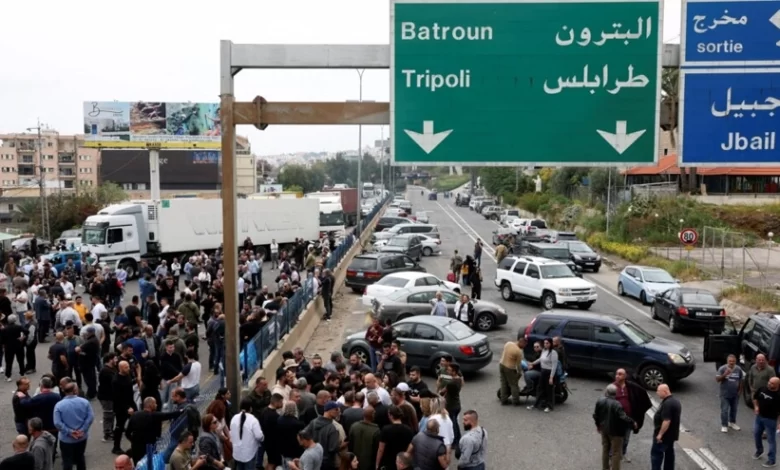
On Monday, following Pascal Suleiman’s killing, supporters of the Lebanese Forces Party blocked main roads in northern Lebanon. By Tuesday, due to concerns about possible clashes between Hezbollah and the Lebanese Forces Party, schools in Beirut were announced to be closed.
The Lebanese Forces Party rejected the Lebanese army’s account on Tuesday, April 9 (Farvardin 21), stating in a released statement: “The official narrative claiming the motive for this attack was car theft is incorrect, and we consider Pascal Suleiman’s death a political assassination due to his political activities. However, we view this act as a direct attack on the Lebanese Forces Party unless proven otherwise.”
Following the killing of Pascal Suleiman, leader of the Christian Lebanese Forces Party who was also opposed to Hezbollah, concerns about the possibility of clashes between rival political groups in Lebanon have sharply increased. Lebanon is already suffering from a severe economic crisis and tensions arising from the conflict between Hezbollah and the Israeli army at the southern borders. Government officials and religious leaders are attempting to contain tensions that have spread to street scuffles and physical attacks on Syrian migrants.
Many Western governments recognize Hezbollah, which is supported by the Islamic Republic of Iran, as a terrorist organization. Criticism from Lebanon’s Christian community toward Hezbollah has also increased, particularly following rocket fire by the group’s militias on a Christian-populated village in southern Lebanon toward Israel.
“Beshara Boutros Al-Rahi,” a Maronite Catholic cleric and one of Lebanon’s highest-ranking Christian leaders, despite criticisms he had voiced against Hezbollah in recent months, said: “In today’s sensitive and fragile political and social conditions, we urge everyone to maintain their composure and exercise restraint.”