Iran News

Pompeo Calls on Other Countries to Join Sanctions Against Iran
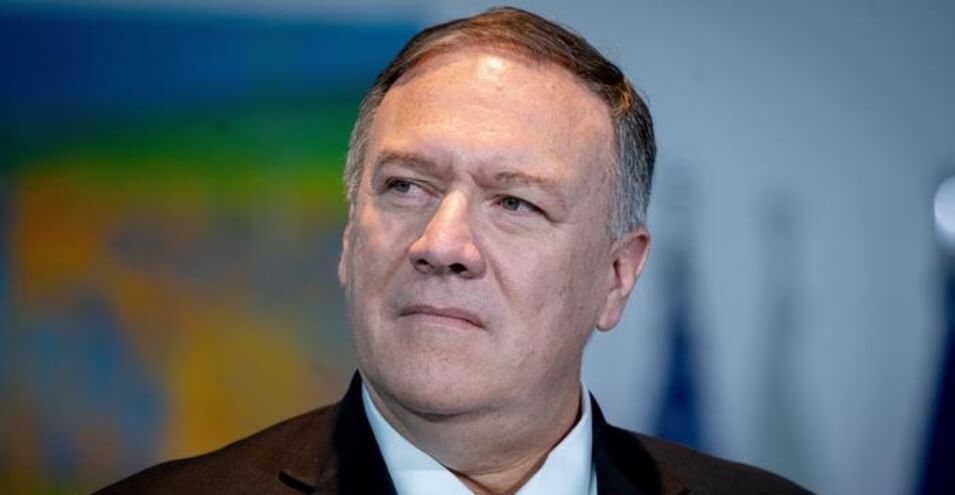
The U.S. Secretary of State has called on the international community to join American sanctions against the Islamic Republic of Iran. Mike Pompeo stated that Iran has violated its commitments under the JCPOA and increased uranium reserves to up to 10 times the allowed limit.

On the evening of Tuesday, September 8 (Shahrivar 18), the U.S. Secretary of State issued a tweet in response to the increase in Iran’s enriched uranium stockpile. He called on the European troika (Britain, France, and Germany—signatories to the JCPOA) and other countries to “wake up and accept the reality that the JCPOA is history and join the United States in implementing severe sanctions against Iran.” According to the U.S. Secretary of State, “pressure and dialogue” is the only way forward.

Pompeo cited the International Atomic Energy Agency (IAEA) report in his tweet. The Agency released its three-month report on Iran’s nuclear activities to members of the Board of Governors five days earlier—Friday, September 4 (Shahrivar 14).

Under the JCPOA, Iran’s low-enriched uranium stockpile should not exceed the ceiling of 203 kilograms. However, according to the IAEA’s recent report, Iran’s low-enriched uranium stockpile has reached over 2,300 kilograms, which exceeds the allowed limit in the nuclear agreement by more than tenfold. This agreement was signed in Vienna in 2015 (Farvardin 1394) between representatives of the Islamic Republic of Iran and six world powers (the United States, Russia, China, France, Britain, and Germany).

The United States withdrew from the nuclear agreement in May 2018 (Ordibehesht 1397) and subsequently reimposed sanctions that had been lifted or suspended against Iran. These sanctions have been increasingly tightened over the past two years and four months. The stated aim is to exert maximum pressure on Iran to bring it to the negotiating table and reach a comprehensive agreement.

Unlike the United States, Russia and China, as well as Germany, France, and Britain, have announced they remain committed to the JCPOA and have called on Iran to return to its commitments under the agreement.

The Islamic Republic has reduced its JCPOA commitments in five phases following the U.S. withdrawal, including exceeding the ceiling set for enriched uranium and heavy water stockpiles.

Behrouz Kamalvandi, the spokesman for Iran’s Atomic Energy Organization, also confirmed that production of advanced centrifuges has expanded and the amount of enriched uranium has increased. Kamalvandi confirmed the production of over 130 tons of heavy water.

According to Kamalvandi’s statements, enriched uranium production, as part of Iran’s reduction of JCPOA commitments, has increased, and Iran has currently reached over three tons of enriched uranium. Kamalvandi also stated that the Islamic Republic produces 250 to 300 kilograms of enriched uranium monthly, a rate equal to Iran’s uranium production capacity before the nuclear agreement.

IAEA Inspectors Visit Two Suspected Iranian Sites

Iran-IAEA relations had become tense in recent months, with the primary cause cited as Tehran’s refusal to provide access for inspections at two “suspect sites.”

These two sites, one between Shahreza and Abadeh and another near Tehran, are suspected to be locations where the Islamic Republic conducted undeclared nuclear activities.

Apparently, with mounting pressure on Tehran, negotiations took place regarding visits to these two sites, resulting in an agreement reached during a two-day visit by Rafael Grossi, the IAEA Director General, and his delegation to Tehran on the fourth and fifth days of Shahrivar.

Given the IAEA’s report and confirmation by Iranian officials regarding increased uranium enrichment, American officials have accused the Islamic Republic of violating the JCPOA nuclear agreement commitments. In this regard, the United States has called for activating the “trigger mechanism” and restoring international sanctions against Iran.

Mike Pompeo, U.S. Secretary of State, expressed confidence on August 27 (Shahrivar 6) that international sanctions against the Islamic Republic of Iran, which were lifted or suspended under the nuclear agreement, would be reimposed from midnight on September 20 (Shahrivar 30).

Iranian officials have not yet responded to Pompeo’s latest statements regarding increased enrichment and the call for the European troika and other countries to join sanctions.


Source: DW

Related Articles

Back to top button