Press Freedom Committee Expresses Concern: Iran’s Parliament Advancing ‘Sayanat’ Bill
The non-governmental Committee to Protect Journalists, based in the United States, expressed concern by issuing a statement regarding the Islamic Consultative Assembly’s efforts to advance an internet-restricting bill.
In its statement, the committee noted that Iran’s parliament is pushing forward with the internet-restricting bill despite opposition from citizens and international observers.
According to news reports, the bill titled “Protection of the Rights of Virtual Space Users and Basic Applicable Services of Virtual Space” was being reviewed last month by a parliamentary sub-committee.
The Committee to Protect Journalists states that, according to domestic news agencies, this bill is under review in Iran’s parliament and is expected to be approved in early next year. The Committee to Protect Journalists, referring to the imprisonment of journalists and media activists in Iran, notes that some of them, such as Mehrnousch Tavakoli, have been imprisoned for posts they wrote on social networks.
Mehsa Alimardan, an Article 19 researcher, told the Committee to Protect Journalists via Zoom that the “Sayanat” bill poses a threat to journalism in Iran and the government could potentially control information that journalists have access to more than before.
The Committee to Protect Journalists has reviewed the draft of this internet-restricting bill that was published several months ago.
The committee states that its review of the draft shows that the government’s legal authorities to block websites and platforms operated by foreign tech companies without a domestic representative in Iran would be strengthened.
Citing Article 19, which is a free speech advocacy organization, the committee writes that U.S. sanctions also prevent companies based in America from establishing offices in Iran. The review of the draft bill also showed that people would need to register identifying information to access the internet.
According to “The Iran Primer,” a project of the U.S. Institute of Peace, the bill called “Sayanat…” is part of a campaign to create a closed domestic national network (intranet) under government control.
With the rise of a parliament controlled by conservatives and the government of Ebrahim Raisi, the hardline president, efforts by the Islamic Republic to limit people’s access to the internet have intensified.
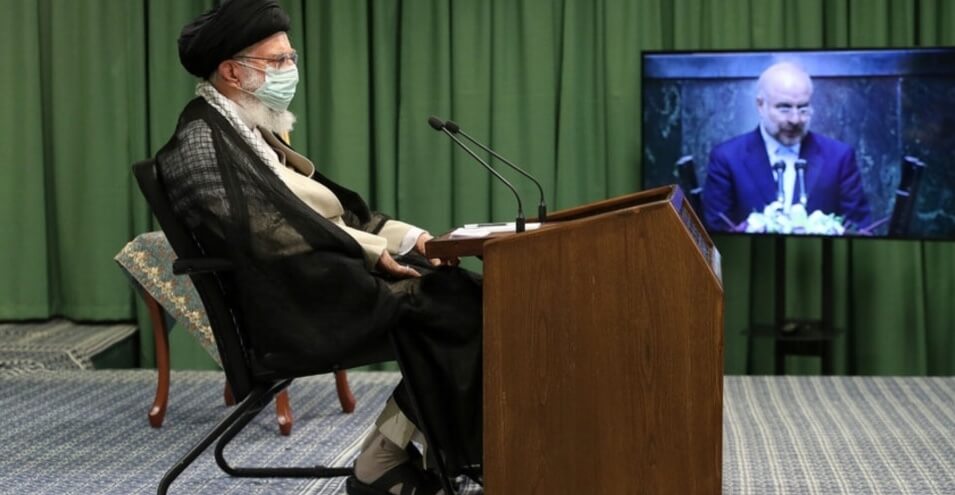
Ayatollah Khamenei, the Supreme Leader of the Islamic Republic, who has been referred to as one of the “beasts of media freedom,” has repeatedly called for restricting the internet, particularly social networks. Years ago, even before the internet became widespread in Iran, he expressed his opposition to satellites and uncensored public access to free information and radio and television programs not under government censorship, and called for measures to block public access to satellite programs.
The passage of the bill called “Sayanat” is referred to as the implementation of one of Ayatollah Khamenei’s main demands.
Source: Voice of America