Prince Reza Pahlavi’s Message to the World: “Iran is on the Brink of Profound Transformation”
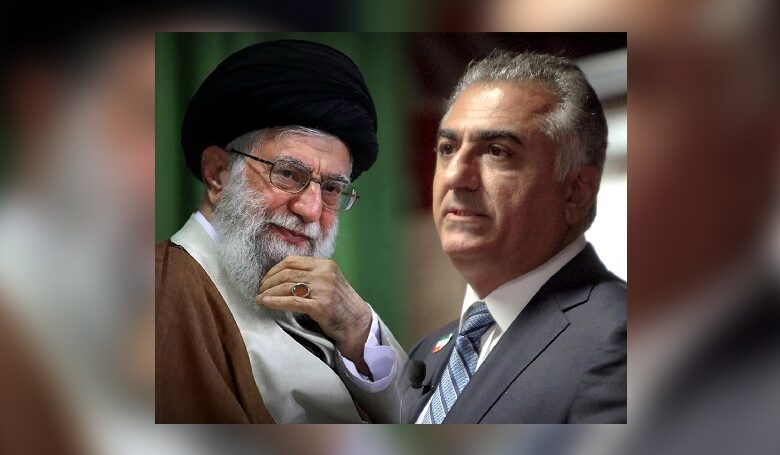
Prince Reza Pahlavi, while sending a global message about profound transformation in Iran, has declared a call for accountability, leadership, and international engagement.
In the midst of a new wave of nationwide protests, Prince Reza Pahlavi has published an op-ed in the Washington Post, painting a clear picture of a historic moment that, according to him, could shape Iran’s destiny for decades to come. He writes that Iran today is not merely facing temporary unrest, but rather stands on the brink of profound transformation—a transformation whose price the people are paying with their lives, freedom, and future.
According to Prince Pahlavi, what is currently unfolding in Iran’s streets is a conscious effort to reclaim the future. He emphasizes that Iranians, fully aware of the danger, have taken to the streets, and this courage now requires, more than ever, clarity, readiness, and responsible leadership—not only within the country, but also at the international level and among global decision-makers.
In a section of this op-ed, Prince Reza Pahlavi welcomes Donald Trump’s stance in support of Iranian protesters, writing: “His message that America stands with those who seek freedom, not with a government that exports terror and instability, has resonated widely within Iran.”
This statement shows that symbolic and political support from global powers is, contrary to some analysts’ assumptions, not insignificant to Iran’s protesting society and can impact the morale and domestic political equations, especially when the message clearly distinguishes between the people and the government.
Prince Pahlavi goes on to reference slogans in which his name is heard alongside concepts such as freedom and national unity. However, his interpretation of these voices is not ambitious but rather responsible. Regarding these slogans, he said: “Protesters chant my name alongside slogans of freedom and national unity. I do not interpret this as a call to claim power; I see it as a deep responsibility on my shoulders.”
He views this phenomenon as a sign of collective understanding—an understanding that suggests Iranian society needs a unifying figure during this historic transition. Prince Pahlavi further added: “This reflects an understanding that our nation needs a unifying figure to help guide the transition from despotism to a democratic future—a future that people choose for themselves.”
His emphasis on “people’s choice” is seen as a deliberate effort to distance himself from any authoritarian model, even in the guise of opposition.
Prince Reza Pahlavi concludes his op-ed with a clear call to the global community—a call that marks the boundary between verbal solidarity and practical responsibility: “Do not merely witness the birth of a new Iran; work with us to ensure this transition is peaceful, stable, and worthy of the sacrifices people are making.”
This statement is the essence of his message: “Tomorrow’s Iran, though built by the Iranian people themselves, can have its transition costs made heavier by the world’s indifference or miscalculations.”
Prince Reza Pahlavi’s op-ed in the Washington Post can be viewed as an effort to place Iran’s protests within a clearer framework for global public opinion and policymakers—a framework in which the people’s uprising is presented not as chaos, but as a national project to move beyond despotism. His emphasis on responsible leadership, national unity, and peaceful transition suggests that today’s debate about Iran is not merely about collapse or survival, but about how to build the future after the Islamic Republic.